
Education
Old PLA Filament: Can It Still Deliver Quality Prints?

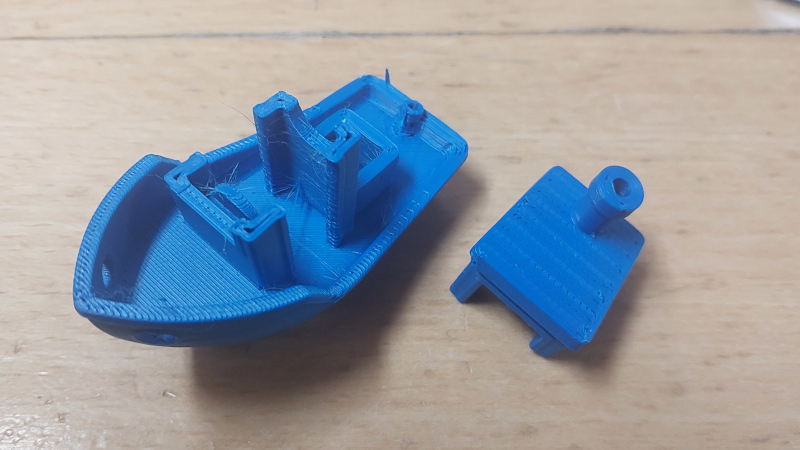
3D printing enthusiasts often debate the viability of using older filament, particularly PLA (polylactic acid), due to concerns about quality deterioration over time. A recent experiment tested the performance of a decade-old blue PLA filament, sourced from a hackerspace, to determine whether it could still produce reliable prints. The results challenge common assumptions about the longevity of 3D printing materials.
Testing the Age-Old Filament
The blue PLA filament, over ten years old and stored in less-than-ideal conditions, was examined for its printing capabilities. Initially, the filament appeared in good condition, showing no signs of brittleness or discoloration. Using a Prusa Mini 3D printer, the first print—a well-known model called Benchy—was produced. Contrary to expectations, the print quality was surprisingly high, exhibiting minimal stringiness, a common issue with older filament that has absorbed moisture over time.
The only noticeable flaw in the print was a slight collapse along the prow line. This prompted further investigation into the filament’s layer adhesion, a critical factor in print durability. Observations of the Benchy model revealed that it could snap under moderate pressure, indicating potential weaknesses in layer adhesion compared to newer filament.
Layer Adhesion Experiments
To quantify the difference in layer adhesion between the old blue PLA and new filament, a specific test was devised. A 150 mm long box section with a 2 mm wall was printed in both filaments. This design allowed for the application of force to determine the breaking point when clamped at one end. The experiment involved adding weights gradually until the structure failed.
The results were telling. The print made from the old PLA broke at a load of approximately 1.3 kg, while the new grey PLA print withstood a much higher force, refusing to break even with a 3 kg load attached. The force applied at the breaking point was calculated to be about 130 N, highlighting a significant disparity in strength between the two materials.
The break in the old PLA print occurred cleanly along the layer lines, suggesting that the issue was not one of material failure but rather a lack of adhesion between layers. This finding underscores the impact of aging on the filament’s structural integrity, raising questions about the chemical changes that may have occurred over the years.
Understanding Filament Degradation
The degradation of PLA over time may stem from the loss of volatile additives used during manufacturing. These additives can enhance the filament’s properties, but their evaporation could leave behind a more basic form of PLA, which may not perform as well. While the old filament produced aesthetically pleasing prints, the lack of strength indicates a noteworthy decline in its functional characteristics.
As 3D printing technology continues to evolve, these findings offer insight into best practices for filament storage. Proper storage conditions can potentially prolong the life and performance of PLA. Enthusiasts are advised to consider using filament promptly rather than hoarding it, as prolonged exposure to air and moisture may accelerate the deterioration of key properties.
In conclusion, while the experiment demonstrates that decade-old PLA can still produce quality prints, it also highlights the limitations that come with age. As the 3D printing community continues to grow, ongoing exploration of material science will be essential in understanding how to maximize the longevity and performance of printing filaments.



Revolutionary Photonic Ski-Jump Could Miniaturize LiDAR Systems

Couples Detox from Plastics in New Netflix Doc: Can It Boost Fertility?

Aventon Launches Affordable Full-Suspension Electric Mountain Bike

Discover Eight Must-Try Restaurants This Spring Season

UC Irvine Team Unveils Innovative Ion Pump for Water Treatment

One-Third of Americans Trim Daily Expenses for Healthcare Needs

Apple Secures First Oscar in Three Years with F1: The Movie

Fourth Graders Celebrate St. Patrick’s Day with Creative Weather Drawings

Kim Kardashian Dazzles at Vanity Fair Oscars Party 2026

Nostradamus’ 2026 Predictions: Star Death and Dark Events Loom

Breakthroughs and Challenges Await Science in 2026

Electric Moto Influencer Surronster Arrested in Tijuana

OpenAI to Implement Age Verification for ChatGPT by December 2025

Discover the Top 10 Calorie Counting Apps of 2025

Recovering a Suspended TikTok Account: A Step-by-Step Guide

Bella Hadid Shares Health Update After Treatment for Lyme Disease

Backpack Drives Equip Students with Supplies for New School Year

Analysts Project Stronger Growth for Apple’s iPhone 17 Lineup
-
 Science8 months ago
Nostradamus’ 2026 Predictions: Star Death and Dark Events Loom
-
 Science8 months ago
Breakthroughs and Challenges Await Science in 2026
-
 Technology11 months ago
Electric Moto Influencer Surronster Arrested in Tijuana
-
 Technology9 months ago
OpenAI to Implement Age Verification for ChatGPT by December 2025
-
 Technology1 year ago
Discover the Top 10 Calorie Counting Apps of 2025
-
 Technology1 year ago
Recovering a Suspended TikTok Account: A Step-by-Step Guide
-
 Health11 months ago
Bella Hadid Shares Health Update After Treatment for Lyme Disease
-
 Education1 year ago
Backpack Drives Equip Students with Supplies for New School Year
-
 Health12 months ago
Analysts Project Stronger Growth for Apple’s iPhone 17 Lineup
-

 Health12 months ago
Japanese Study Finds Rose Oil Can Increase Brain Gray Matter
-

 Technology8 months ago
Top 10 Penny Stocks to Watch in 2026 for Strong Returns
-

 Science10 months ago
Starship V3 Set for 2026 Launch After Successful Final Test of Version 2