
Education
Newsom Proposes Major Overhaul of California’s Education System

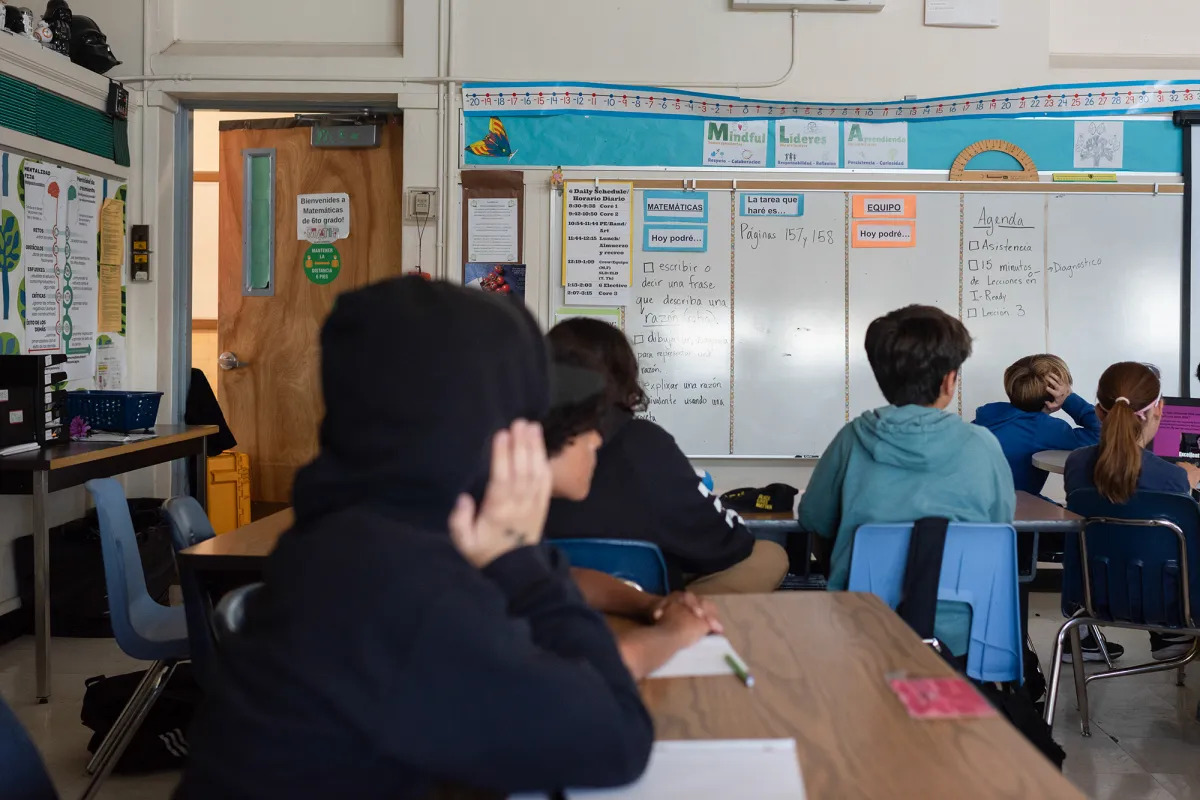
Governor Gavin Newsom has proposed a significant restructuring of California’s education management system, a move he believes is necessary for modernizing oversight of the state’s public schools. During his State of the State address earlier this month, Newsom stated, “It’s long overdue that we modernize the management of our educational system.” He is set to submit a budget plan that seeks to unify policymaking between the State Board of Education and the Department of Education, aiming to streamline educational governance from early childhood through college.
This proposal aims to shift oversight authority from the elected State Superintendent of Public Instruction to the California Board of Education, which is appointed by the governor. The intent is to provide clearer accountability and coherence within the educational framework, which serves nearly 6 million students across the state. Although the budget proposal outlines these changes, it lacks detailed explanations of how the new governance structure will function.
In support of this initiative, Newsom referenced two reports highlighting the inefficiencies of California’s current educational governance. One of these documents, the Master Plan for Education published in 2002, alongside a recent report from Policy Analysis for California Education (PACE), criticized the overlapping responsibilities and fragmented authority among various agencies managing the schools.
Tony Thurmond, the current Superintendent of Public Instruction, expressed concerns about the implications of such a governance overhaul. He stated that he was not consulted regarding the changes and criticized the proposal for failing to establish structures that would positively influence student outcomes. Thurmond emphasized, “This governance proposal doesn’t establish any structures proven to move the needle on student outcomes,” and raised alarms about shifting authority away from an elected official accountable to voters.
The discussions surrounding this proposal have been ongoing, with the groundwork laid well before the recent address. The PACE report, which aligned closely with Newsom’s vision, pointed to the complexity of California’s education governance system. It described a network of agencies designed to serve a diverse TK-12 population but noted that this complexity often leads to fragmented authority and inefficient decision-making.
Former education authority Michael Kirst, who played a key role in enacting the Local Control Funding Formula in 2012, has expressed support for the proposed changes. Kirst characterized it as “a new vision and a dramatic overhaul” that addresses a governance structure dating back to the 19th century. He highlighted that the lack of substantial reform over the years has hindered educational progress in the state.
Despite the political implications, Newsom’s initiative seeks to simplify a governance system perceived as opaque and inefficient. Critics, however, argue that concentrating authority in the hands of the governor and their appointees may create challenges in holding leadership accountable for educational outcomes. As the discourse evolves, stakeholders in California’s education system will be watching closely to see if these proposed changes result in tangible improvements for students and educators alike.










Revolutionary Photonic Ski-Jump Could Miniaturize LiDAR Systems

Couples Detox from Plastics in New Netflix Doc: Can It Boost Fertility?

Aventon Launches Affordable Full-Suspension Electric Mountain Bike

Discover Eight Must-Try Restaurants This Spring Season

UC Irvine Team Unveils Innovative Ion Pump for Water Treatment

One-Third of Americans Trim Daily Expenses for Healthcare Needs

Apple Secures First Oscar in Three Years with F1: The Movie

Fourth Graders Celebrate St. Patrick’s Day with Creative Weather Drawings

Kim Kardashian Dazzles at Vanity Fair Oscars Party 2026

Nostradamus’ 2026 Predictions: Star Death and Dark Events Loom

Breakthroughs and Challenges Await Science in 2026

Electric Moto Influencer Surronster Arrested in Tijuana

OpenAI to Implement Age Verification for ChatGPT by December 2025

Discover the Top 10 Calorie Counting Apps of 2025

Bella Hadid Shares Health Update After Treatment for Lyme Disease

Analysts Project Stronger Growth for Apple’s iPhone 17 Lineup

Japanese Study Finds Rose Oil Can Increase Brain Gray Matter

Top 10 Penny Stocks to Watch in 2026 for Strong Returns
-
 Science4 months ago
Nostradamus’ 2026 Predictions: Star Death and Dark Events Loom
-
 Science4 months ago
Breakthroughs and Challenges Await Science in 2026
-
 Technology7 months ago
Electric Moto Influencer Surronster Arrested in Tijuana
-
 Technology4 months ago
OpenAI to Implement Age Verification for ChatGPT by December 2025
-
 Technology9 months ago
Discover the Top 10 Calorie Counting Apps of 2025
-
 Health7 months ago
Bella Hadid Shares Health Update After Treatment for Lyme Disease
-
 Health7 months ago
Analysts Project Stronger Growth for Apple’s iPhone 17 Lineup
-
 Health7 months ago
Japanese Study Finds Rose Oil Can Increase Brain Gray Matter
-
 Technology4 months ago
Top 10 Penny Stocks to Watch in 2026 for Strong Returns
-

 Science6 months ago
Starship V3 Set for 2026 Launch After Successful Final Test of Version 2
-

 Technology1 month ago
Nvidia GTC 2026: Major Announcements Expected for AI and Hardware
-

 Education7 months ago
Harvard Secures Court Victory Over Federal Funding Cuts