
Education
New Mexico Schools Tackle Cellphone Disruption in Classrooms

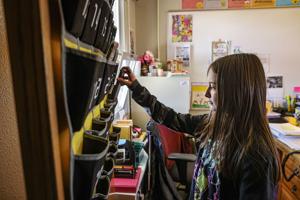
New Mexico educators are actively addressing the growing challenge of cellphone use in classrooms, which has become a contentious issue among teachers and administrators. In a recent meeting, Geron Spray, a teacher at Capital High in Santa Fe, voiced his frustrations about the disruptive nature of cellphones. He described the situation as having turned “adversarial,” highlighting incidents where students reacted negatively to requests to put their phones away. “No wonder that teachers give up the fight,” he stated, underscoring a sentiment echoed by many of his colleagues.
The issue of cellphone use in classrooms is part of a broader national movement aimed at reducing distractions and promoting healthier screen time habits among students. New Mexico schools have adopted various policies to combat this problem, with many localities opting for differing approaches to enforce rules on device usage. This patchwork of policies reflects growing concerns among educators and parents regarding the impact of excessive screen time on student performance and mental health.
During the last legislative session, State Senator Crystal Brantley introduced the Anti-Distraction Policy bill, co-sponsored by State Senator Antonio “Moe” Maestas. This legislation aimed to address what Brantley described as a crisis regarding cellphone addiction among youths. According to a report from the Parents Television and Media Council, New Mexico is among over 30 states that have implemented or advanced cellphone policies in schools between the fall of 2024 and mid-2025.
The American Academy of Child & Adolescent Psychiatry reports that U.S. youths aged 8 to 18 spend an average of 7.5 hours a day on screens. This trend has been linked to declining academic performance and various mental health issues. Dr. Kristina Sowar, a child and adolescent psychiatrist at the University of New Mexico, noted an increasing awareness of the effects of cellphone use on children’s health. “There’s been more curiosity and conversation over the past several years,” Sowar remarked, emphasizing the importance of promoting a balanced lifestyle that includes outdoor activities and social interactions.
Brantley’s bill initially sought $10 million to help school districts acquire devices like Yondr pouches, which securely lock away cellphones during class. Although the funding request was removed, the legislation still encourages districts to implement policies regarding cellphone use. Many schools have begun to adopt new strategies to manage device usage effectively.
For instance, the Academy for Technology and the Classics in Santa Fe instituted a policy requiring students to place their phones in designated holders at the front of classrooms. According to Principal Jason Morgan, this approach has led to improved student engagement and reduced conflicts. “You can have a policy on paper, but don’t put your teachers on an island as far as enforcement,” he stated.
Santa Fe Public Schools also revised its cellphone policy in July 2024, mandating that devices be turned off and out of sight during class. The district is currently evaluating the implementation of this policy in light of feedback from teachers and parents. Kenneth Stowe, the district’s chief of staff, indicated that a task force will convene to review the effectiveness of current policies and explore potential improvements for the upcoming school year.
Other schools, like Hermosa Middle School in Farmington, have adopted stricter measures. Principal Kyle Haws reported that students are now required to store their phones in lockers at the start of the day, with teachers instructed to contact the front office rather than confront students directly about phone use. This strategy has reportedly resulted in a significant decrease in classroom disruptions, with Haws noting it works “99% of the time.”
In contrast, the Hobbs district has taken a more flexible approach, allowing individual classrooms to set their own cellphone policies. Superintendent Gene Strickland stated that while some issues arise, an outright ban on phones is unrealistic. “Our responsibility is to help them make informed decisions,” he explained, acknowledging the creativity and resourcefulness students often display when navigating rules.
As New Mexico educators continue to grapple with cellphone use in classrooms, the collective efforts and innovations being implemented offer a glimpse into potential solutions. The ongoing dialogue among teachers, administrators, and policymakers highlights a commitment to fostering a more focused and productive learning environment. For educators like Spray, the hope is that these initiatives will support their efforts to reclaim the classroom from the pervasive influence of mobile devices.













Revolutionary Photonic Ski-Jump Could Miniaturize LiDAR Systems

Couples Detox from Plastics in New Netflix Doc: Can It Boost Fertility?

Aventon Launches Affordable Full-Suspension Electric Mountain Bike

Discover Eight Must-Try Restaurants This Spring Season

UC Irvine Team Unveils Innovative Ion Pump for Water Treatment

One-Third of Americans Trim Daily Expenses for Healthcare Needs

Apple Secures First Oscar in Three Years with F1: The Movie

Fourth Graders Celebrate St. Patrick’s Day with Creative Weather Drawings

Kim Kardashian Dazzles at Vanity Fair Oscars Party 2026

Nostradamus’ 2026 Predictions: Star Death and Dark Events Loom

Breakthroughs and Challenges Await Science in 2026

Electric Moto Influencer Surronster Arrested in Tijuana

OpenAI to Implement Age Verification for ChatGPT by December 2025

Discover the Top 10 Calorie Counting Apps of 2025

Recovering a Suspended TikTok Account: A Step-by-Step Guide

Bella Hadid Shares Health Update After Treatment for Lyme Disease

Backpack Drives Equip Students with Supplies for New School Year

Analysts Project Stronger Growth for Apple’s iPhone 17 Lineup
-
 Science8 months ago
Nostradamus’ 2026 Predictions: Star Death and Dark Events Loom
-
 Science8 months ago
Breakthroughs and Challenges Await Science in 2026
-
 Technology11 months ago
Electric Moto Influencer Surronster Arrested in Tijuana
-
 Technology9 months ago
OpenAI to Implement Age Verification for ChatGPT by December 2025
-
 Technology1 year ago
Discover the Top 10 Calorie Counting Apps of 2025
-
 Technology1 year ago
Recovering a Suspended TikTok Account: A Step-by-Step Guide
-
 Health11 months ago
Bella Hadid Shares Health Update After Treatment for Lyme Disease
-
 Education1 year ago
Backpack Drives Equip Students with Supplies for New School Year
-
 Health11 months ago
Analysts Project Stronger Growth for Apple’s iPhone 17 Lineup
-

 Health12 months ago
Japanese Study Finds Rose Oil Can Increase Brain Gray Matter
-

 Technology8 months ago
Top 10 Penny Stocks to Watch in 2026 for Strong Returns
-

 Science10 months ago
Starship V3 Set for 2026 Launch After Successful Final Test of Version 2