
Education
Lawmakers Celebrate Increased Education Funding in Pennsylvania

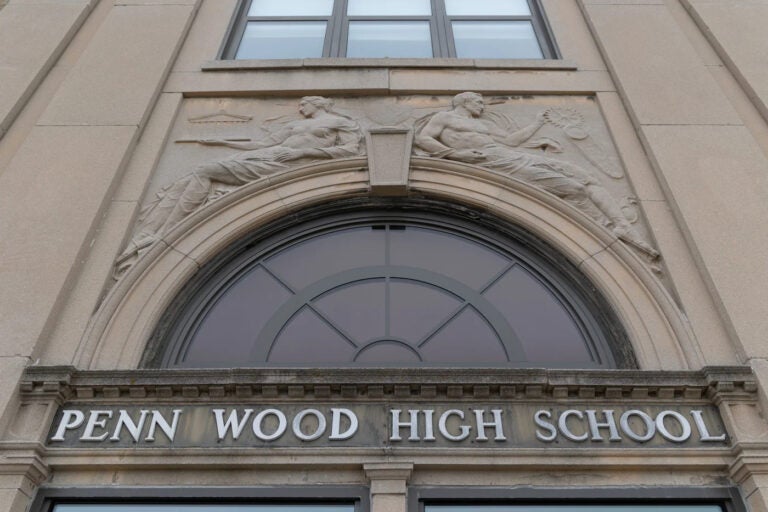
Democratic lawmakers and education officials convened at the Penn Wood Ninth Grade Academy on March 5, 2024, to celebrate a substantial increase in funding for the William Penn School District. This event comes as the state approaches the proposal of its next budget, with significant educational investments spotlighted by the recent ruling from the Pennsylvania Commonwealth Court that deemed the state’s school funding system unconstitutional.
House Speaker Joanna McClinton, whose district encompasses part of William Penn, emphasized the importance of this moment as the culmination of years of advocacy. “We have all been on the front line fighting for change, fighting for investment because we believe you’re the future,” she stated, addressing both students and educators. She highlighted the unfairness of a funding system based solely on property taxes, stating, “If you base [funding] only on the value of someone’s home and what they pay in taxes, it is not fair.”
The event served as a platform for Principal Rob Curry to showcase academic improvements within the school. “Over the past two years, the Ninth Grade Academy has made significant academic growth,” Curry noted. He revealed that the school’s score increased from 56 in the 2022-23 school year to 95 in the 2024-25 school year, nearly doubling in just two years.
The William Penn School District was at the forefront of the legal battle that led to the landmark decision regarding state funding. The lawsuit claimed that the state was not providing a “thorough and efficient” education, which resulted in significant disparities between affluent and less wealthy districts. This inequity disproportionately affected students of color and those from low-income backgrounds. Several other districts, including Greater Johnstown and Wilkes-Barre Area, joined the suit.
Since the ruling, Governor Josh Shapiro has proposed considerable increases to the education budget, including a record $1 billion announced in February 2024 for the following budget cycle. His proposal for the 2025 budget also includes another significant increase. Under the current state budget, the William Penn School District received $80 million in funding, which is over $10 million more than the previous year. This includes more than $57 million allocated for basic and special education as well as Ready to Learn grants.
Superintendent Eric Becoats attributed the funding boost to the substantial academic gains within the district. He reported that eight of the district’s eleven elementary schools “met or exceeded growth expectations” in both math and English. “Three out of every four William Penn teachers met or exceeded growth expectations in both subjects,” Becoats explained. Furthermore, he noted that nearly 90% of Algebra 1 teachers and almost 80% of English language arts teachers achieved similar success on the Pennsylvania System of School Assessment. “Growth like that does not happen by accident,” he added, crediting it to improved staffing and academic resources.
Despite these advancements, the past two years have presented challenges for the William Penn School District and others in similar situations. Early last year, the district faced a $9 million deficit, partly due to new state funds being allocated towards construction projects rather than directly enhancing teaching resources. In the fall, budget constraints forced the district to cut extracurricular activities, an issue compounded by a five-month-long budget impasse over education funding.
Senior student Maurion Miller, a third-generation William Penn student, shared his perspective with lawmakers, saying, “Delays in the state budget affected the start of activities and clubs that matter to students like me. Consistent and full funding matters, not just in the classroom but in everything that helps us grow.”
Becoats called for a stable funding system that would eliminate the annual struggle for resources. He stressed the necessity for long-term capital funding to ensure that students receive the stability they need. “Our students need stability, not stopgaps,” he said.
State Representative Jordan Harris, chair of the House Appropriations Committee, echoed this sentiment, stating that he and his colleagues are working on a capital funding plan. “Fair funding is not a one-time fix,” he remarked. “It’s our ongoing responsibility, and it’s something that is extremely important to what we’re doing.”
Looking ahead, Governor Shapiro is scheduled to deliver his next budget address on February 3, 2025, where education funding is expected to take a prominent role once again. The ongoing commitment to improving educational resources in Pennsylvania remains a priority for lawmakers and educators alike.



Revolutionary Photonic Ski-Jump Could Miniaturize LiDAR Systems

Couples Detox from Plastics in New Netflix Doc: Can It Boost Fertility?

Aventon Launches Affordable Full-Suspension Electric Mountain Bike

Discover Eight Must-Try Restaurants This Spring Season

UC Irvine Team Unveils Innovative Ion Pump for Water Treatment

One-Third of Americans Trim Daily Expenses for Healthcare Needs

Apple Secures First Oscar in Three Years with F1: The Movie

Fourth Graders Celebrate St. Patrick’s Day with Creative Weather Drawings

Kim Kardashian Dazzles at Vanity Fair Oscars Party 2026

Nostradamus’ 2026 Predictions: Star Death and Dark Events Loom

Breakthroughs and Challenges Await Science in 2026

Electric Moto Influencer Surronster Arrested in Tijuana

OpenAI to Implement Age Verification for ChatGPT by December 2025

Discover the Top 10 Calorie Counting Apps of 2025

Bella Hadid Shares Health Update After Treatment for Lyme Disease

Analysts Project Stronger Growth for Apple’s iPhone 17 Lineup

Japanese Study Finds Rose Oil Can Increase Brain Gray Matter

Top 10 Penny Stocks to Watch in 2026 for Strong Returns
-
 Science3 months ago
Nostradamus’ 2026 Predictions: Star Death and Dark Events Loom
-
 Science3 months ago
Breakthroughs and Challenges Await Science in 2026
-
 Technology7 months ago
Electric Moto Influencer Surronster Arrested in Tijuana
-
 Technology4 months ago
OpenAI to Implement Age Verification for ChatGPT by December 2025
-
 Technology9 months ago
Discover the Top 10 Calorie Counting Apps of 2025
-
 Health7 months ago
Bella Hadid Shares Health Update After Treatment for Lyme Disease
-
 Health7 months ago
Analysts Project Stronger Growth for Apple’s iPhone 17 Lineup
-
 Health7 months ago
Japanese Study Finds Rose Oil Can Increase Brain Gray Matter
-
 Technology4 months ago
Top 10 Penny Stocks to Watch in 2026 for Strong Returns
-

 Science6 months ago
Starship V3 Set for 2026 Launch After Successful Final Test of Version 2
-

 Technology1 month ago
Nvidia GTC 2026: Major Announcements Expected for AI and Hardware
-

 Education7 months ago
Harvard Secures Court Victory Over Federal Funding Cuts