
Education
Indigenous Remains Returned to Tribes After Decades of Displacement

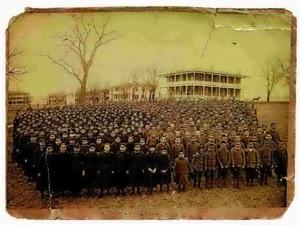
The remains of two Indigenous individuals, Matavito Horse and Leah Road Traveler, have been returned to their respective tribes, marking a significant step in addressing the historical injustices faced by Native American communities. These remains were taken to the Carlisle Indian Industrial School in Pennsylvania in October 1879, part of a broader campaign by the U.S. government aimed at assimilating Native American youth and erasing their cultural identities.
The Carlisle Indian Industrial School, established in 1879, served as one of the most notorious institutions in this campaign. Children were forcibly removed from their families and communities, subjected to cultural indoctrination, and stripped of their identities. This practice left lasting scars on generations of Native American families.
The recent return of the remains was facilitated by the National Native American Boarding School Healing Coalition, an organization dedicated to addressing the legacy of boarding schools and advocating for the rights of Indigenous peoples. This coalition has been instrumental in the efforts to recover remains from various institutions across the United States and facilitate their return to the tribes.
Officials from both the U.S. government and tribal representatives participated in a ceremony to honor the lives of Matavito Horse and Leah Road Traveler. This event not only serves as a moment of closure for the families involved but also symbolizes a larger movement toward reconciliation and healing.
The return of Indigenous remains is part of a growing acknowledgment of the traumatic history associated with boarding schools. In recent years, there has been a concerted effort to document and return the remains of Indigenous children who died while attending these institutions. According to reports, thousands of Indigenous children were buried in unmarked graves, and many families continue to seek closure.
As the conversation around Indigenous rights and historical injustices continues to evolve, the return of Matavito Horse and Leah Road Traveler’s remains stands as a meaningful gesture towards healing. It underscores the importance of recognizing the past and working collaboratively with Indigenous communities to foster understanding and respect.
The path to reconciliation is long, but steps such as these serve to remind us of the ongoing need for dialogue and action in addressing historical wrongs. The return of these remains not only honors the individuals themselves but also their families and communities who have endured decades of loss and displacement.
With increasing attention on the legacy of boarding schools, the hope is that more remains will be returned, allowing families the opportunity to mourn their loved ones properly and restore some dignity to their histories.










Revolutionary Photonic Ski-Jump Could Miniaturize LiDAR Systems

Couples Detox from Plastics in New Netflix Doc: Can It Boost Fertility?

Aventon Launches Affordable Full-Suspension Electric Mountain Bike

Discover Eight Must-Try Restaurants This Spring Season

UC Irvine Team Unveils Innovative Ion Pump for Water Treatment

One-Third of Americans Trim Daily Expenses for Healthcare Needs

Apple Secures First Oscar in Three Years with F1: The Movie

Fourth Graders Celebrate St. Patrick’s Day with Creative Weather Drawings

Kim Kardashian Dazzles at Vanity Fair Oscars Party 2026

Nostradamus’ 2026 Predictions: Star Death and Dark Events Loom

Breakthroughs and Challenges Await Science in 2026

Electric Moto Influencer Surronster Arrested in Tijuana

OpenAI to Implement Age Verification for ChatGPT by December 2025

Discover the Top 10 Calorie Counting Apps of 2025

Recovering a Suspended TikTok Account: A Step-by-Step Guide

Bella Hadid Shares Health Update After Treatment for Lyme Disease

Backpack Drives Equip Students with Supplies for New School Year

Analysts Project Stronger Growth for Apple’s iPhone 17 Lineup
-
 Science8 months ago
Nostradamus’ 2026 Predictions: Star Death and Dark Events Loom
-
 Science8 months ago
Breakthroughs and Challenges Await Science in 2026
-
 Technology11 months ago
Electric Moto Influencer Surronster Arrested in Tijuana
-
 Technology9 months ago
OpenAI to Implement Age Verification for ChatGPT by December 2025
-
 Technology1 year ago
Discover the Top 10 Calorie Counting Apps of 2025
-
 Technology1 year ago
Recovering a Suspended TikTok Account: A Step-by-Step Guide
-
 Health11 months ago
Bella Hadid Shares Health Update After Treatment for Lyme Disease
-
 Education1 year ago
Backpack Drives Equip Students with Supplies for New School Year
-
 Health11 months ago
Analysts Project Stronger Growth for Apple’s iPhone 17 Lineup
-

 Health12 months ago
Japanese Study Finds Rose Oil Can Increase Brain Gray Matter
-

 Technology8 months ago
Top 10 Penny Stocks to Watch in 2026 for Strong Returns
-

 Science10 months ago
Starship V3 Set for 2026 Launch After Successful Final Test of Version 2