
Science
Scientists Uncover Ancient Human Isolation, New Cosmic Structures

Recent scientific discoveries have unveiled remarkable insights into human history, cosmic structures, and environmental changes. These findings span from a population isolated for over 100,000 years to the largest spinning object in the universe, with significant implications for our understanding of humanity and the cosmos.
Ancient Population Reveals Genetic Secrets
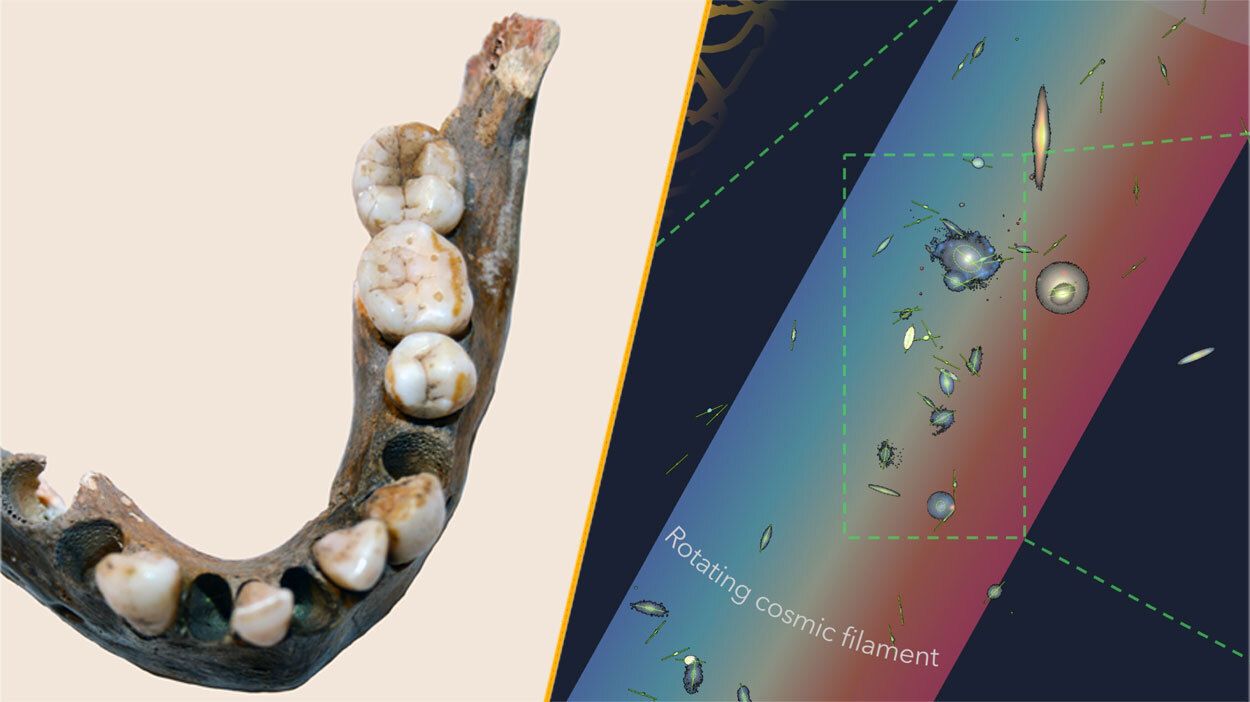
Researchers have identified a human population in southern Africa that remained genetically isolated for approximately 100,000 years. This study, which examined skeletons dating back up to 10,000 years, was conducted south of the Limpopo River, a major waterway flowing from South Africa into Mozambique. The findings indicate that these ancient individuals exhibit a vastly different genetic profile compared to modern humans, representing “an extreme end of human genetic variation,” according to the research team.
The implications of this discovery are profound. It not only enhances our understanding of human evolution but also highlights the diverse genetic landscapes that have existed throughout history. The research urges further exploration of how isolation influenced genetic diversity and adaptation in prehistoric populations.
Cosmic Discoveries and Environmental Concerns
In a remarkable cosmic discovery, astronomers have located the largest spinning structure in the universe, situated approximately 140 million light-years away. This colossal rotating filament, which is wider than the Milky Way, connects a chain of 14 galaxies and spins at an astonishing 68 miles per second (110 kilometers per second). Such findings not only push the boundaries of our understanding of cosmic structures but also stimulate curiosity about how these formations have evolved over billions of years.
Meanwhile, in China, a decades-long initiative known as the Great Green Wall aimed at combating desertification has yielded unintended consequences. A recent analysis shows that while the tree-planting efforts were successful, they altered rainfall and evaporation patterns across the country. This shift has resulted in reduced water levels in some of China’s most populous regions, raising concerns about the environmental impact of large-scale engineering projects.
In a separate study, researchers have revisited the record for the hottest temperature on Earth, recorded in Death Valley in 1913. New findings suggest that human error may have contributed to this extreme reading, prompting a reevaluation of historical climate data.
Archaeological discoveries have also made headlines this week. In China, archaeologists unearthed a large pit filled with skulls outside a 4,000-year-old city. Notably, the majority of the skulls belonged to males, diverging from the typical sacrificial patterns observed in other nearby settlements. In Greece, an elaborate tomb dating back 2,700 years was discovered, containing the remains of a woman adorned with an upside-down crown, adding layers of intrigue to ancient burial practices.
Innovations in Water Extraction and Space Exploration
On the technological front, researchers at MIT have developed a groundbreaking method for extracting drinking water from the air, even in arid regions. This innovative technique utilizes sound waves to efficiently shake water droplets from sponges, achieving a remarkable efficiency rate that is 45 times greater than traditional evaporation methods. Although the device requires a power source, researchers are optimistic about integrating it with solar energy solutions.
In the realm of space exploration, scientists have been closely monitoring interstellar comet 3I/ATLAS, which has exhibited unusual activity indicative of “ice volcanoes.” Observations from the Joan Oró Telescope in northeastern Spain reveal that as the comet approaches the sun, it heats up rapidly, leading to the sublimation of ice from its surface.
These developments reflect the ongoing quest for knowledge across multiple scientific disciplines, from genetics to astronomy. As researchers continue to uncover the mysteries of our planet and beyond, the potential for groundbreaking discoveries remains vast and promising.








Revolutionary Photonic Ski-Jump Could Miniaturize LiDAR Systems

Couples Detox from Plastics in New Netflix Doc: Can It Boost Fertility?

Aventon Launches Affordable Full-Suspension Electric Mountain Bike

Discover Eight Must-Try Restaurants This Spring Season

UC Irvine Team Unveils Innovative Ion Pump for Water Treatment

One-Third of Americans Trim Daily Expenses for Healthcare Needs

Apple Secures First Oscar in Three Years with F1: The Movie

Fourth Graders Celebrate St. Patrick’s Day with Creative Weather Drawings

Kim Kardashian Dazzles at Vanity Fair Oscars Party 2026

Nostradamus’ 2026 Predictions: Star Death and Dark Events Loom

Breakthroughs and Challenges Await Science in 2026

OpenAI to Implement Age Verification for ChatGPT by December 2025

Electric Moto Influencer Surronster Arrested in Tijuana

Discover the Top 10 Calorie Counting Apps of 2025

Bella Hadid Shares Health Update After Treatment for Lyme Disease

Analysts Project Stronger Growth for Apple’s iPhone 17 Lineup

Top 10 Penny Stocks to Watch in 2026 for Strong Returns

Japanese Study Finds Rose Oil Can Increase Brain Gray Matter
-
 Science3 months ago
Nostradamus’ 2026 Predictions: Star Death and Dark Events Loom
-
 Science3 months ago
Breakthroughs and Challenges Await Science in 2026
-
 Technology4 months ago
OpenAI to Implement Age Verification for ChatGPT by December 2025
-
 Technology6 months ago
Electric Moto Influencer Surronster Arrested in Tijuana
-
 Technology8 months ago
Discover the Top 10 Calorie Counting Apps of 2025
-
 Health6 months ago
Bella Hadid Shares Health Update After Treatment for Lyme Disease
-
 Health7 months ago
Analysts Project Stronger Growth for Apple’s iPhone 17 Lineup
-
 Technology3 months ago
Top 10 Penny Stocks to Watch in 2026 for Strong Returns
-
 Health7 months ago
Japanese Study Finds Rose Oil Can Increase Brain Gray Matter
-

 Science5 months ago
Starship V3 Set for 2026 Launch After Successful Final Test of Version 2
-

 Technology4 weeks ago
Nvidia GTC 2026: Major Announcements Expected for AI and Hardware
-

 Education7 months ago
Harvard Secures Court Victory Over Federal Funding Cuts