
Science
Scientists Develop Leaf-Scanning Technology to Assess Fruit Ripeness

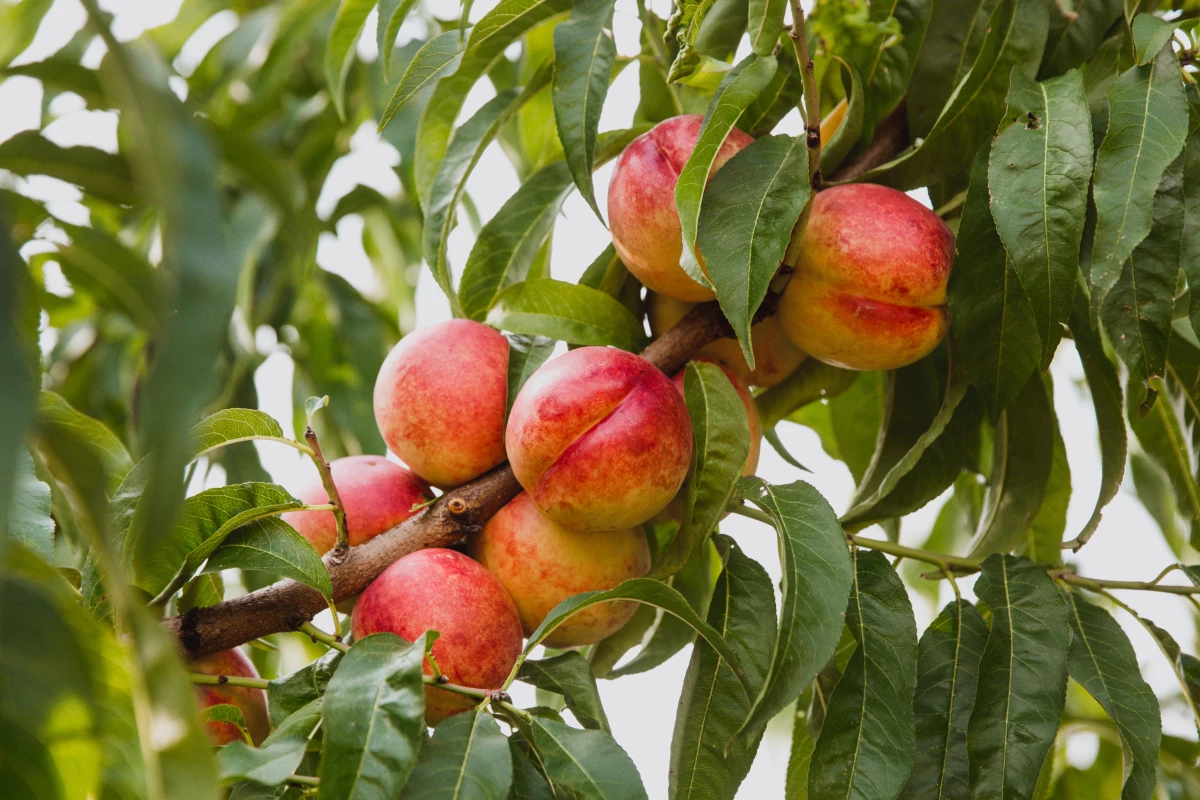
Farmers may soon be able to determine the ripeness of their fruit without sacrificing their yield. A team of scientists at Universitat Rovira i Virgili in Spain has developed a novel technique that analyzes the leaves of fruit trees instead of the fruit itself. This innovative approach aims to preserve the integrity of the crop while providing accurate information on ripeness.
Over an 11-week trial conducted on 12 nectarine trees in a commercial orchard, researchers utilized two spectrometers to perform near-infrared and mid-infrared scans. These scans focused on both the top and underside of the leaves adjacent to the fruit. The way these leaves absorb and reflect light emitted by the spectrometers serves as a reliable indicator of the fruit’s current ripeness.
According to team member Dr. Daniel Schorn, “The leaves undergo physiological and biochemical changes as the fruit ripens, due to the direct connection between the metabolism of the leaves and that of the fruit. These changes are reflected in their spectral fingerprint.” This connection underscores the potential for using leaf analysis as a non-invasive method for assessing ripeness.
The technology has demonstrated considerable accuracy in predicting important fruit characteristics such as weight and firmness. While it currently provides less precise data on other ripeness-related properties like sugar content, pH, and acidity, researchers believe these metrics may improve as the technology advances.
Traditional methods of assessing ripeness often involve scanning the fruit itself with a spectrometer. However, this approach can leave visible marks on the skin, negatively impacting the fruit’s market value. The new leaf-scanning technique aims to eliminate this issue, allowing farmers to assess the ripeness of entire crops without damaging the fruit.
The researchers envision a future where this technique is implemented in the field using portable scanners. Such devices could enable farmers to evaluate the ripeness of representative fruit from individual trees, allowing for selective harvesting of ripe fruit while leaving the rest to mature. This could enhance yield and reduce waste, benefiting both farmers and consumers.
The findings of this study were published in the journal ACS Agricultural Science & Technology, highlighting the potential for significant advancements in agricultural practices. As this technology continues to develop, it promises to transform how farmers manage their crops, ensuring they maximize their yield while minimizing waste.







Revolutionary Photonic Ski-Jump Could Miniaturize LiDAR Systems

Couples Detox from Plastics in New Netflix Doc: Can It Boost Fertility?

Aventon Launches Affordable Full-Suspension Electric Mountain Bike

Discover Eight Must-Try Restaurants This Spring Season

UC Irvine Team Unveils Innovative Ion Pump for Water Treatment

One-Third of Americans Trim Daily Expenses for Healthcare Needs

Apple Secures First Oscar in Three Years with F1: The Movie

Fourth Graders Celebrate St. Patrick’s Day with Creative Weather Drawings

Kim Kardashian Dazzles at Vanity Fair Oscars Party 2026

Nostradamus’ 2026 Predictions: Star Death and Dark Events Loom

Breakthroughs and Challenges Await Science in 2026

Electric Moto Influencer Surronster Arrested in Tijuana

OpenAI to Implement Age Verification for ChatGPT by December 2025

Discover the Top 10 Calorie Counting Apps of 2025

Bella Hadid Shares Health Update After Treatment for Lyme Disease

Analysts Project Stronger Growth for Apple’s iPhone 17 Lineup

Japanese Study Finds Rose Oil Can Increase Brain Gray Matter

Top 10 Penny Stocks to Watch in 2026 for Strong Returns
-
 Science4 months ago
Nostradamus’ 2026 Predictions: Star Death and Dark Events Loom
-
 Science4 months ago
Breakthroughs and Challenges Await Science in 2026
-
 Technology7 months ago
Electric Moto Influencer Surronster Arrested in Tijuana
-
 Technology4 months ago
OpenAI to Implement Age Verification for ChatGPT by December 2025
-
 Technology9 months ago
Discover the Top 10 Calorie Counting Apps of 2025
-
 Health7 months ago
Bella Hadid Shares Health Update After Treatment for Lyme Disease
-
 Health7 months ago
Analysts Project Stronger Growth for Apple’s iPhone 17 Lineup
-
 Health7 months ago
Japanese Study Finds Rose Oil Can Increase Brain Gray Matter
-
 Technology4 months ago
Top 10 Penny Stocks to Watch in 2026 for Strong Returns
-

 Science6 months ago
Starship V3 Set for 2026 Launch After Successful Final Test of Version 2
-

 Technology1 month ago
Nvidia GTC 2026: Major Announcements Expected for AI and Hardware
-

 Education7 months ago
Harvard Secures Court Victory Over Federal Funding Cuts