
Science
RIKEN Researchers Uncover Direction-Dependent Electron Flow in Chiral Magnets

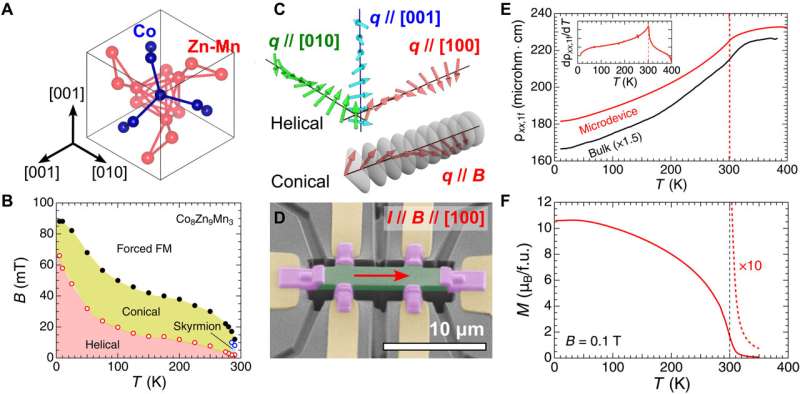
Researchers at RIKEN have made a significant breakthrough in understanding how electron flow is affected by direction in a specific type of magnet known as a chiral magnet. This discovery, published in the journal Science Advances on December 23, 2025, could pave the way for the development of low-energy electronic devices.
Chiral Magnets and Unique Electron Behavior
In conventional magnets, all electron spins align in the same direction. In contrast, chiral magnets exhibit a helical arrangement of electron spins, resembling a spiral staircase. This unique structure enables electrons to flow preferentially in one direction, similar to the behavior observed in diodes, but occurring within a single material instead of between two semiconductor junctions.
The potential applications of chiral magnets are substantial, particularly due to their ability to host tiny magnetic structures known as skyrmions. These skyrmions are seen as promising candidates for energy-efficient memory devices. While several theories have been proposed to explain the direction-dependent electron flow in these materials, no prior research had successfully isolated and identified the various mechanisms at play within a single chiral magnet.
New Findings and Implications for Future Research
To address this gap, Daisuke Nakamura and his team at the RIKEN Center for Emergent Matter Science have identified two distinct mechanisms governing the direction-dependent flow of electrons. The dominant mechanism varies based on environmental factors such as temperature and magnetic field strength. In certain scenarios, electrons moving in one direction encounter more scattering from magnetic quasiparticles with chirality, while those in the opposite direction experience less scattering.
The second mechanism involves the interaction between mobile electrons and the helical spins of static electrons, which contributes to the energy landscape affecting electron mobility within the chiral magnet.
Understanding these mechanisms proves challenging. The research team had to collaborate closely with theoretical physicists to complement their experimental measurements with necessary theoretical calculations. Nakamura remarked on the complexity of the task, saying, “Clarifying the mechanism is very challenging.”
The researchers focused on a chiral magnet composed of cobalt, zinc, and manganese. This particular combination allows for a helical spin arrangement across a broad temperature range, including room temperature, making it an ideal candidate for their investigations. The findings from this study may extend to other materials, suggesting a wide scope for future research into one-way electrical conduction.
Moving forward, the team plans to explore how variations in the ratios of the three metals in the chiral magnet affect electron flow, potentially unlocking new avenues for innovation in electronic materials.
For more information, refer to the paper by Daisuke Nakamura et al., titled “Nonreciprocal transport in a room-temperature chiral magnet,” published in Science Advances.













Asana Emphasizes Shared Memory for Effective AI Integration

Aurora Schools Contract Criticized for Lack of Academic Standards

Join the Fight Against Cancer at 24th Annual Candler Clays

Transparent Windows Offer New Shield Against Electromagnetic Pulses

Vermillion Fire EMS and LifeServe Blood Center Launch Blood Program

Transparent Windows Offer Protection Against Electromagnetic Pulses

Ohio School District Aims to Exit Academic Distress Status

James Webb Space Telescope Unveils Earliest Galaxy Cluster Yet

Black Men Confront Prostate Cancer: Jerry McCormick’s Journey

Nostradamus’ 2026 Predictions: Star Death and Dark Events Loom

OpenAI to Implement Age Verification for ChatGPT by December 2025

Discover the Top 10 Calorie Counting Apps of 2025

Bella Hadid Shares Health Update After Treatment for Lyme Disease

Analysts Project Stronger Growth for Apple’s iPhone 17 Lineup

Electric Moto Influencer Surronster Arrested in Tijuana

Harvard Secures Court Victory Over Federal Funding Cuts

Erin Bates Shares Recovery Update Following Sepsis Complications

Meta Initiates $60B AI Data Center Expansion, Starting in Ohio
-
 Science1 month ago
Nostradamus’ 2026 Predictions: Star Death and Dark Events Loom
-
 Technology2 months ago
OpenAI to Implement Age Verification for ChatGPT by December 2025
-
 Technology7 months ago
Discover the Top 10 Calorie Counting Apps of 2025
-
 Health5 months ago
Bella Hadid Shares Health Update After Treatment for Lyme Disease
-
 Health5 months ago
Analysts Project Stronger Growth for Apple’s iPhone 17 Lineup
-
 Technology5 months ago
Electric Moto Influencer Surronster Arrested in Tijuana
-
 Education5 months ago
Harvard Secures Court Victory Over Federal Funding Cuts
-
 Health5 months ago
Erin Bates Shares Recovery Update Following Sepsis Complications
-
 Technology7 months ago
Meta Initiates $60B AI Data Center Expansion, Starting in Ohio
-

 Technology6 months ago
Discover How to Reverse Image Search Using ChatGPT Effortlessly
-

 Science4 months ago
Starship V3 Set for 2026 Launch After Successful Final Test of Version 2
-

 Technology7 months ago
Recovering a Suspended TikTok Account: A Step-by-Step Guide