
Science
New Study Reveals Urgent Risks of Kessler Syndrome for Space Travel

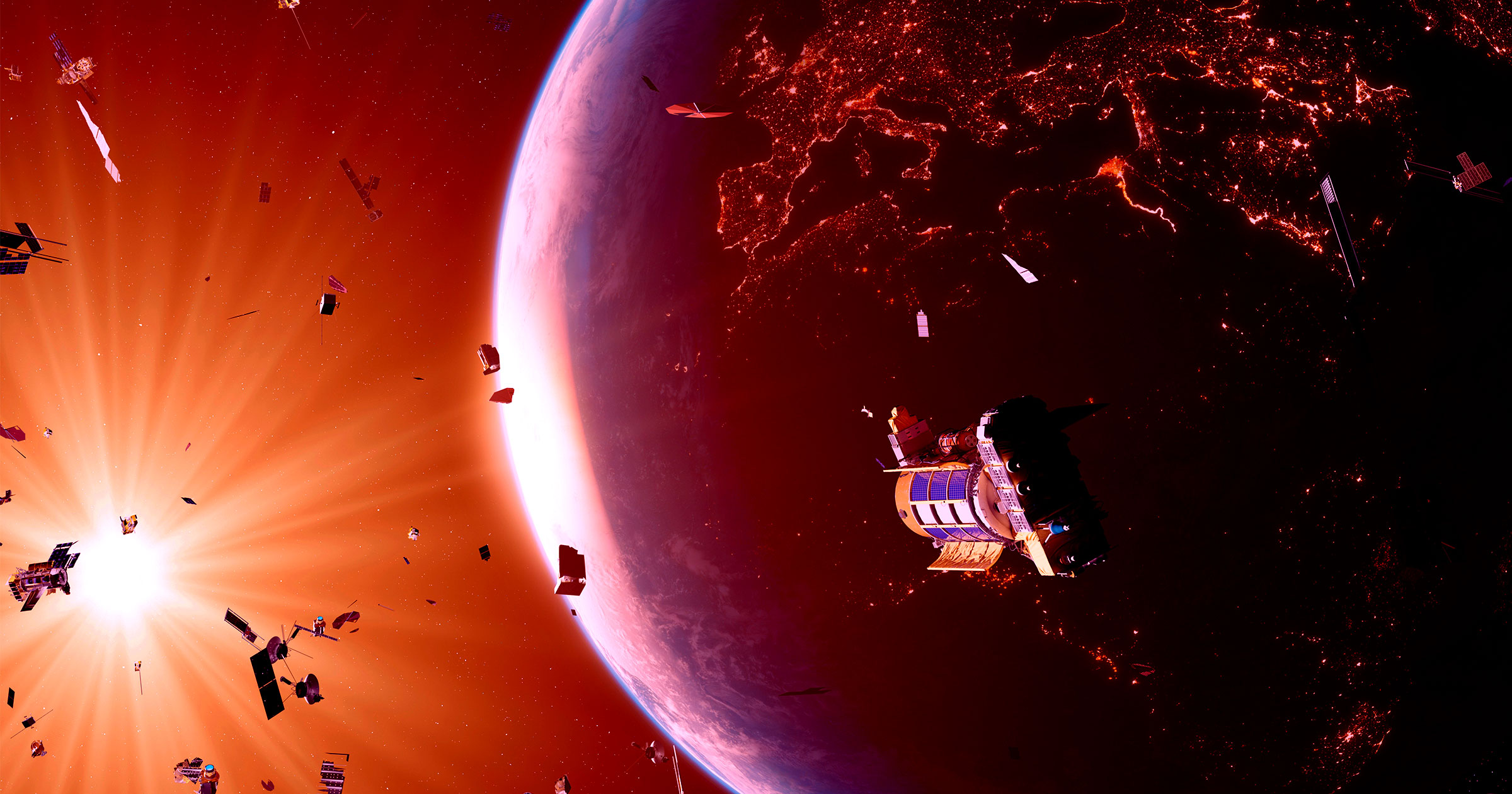
A new study underscores the escalating dangers posed by space debris, specifically through a metric known as the “Collision Realization and Significant Harm (CRASH) Clock.” Developed by an international team from Princeton University, the University of British Columbia, and the University of Regina, the CRASH Clock quantifies the potential for catastrophic collisions in Earth’s orbit, revealing alarming statistics that could impact future space exploration.
The concept of Kessler syndrome, introduced in a 1978 paper by NASA researcher Donald Kessler, describes a scenario where a single satellite collision could trigger a cascade of further accidents, creating a debris belt around the Earth. This phenomenon poses significant risks not only to astronauts but also to the viability of future space missions. The recent research has shown that the risks of such collisions have intensified, particularly since the rise of large satellite constellations.
In their paper, the researchers emphasize the urgent need for better metrics to assess the stress on the orbital environment. The CRASH Clock indicates that if no collision avoidance measures are implemented, a catastrophic collision could occur in as little as 2.8 days following a severe disruption, such as a powerful solar storm. This alarming timeframe highlights the vulnerabilities of current satellite operations. For context, a chaotic solar storm in May 2024 forced numerous satellites to adjust their orbits, making collision avoidance increasingly unpredictable.
The study reflects a dramatic shift in collision risk. In 2018, the CRASH Clock indicated a safer environment with a timeline of 121 days until a potential catastrophic event. Now, with the expansion of satellite networks, that number has drastically decreased. The researchers caution that while the development of collision cascades can take decades to unfold, a single incident can immediately stress the orbital environment.
The surge in satellite launches, particularly driven by companies like SpaceX, poses significant challenges. As of October 30, 2025, SpaceX has launched over 10,000 Starlink satellites, which makes up more than 60 percent of all active satellites in orbit. While these satellites are designed to burn up upon reentry, the sheer volume raises concerns about potential collisions and their environmental impact.
Recent incidents have accentuated these risks. On the same day as the study’s release, SpaceX announced the loss of contact with one of its Starlink satellites, which is expected to reenter Earth’s atmosphere shortly. The satellite’s trajectory places it below the International Space Station, reducing immediate risks. Yet, such mishaps raise questions about the safety protocols surrounding these vast satellite networks.
Moreover, the implications of Kessler syndrome extend beyond collision risks. The proliferation of satellites disrupts astronomical observations and could introduce pollutants into the upper atmosphere, potentially damaging the ozone layer. As the number of satellites continues to grow—projected to reach over 24,000 in the near future—calls for stricter regulations and oversight are becoming increasingly urgent.
In conclusion, the intricacies of Kessler syndrome and the associated risks are more pressing than ever. The CRASH Clock serves as a critical reminder of the vulnerabilities in our increasingly crowded orbital environment. As space exploration expands, addressing these challenges will be vital to ensure the safety and sustainability of activities beyond our planet.





Revolutionary Photonic Ski-Jump Could Miniaturize LiDAR Systems

Couples Detox from Plastics in New Netflix Doc: Can It Boost Fertility?

Aventon Launches Affordable Full-Suspension Electric Mountain Bike

Discover Eight Must-Try Restaurants This Spring Season

UC Irvine Team Unveils Innovative Ion Pump for Water Treatment

One-Third of Americans Trim Daily Expenses for Healthcare Needs

Apple Secures First Oscar in Three Years with F1: The Movie

Fourth Graders Celebrate St. Patrick’s Day with Creative Weather Drawings

Kim Kardashian Dazzles at Vanity Fair Oscars Party 2026

Nostradamus’ 2026 Predictions: Star Death and Dark Events Loom

Breakthroughs and Challenges Await Science in 2026

Electric Moto Influencer Surronster Arrested in Tijuana

OpenAI to Implement Age Verification for ChatGPT by December 2025

Discover the Top 10 Calorie Counting Apps of 2025

Bella Hadid Shares Health Update After Treatment for Lyme Disease

Analysts Project Stronger Growth for Apple’s iPhone 17 Lineup

Japanese Study Finds Rose Oil Can Increase Brain Gray Matter

Top 10 Penny Stocks to Watch in 2026 for Strong Returns
-
 Science3 months ago
Nostradamus’ 2026 Predictions: Star Death and Dark Events Loom
-
 Science4 months ago
Breakthroughs and Challenges Await Science in 2026
-
 Technology7 months ago
Electric Moto Influencer Surronster Arrested in Tijuana
-
 Technology4 months ago
OpenAI to Implement Age Verification for ChatGPT by December 2025
-
 Technology9 months ago
Discover the Top 10 Calorie Counting Apps of 2025
-
 Health7 months ago
Bella Hadid Shares Health Update After Treatment for Lyme Disease
-
 Health7 months ago
Analysts Project Stronger Growth for Apple’s iPhone 17 Lineup
-
 Health7 months ago
Japanese Study Finds Rose Oil Can Increase Brain Gray Matter
-
 Technology4 months ago
Top 10 Penny Stocks to Watch in 2026 for Strong Returns
-

 Science6 months ago
Starship V3 Set for 2026 Launch After Successful Final Test of Version 2
-

 Technology1 month ago
Nvidia GTC 2026: Major Announcements Expected for AI and Hardware
-

 Education7 months ago
Harvard Secures Court Victory Over Federal Funding Cuts