
Science
Grigori Perelman Solves Poincaré Conjecture in Groundbreaking Work

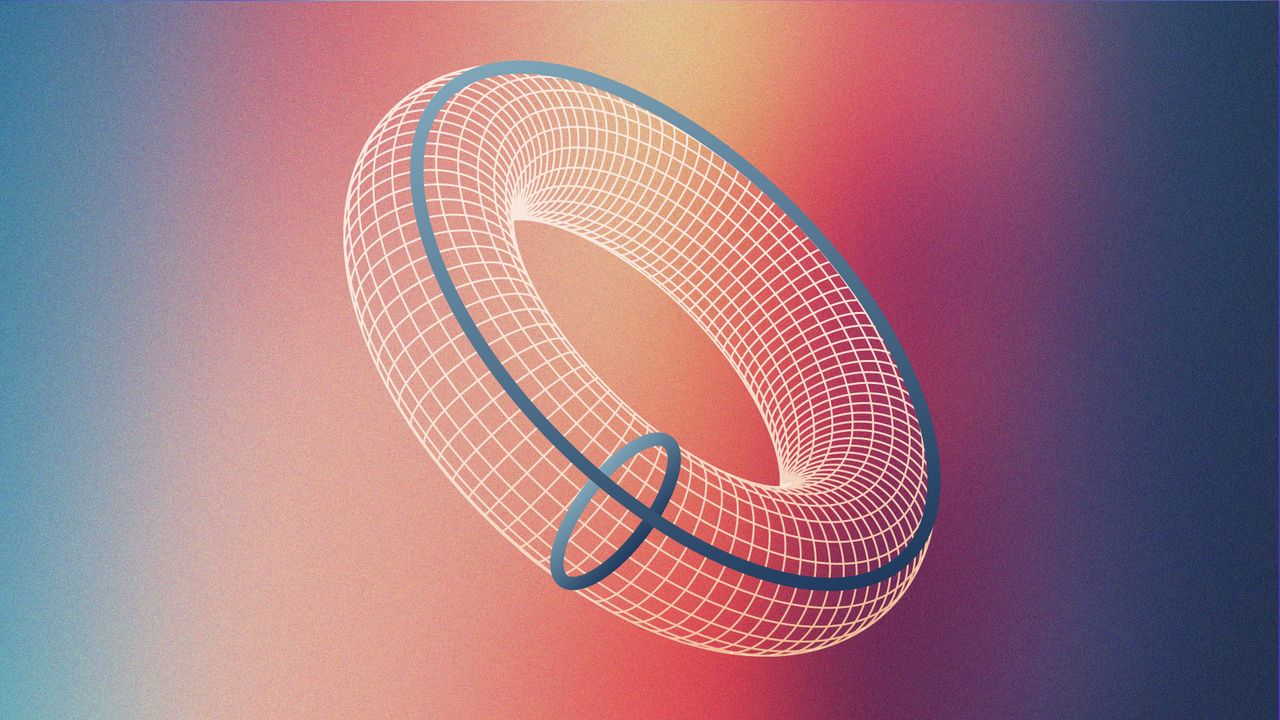
On November 11, 2002, Russian mathematician Grigori Perelman made a historic contribution to mathematics by publishing a paper that solved one of the most renowned unsolved problems in the field: the Poincaré conjecture. The paper, titled “The entropy formula for the Ricci flow and its geometric applications,” was made available on a public server, marking a significant milestone in mathematical history.
The Poincaré conjecture, formulated nearly a century earlier by Henri Poincaré, posits that any three-dimensional space that allows a two-dimensional loop to be continuously shrunk to a point without breaking the loop is equivalent to a sphere in mathematical terms. This conjecture is pivotal to the study of topology, the branch of mathematics concerned with the properties of space that are preserved under continuous transformations.
In the 1960s, mathematician Stephen Smale proved the conjecture for five-dimensional spaces, earning the prestigious Fields Medal in the process. However, the three-dimensional case remained elusive for decades. In the 1980s, Richard Hamilton at Columbia University proposed a method known as Ricci flow to tackle the conjecture. Ricci flow, reminiscent of using heat to smooth out surfaces, aimed to simplify complex geometrical shapes into more fundamental forms. Yet, this method faced challenges due to the emergence of singularities—points of infinite density.
Perelman’s groundbreaking work addressed the singularity problem, demonstrating that these complex shapes could ultimately reduce to simpler forms, such as spheres or tubes. His findings indicated that by following the Ricci process to its conclusion, one would arrive at a sphere as the final shape. Despite the complexity of his proofs, it took several years for the mathematical community to fully validate his claims.
In 2006, mathematicians John Morgan and Gang Tian published a comprehensive 473-page paper confirming that Perelman’s work indeed provided a solution to the Poincaré conjecture. This monumental achievement garnered Perelman significant recognition, including the Clay Millennium Prize of $1 million and the Fields Medal. Remarkably, Perelman declined both honors, reportedly due to dissatisfaction with how credit was allocated for the solution.
Before his breakthrough, Perelman had retreated from the mathematical community, spending much of the 1990s in relative isolation in St. Petersburg, Russia, after turning down prestigious opportunities abroad. Colleagues described him as reclusive and uninterested in material success. Following his 2002 publication, he presented his findings at various academic institutions but soon withdrew from public life again.
As of the early 2010s, Perelman was known to live a quiet life in St. Petersburg, caring for his elderly mother. Attempts by reporters to interview him were met with rejection; he famously stated, “You are disturbing me. I am picking mushrooms,” highlighting his desire for privacy.
Perelman’s resolution of the Poincaré conjecture not only marks an important moment in mathematics but also exemplifies the profound impact of individual contributions to the field. His work remains a focal point of research and discussion among mathematicians, ensuring his legacy within the mathematical community and beyond.

Revolutionary Photonic Ski-Jump Could Miniaturize LiDAR Systems

Couples Detox from Plastics in New Netflix Doc: Can It Boost Fertility?

Aventon Launches Affordable Full-Suspension Electric Mountain Bike

Discover Eight Must-Try Restaurants This Spring Season

UC Irvine Team Unveils Innovative Ion Pump for Water Treatment

One-Third of Americans Trim Daily Expenses for Healthcare Needs

Apple Secures First Oscar in Three Years with F1: The Movie

Fourth Graders Celebrate St. Patrick’s Day with Creative Weather Drawings

Kim Kardashian Dazzles at Vanity Fair Oscars Party 2026

Nostradamus’ 2026 Predictions: Star Death and Dark Events Loom

Breakthroughs and Challenges Await Science in 2026

Electric Moto Influencer Surronster Arrested in Tijuana

OpenAI to Implement Age Verification for ChatGPT by December 2025

Discover the Top 10 Calorie Counting Apps of 2025

Bella Hadid Shares Health Update After Treatment for Lyme Disease

Analysts Project Stronger Growth for Apple’s iPhone 17 Lineup

Japanese Study Finds Rose Oil Can Increase Brain Gray Matter

Top 10 Penny Stocks to Watch in 2026 for Strong Returns
-
 Science4 months ago
Nostradamus’ 2026 Predictions: Star Death and Dark Events Loom
-
 Science4 months ago
Breakthroughs and Challenges Await Science in 2026
-
 Technology7 months ago
Electric Moto Influencer Surronster Arrested in Tijuana
-
 Technology4 months ago
OpenAI to Implement Age Verification for ChatGPT by December 2025
-
 Technology9 months ago
Discover the Top 10 Calorie Counting Apps of 2025
-
 Health7 months ago
Bella Hadid Shares Health Update After Treatment for Lyme Disease
-
 Health7 months ago
Analysts Project Stronger Growth for Apple’s iPhone 17 Lineup
-
 Health7 months ago
Japanese Study Finds Rose Oil Can Increase Brain Gray Matter
-
 Technology4 months ago
Top 10 Penny Stocks to Watch in 2026 for Strong Returns
-

 Science6 months ago
Starship V3 Set for 2026 Launch After Successful Final Test of Version 2
-

 Technology1 month ago
Nvidia GTC 2026: Major Announcements Expected for AI and Hardware
-

 Education7 months ago
Harvard Secures Court Victory Over Federal Funding Cuts