
Science
Astronomers Discover Massive Lava Tube on Venus, Expanding Knowledge

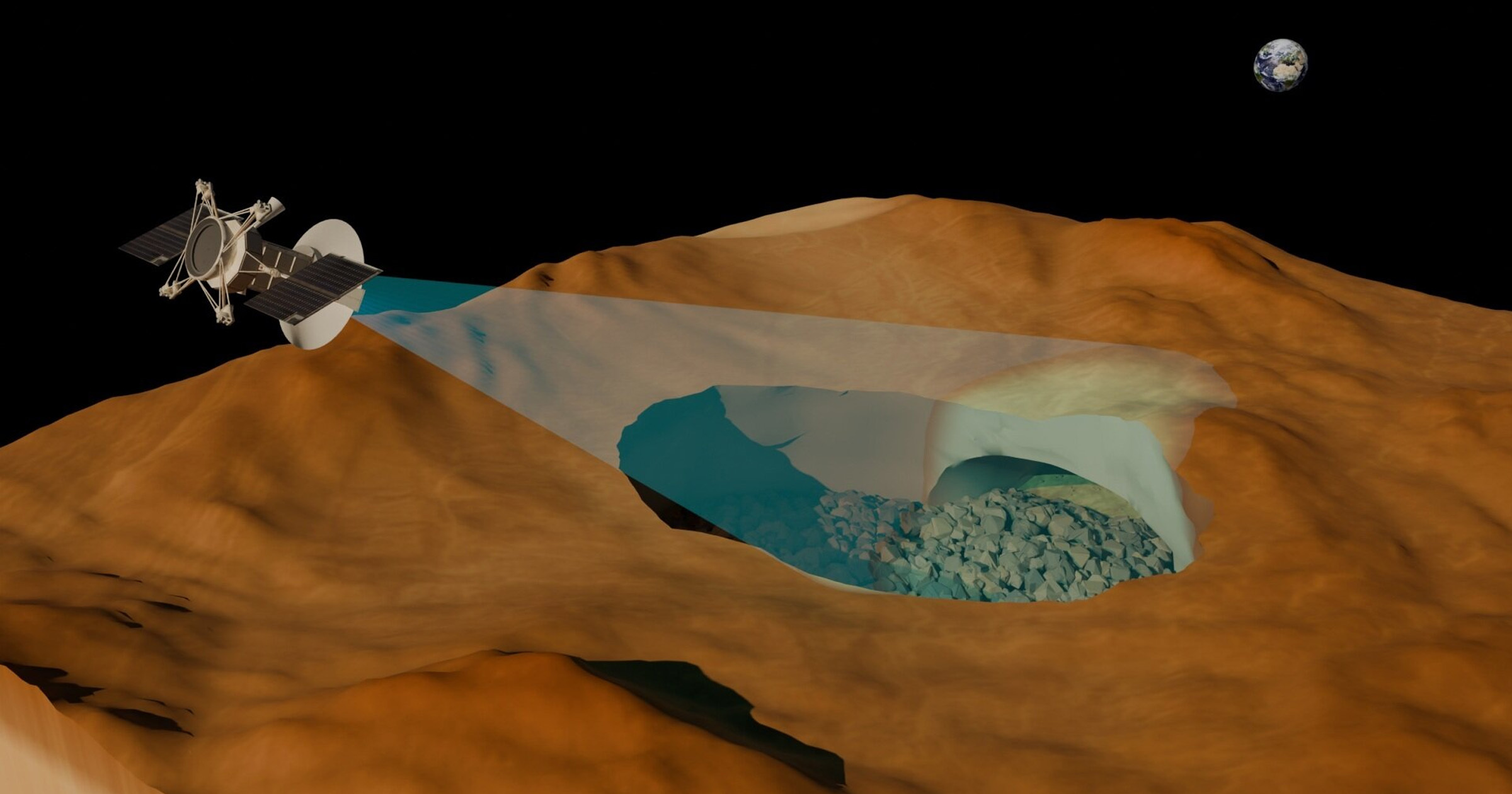
Astronomers have uncovered a substantial lava tube beneath the surface of Venus, marking a significant advancement in our understanding of the planet’s geology. The discovery, detailed in a study published in Nature Communications, provides compelling evidence that Venus is extensively tunneled by lava tubes, known as pyroducts.
The research team, including coauthor Lorenzo Bruzzone from the University of Trento, emphasized the importance of this finding. “Our knowledge of Venus is still limited, and until now we have never had the opportunity to directly observe processes occurring beneath the surface of Earth’s twin planet,” Bruzzone stated. The identification of this volcanic cavity validates long-standing theories about the planet’s geological history.
Venus, often referred to as Earth’s twin, has a surface marked by countless volcanoes and extensive volcanic plains. For years, scientists have suspected that lava tubes exist on the planet, supported by evidence of recent volcanic activity. Despite this, direct detection of such structures had remained elusive. The challenges imposed by Venus’s dense atmosphere and extreme surface temperatures, which exceed 870 degrees Fahrenheit, complicated observations of subsurface features.
Utilizing radar technology, researchers were able to penetrate the thick clouds of sulfur and carbon dioxide enveloping Venus. They analyzed data collected by NASA’s Magellan spacecraft, which operated from 1990 to 1992, using its Synthetic Aperture Radar (SAR). This radar method transmits radio waves toward the surface, measuring the time it takes for the waves to return after interacting with the terrain.
By processing these radar signals, the team created a detailed map of the Venusian surface. They focused on areas showing signs of localized surface collapses using an imaging technique developed specifically to detect underground conduits near skylights—holes formed when the roofs of lava tubes collapse.
The analysis revealed a significant subsurface conduit in the region of Nyx Mons, a shield volcano measuring a remarkable 225 miles in diameter. The researchers propose that this conduit is a lava tube, with an estimated diameter of around one kilometer. This size surpasses similar structures found on both Earth and Mars, aligning with scientific predictions.
“The available data allow us to confirm and measure only the portion of the cavity close to the skylight,” Bruzzone explained. “However, analysis of the morphology and elevation of the surrounding terrain, together with the presence of other pits similar to the one studied, supports the hypothesis that the subsurface conduits may extend for at least 45 kilometers.”
To further verify this hypothesis and identify additional lava tubes, the team calls for new, high-resolution images and data from radar systems capable of deeper surface penetration. This future research could provide even more insights into the volcanic history of Venus and its geological processes.
The identification of this lava tube represents a pivotal moment in planetary science, enhancing our understanding of Venus and its tumultuous volcanic landscape. As scientists continue to explore the depths of this enigmatic planet, each discovery reveals more about its past and the processes that have shaped it.









Antarctica’s Gravity Anomaly Sheds Light on Earth’s Interior Dynamics

Muscle Power Linked to Longevity: A New Health Insight

LightPath Technologies Outperforms Axion Power in Key Metrics

Dive into Self-Discovery with Proust on The Cosmic Library

Kendall Jenner Dazzles in Bold Crop Top for Vogue France

Avidity Biosciences Set to Release Q4 Earnings on February 26

Sleep Apnea: Understanding a Hidden Health Challenge

Bitcoin Faces Critical Test as Fear & Greed Index Plummets to 5

AAUW Grant Recipient Kate McKinney Inspires Future Mathematicians

Nostradamus’ 2026 Predictions: Star Death and Dark Events Loom

OpenAI to Implement Age Verification for ChatGPT by December 2025

Discover the Top 10 Calorie Counting Apps of 2025

Electric Moto Influencer Surronster Arrested in Tijuana

Bella Hadid Shares Health Update After Treatment for Lyme Disease

Breakthroughs and Challenges Await Science in 2026

Analysts Project Stronger Growth for Apple’s iPhone 17 Lineup

Top 10 Penny Stocks to Watch in 2026 for Strong Returns

Harvard Secures Court Victory Over Federal Funding Cuts
-
 Science2 months ago
Nostradamus’ 2026 Predictions: Star Death and Dark Events Loom
-
 Technology3 months ago
OpenAI to Implement Age Verification for ChatGPT by December 2025
-
 Technology7 months ago
Discover the Top 10 Calorie Counting Apps of 2025
-
 Technology5 months ago
Electric Moto Influencer Surronster Arrested in Tijuana
-
 Health5 months ago
Bella Hadid Shares Health Update After Treatment for Lyme Disease
-
 Science2 months ago
Breakthroughs and Challenges Await Science in 2026
-
 Health6 months ago
Analysts Project Stronger Growth for Apple’s iPhone 17 Lineup
-
 Technology2 months ago
Top 10 Penny Stocks to Watch in 2026 for Strong Returns
-
 Education6 months ago
Harvard Secures Court Victory Over Federal Funding Cuts
-

 Health6 months ago
Erin Bates Shares Recovery Update Following Sepsis Complications
-

 Science4 months ago
Starship V3 Set for 2026 Launch After Successful Final Test of Version 2
-

 Technology7 months ago
Meta Initiates $60B AI Data Center Expansion, Starting in Ohio