
Science
Ancient Rocks Uncover Secrets of Earth and Moon Formation

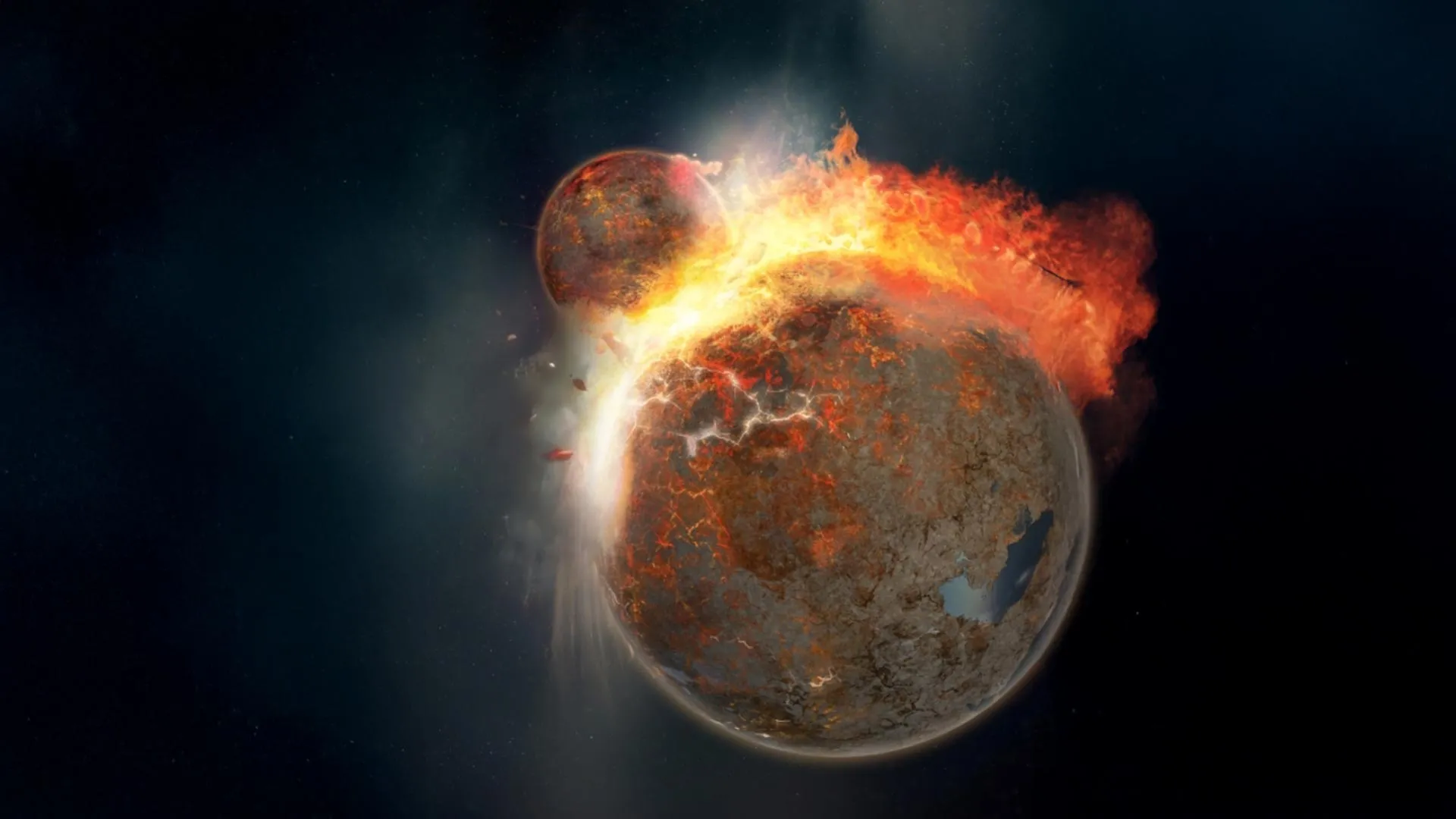
Research into ancient rocks has provided significant insights into the formation of Earth and the Moon. A team of scientists has discovered that tiny feldspar crystals within Australia’s oldest volcanic rocks reveal new details about the early history of our planet. The findings suggest that Earth’s continents did not begin to form until hundreds of millions of years after the planet’s initial creation.
Understanding Earth’s Early Crust
The study, led by PhD student Matilda Boyce from the University of Western Australia, involved collaboration with researchers from the University of Bristol, the Geological Survey of Western Australia, and Curtin University. The results of this research were published in the journal Nature Communications. The scientists focused on anorthosites, a type of rock that formed approximately 3.7 billion years ago in the Murchison region of Western Australia. These rocks rank among the oldest known on Earth, making them invaluable for understanding the planet’s early development.
According to Boyce, the timeline and rate of early crustal growth on Earth have been subjects of debate due to the limited availability of very ancient rock samples. To address this, the research team utilized high-precision analytical techniques to examine pristine sections of plagioclase feldspar crystals. These crystals contain isotopic “fingerprints” that provide insights into the conditions of Earth’s early mantle, offering a rare glimpse into the planet’s formative years.
Insights into Continental Formation and Lunar Links
The chemical evidence from this research indicates that Earth’s continents did not emerge immediately after the planet’s formation. Instead, significant continental growth likely began around 3.5 billion years ago, roughly one billion years after Earth took shape. This revised timeline alters longstanding assumptions about the speed at which Earth developed its continents, providing critical context for the understanding of its early evolution.
In a notable aspect of the study, the researchers compared their findings with data from lunar samples collected during NASA’s Apollo missions. Boyce noted that while anorthosites are rare on Earth, they are prevalent on the Moon. The data revealed a consistent composition between Earth and Moon anorthosites, suggesting that both bodies shared similar starting materials around 4.5 billion years ago. This evidence supports the hypothesis that a massive impact involving an early celestial body played a crucial role in the Moon’s formation.
The research received support from the Australian Research Council, highlighting the importance of collaborative efforts in advancing our understanding of planetary science. As scientists continue to study these ancient rocks, they unlock secrets that could reshape our knowledge of the origins of both Earth and its lunar companion.







Revolutionary Photonic Ski-Jump Could Miniaturize LiDAR Systems

Couples Detox from Plastics in New Netflix Doc: Can It Boost Fertility?

Aventon Launches Affordable Full-Suspension Electric Mountain Bike

Discover Eight Must-Try Restaurants This Spring Season

UC Irvine Team Unveils Innovative Ion Pump for Water Treatment

One-Third of Americans Trim Daily Expenses for Healthcare Needs

Apple Secures First Oscar in Three Years with F1: The Movie

Fourth Graders Celebrate St. Patrick’s Day with Creative Weather Drawings

Kim Kardashian Dazzles at Vanity Fair Oscars Party 2026

Nostradamus’ 2026 Predictions: Star Death and Dark Events Loom

Breakthroughs and Challenges Await Science in 2026

Electric Moto Influencer Surronster Arrested in Tijuana

OpenAI to Implement Age Verification for ChatGPT by December 2025

Discover the Top 10 Calorie Counting Apps of 2025

Bella Hadid Shares Health Update After Treatment for Lyme Disease

Analysts Project Stronger Growth for Apple’s iPhone 17 Lineup

Japanese Study Finds Rose Oil Can Increase Brain Gray Matter

Top 10 Penny Stocks to Watch in 2026 for Strong Returns
-
 Science4 months ago
Nostradamus’ 2026 Predictions: Star Death and Dark Events Loom
-
 Science4 months ago
Breakthroughs and Challenges Await Science in 2026
-
 Technology7 months ago
Electric Moto Influencer Surronster Arrested in Tijuana
-
 Technology4 months ago
OpenAI to Implement Age Verification for ChatGPT by December 2025
-
 Technology9 months ago
Discover the Top 10 Calorie Counting Apps of 2025
-
 Health7 months ago
Bella Hadid Shares Health Update After Treatment for Lyme Disease
-
 Health7 months ago
Analysts Project Stronger Growth for Apple’s iPhone 17 Lineup
-
 Health7 months ago
Japanese Study Finds Rose Oil Can Increase Brain Gray Matter
-
 Technology4 months ago
Top 10 Penny Stocks to Watch in 2026 for Strong Returns
-

 Science6 months ago
Starship V3 Set for 2026 Launch After Successful Final Test of Version 2
-

 Technology2 months ago
Nvidia GTC 2026: Major Announcements Expected for AI and Hardware
-

 Education7 months ago
Harvard Secures Court Victory Over Federal Funding Cuts