
Lifestyle
Florida Announces 2025 Black Bear Hunt Results and Insights

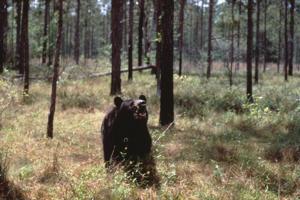
The Florida Fish and Wildlife Conservation Commission (FWC) has reported that a total of 52 black bears were harvested during the state’s 2025 black bear hunt, which was conducted under new regulations approved earlier this year. The hunt occurred within designated Bear Hunting Zones established in four of the state’s seven Bear Management Units.
Following public consultations held in August and November 2025, the FWC commissioners finalized amendments to the bear hunting rules. These changes came into effect for the 2025 hunting season, allowing the issuance of 172 permits through a random drawing across the East Panhandle, North, Central, and South units. Each permit authorized the harvest of one bear within a specified zone, reflecting a management strategy aimed at sustaining bear populations.
FWC Executive Director Roger Young remarked on the success of this regulated hunt, stating, “The 2025 black bear hunt, rooted in sound scientific data, was a success.” He highlighted the agency’s commitment to joining over 30 states that utilize regulated hunting as a method of wildlife management. The limited number of permits, issued in areas with the largest bear populations, underscores a conservative approach to ensure the long-term health of Florida’s bear populations.
Management and Compliance Efforts
The FWC emphasized the importance of regulated hunting as a foundational wildlife management tool. George Warthen, Chief Conservation Officer, noted that hunting plays a vital role in managing wildlife populations globally, aligning with the principles of the North American Model of Wildlife Conservation. He stated, “It’s about helping bears succeed over the long term in our state and is a way for us to guide an iconic Florida species into the future, for their benefit and ours.”
In preparation for the hunt, the FWC Division of Law Enforcement enhanced staffing and outreach efforts, focusing on education and compliance. During the hunt, officials interacted with numerous hunters, resulting in only one warning issued for a minor violation in a Wildlife Management Area, with no citations filed. Col. Alberto Maza, director of the FWC Division of Law Enforcement, affirmed, “Our officers maintained a strong, engaged presence throughout the hunt to help ensure it was conducted safely and legally.” He emphasized that the primary focus was on education to support the goals of the agency’s Bear Management Plan.
The regulated hunting strategy is part of the 2019 Florida Black Bear Management Plan, which aims to manage population growth effectively in areas hosting significant bear subpopulations. While hunting can assist in managing wildlife numbers, FWC officials noted that it does not inherently reduce human-bear conflicts, which continue to necessitate ongoing education and prevention initiatives.
For further details on regulated bear hunting in Florida, visit MyFWC.com/hunting/bear. Additional tips on minimizing human-bear conflicts and general information about black bears can be found at MyFWC.com/wildlifehabitats by selecting “Wildlife” and then “Black Bears,” as well as at BearWise.org.

Gluteus Maximus Shape Reveals Key Insights into Metabolic Health

Music Streaming Highlights of 2025: Nostalgia Dominates Playlists

Discover Culinary Delights in a Unique Steak & Bacon Class

Critics Choice Awards 2026: Top Nominations and Highlights Revealed

NASA Launches STELLA Project to Democratize Remote Sensing Science

Researchers Uncover Muscle Shape Links to Metabolic Health

Bristol Palin Provides Update on Ongoing Facial Paralysis Battle

Higher Education Faces Serious Challenges Amid Changing Values

Aid Worker Heads to Caracas to Address Ongoing Humanitarian Crisis

Nostradamus’ 2026 Predictions: Star Death and Dark Events Loom

OpenAI to Implement Age Verification for ChatGPT by December 2025

Discover the Top 10 Calorie Counting Apps of 2025

Bella Hadid Shares Health Update After Treatment for Lyme Disease

Analysts Project Stronger Growth for Apple’s iPhone 17 Lineup

Erin Bates Shares Recovery Update Following Sepsis Complications

Electric Moto Influencer Surronster Arrested in Tijuana

Discover How to Reverse Image Search Using ChatGPT Effortlessly

Meta Initiates $60B AI Data Center Expansion, Starting in Ohio
-
 Science1 week ago
Nostradamus’ 2026 Predictions: Star Death and Dark Events Loom
-
 Technology1 month ago
OpenAI to Implement Age Verification for ChatGPT by December 2025
-
 Technology6 months ago
Discover the Top 10 Calorie Counting Apps of 2025
-
 Health4 months ago
Bella Hadid Shares Health Update After Treatment for Lyme Disease
-
 Health4 months ago
Analysts Project Stronger Growth for Apple’s iPhone 17 Lineup
-
 Health4 months ago
Erin Bates Shares Recovery Update Following Sepsis Complications
-
 Technology4 months ago
Electric Moto Influencer Surronster Arrested in Tijuana
-
 Technology5 months ago
Discover How to Reverse Image Search Using ChatGPT Effortlessly
-
 Technology6 months ago
Meta Initiates $60B AI Data Center Expansion, Starting in Ohio
-

 Technology6 months ago
Recovering a Suspended TikTok Account: A Step-by-Step Guide
-

 Technology2 months ago
Discover 2025’s Top GPUs for Exceptional 4K Gaming Performance
-

 Health5 months ago
Tested: Rab Firewall Mountain Jacket Survives Harsh Conditions