
Education
Pittsburgh Schools Launch New Literacy Initiative After Low Scores

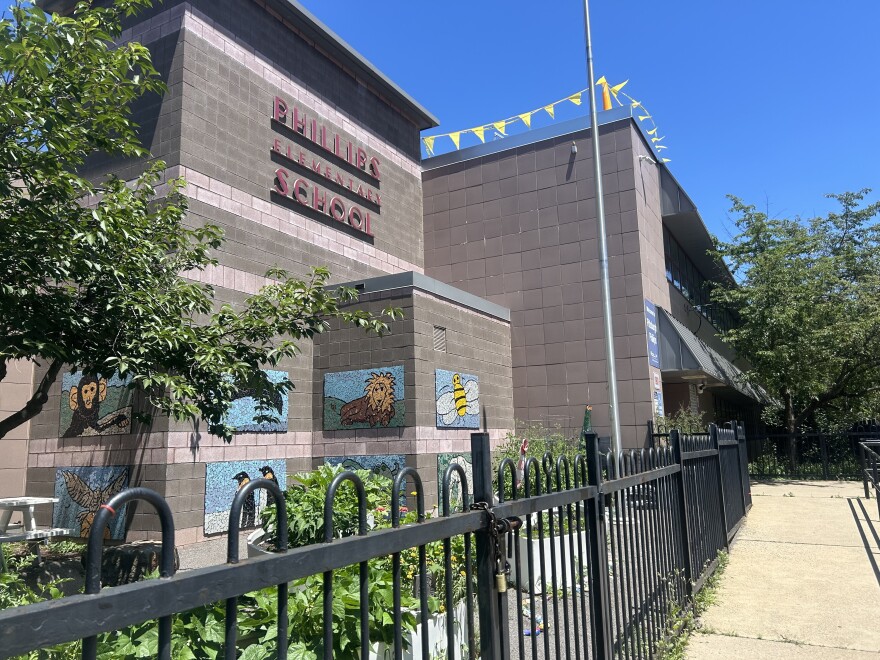
Pittsburgh Public Schools (PPS) is renewing its commitment to literacy after only 44% of third graders demonstrated proficiency in reading on state assessments for the 2024-2025 school year. This represents a slight decline from 46% in the previous year. During a presentation on the results of the Pennsylvania System of School Assessment (PSSA), Superintendent Wayne Walters attributed the disappointing scores to “inconsistent implementation” of reading programs across the district.
Walters emphasized the necessity for teachers to receive additional training focused on reading instruction. He stated, “It has to be across the board because there’s not a content area where reading is not a necessity.” Research indicates that students who do not achieve reading proficiency by the end of third grade are at a higher risk of falling behind in their education.
The situation is particularly concerning when compared to statewide statistics, where 48.6% of third graders were deemed proficient or advanced in reading. In contrast, less than a third of PPS schools met or exceeded this benchmark, while nearly two-thirds fell short.
In response to these challenges, PPS had previously announced plans to enhance its reading programs by introducing literacy coaches in elementary schools, sharing effective practices among schools, and tailoring instruction to meet diverse student needs. However, Walters noted that not all schools have dedicated coaches, which has hindered the level of support available for teachers.
Assistant Superintendent Shawn McNeil highlighted discrepancies in the implementation of these strategies, suggesting that some principals had not allocated enough time for classroom observations and that teachers lacked the structured opportunities to analyze data effectively. “Because of this, it was harder to make quick adjustments to instruction,” McNeil explained.
Looking ahead, district leaders are committed to aligning educational practices with the principles of the science of reading, which advocates for systematic phonics instruction. Starting in January 2024, PPS plans to roll out a mandatory training course in the science of reading for all K-3 teachers and principals. Additionally, the district will publish a comprehensive playbook designed to provide immediate and practical guidance for educators.
In line with new state requirements, all Pennsylvania schools must adopt an evidence-based reading curriculum by 2027. Schools will be obligated to report their chosen curriculum and the number of educators who have completed the necessary training. Furthermore, schools will need to screen students in kindergarten through third grade at least three times a year to evaluate their reading proficiency and to offer additional support to those who are below grade level.
The urgency of addressing these literacy challenges is underscored by national data, which shows that only one-third of fourth graders in Pennsylvania were proficient in reading according to national standards, as reported by the National Assessment of Educational Progress.
“There’s a national challenge, there is a state challenge, and we have a local challenge,” Walters stated, acknowledging the broader context of educational difficulties.
To further investigate its reading curriculum, PPS commissioned a report from the Reading League to assess the effectiveness of the Open Court Reading program adopted in 2023. The findings of this report were not discussed during the recent board meeting.
Newly appointed board member Tawana Cook Purnell suggested the district consider “departmentalizing” its elementary teaching staff, allowing the most skilled reading instructors to concentrate solely on teaching reading. Purnell recently succeeded Sylvia Wilson, a long-serving board member who retired after a lengthy career in education.
“We have to make reading a priority, teach reading across the curriculum, look at best practices, and devote more time to reading during the school day,” Purnell urged her colleagues.
School board president Gene Walker reinforced the need for a clear vision and strategy moving forward, especially as discussions on the district’s facilities and reconfiguration plans resume. Recently, the board rejected a proposal to close nine school buildings and implement other significant changes.
“We need to flood our students in schools that are disproportionately failing with so much resource that they don’t have any choice but to succeed,” Walker concluded, emphasizing the district’s commitment to improving literacy outcomes for all students.












Experience the Spectacular Geminid Meteor Shower This December

Yale Study Identifies Key Pathway Linked to Pulmonary Fibrosis

EU Credits Digital Markets Act for Streamlined Data Transfer

Avon Schools’ Kelly Gonzales Joins Polaris Career Center

Burnley Bars Raise £1,500 for Christmas Present Appeal

Experience the Spectacular Geminid Meteor Shower This December

UCI Health Launches Largest All-Electric Hospital in the U.S.

VITAS Healthcare Cyberattack Exposes Data of 319,177 Patients

Cornell Unveils Innovative Cake-Pan Telescope to Study Cosmic Bursts

Discover the Top 10 Calorie Counting Apps of 2025

Bella Hadid Shares Health Update After Treatment for Lyme Disease

OpenAI to Implement Age Verification for ChatGPT by December 2025

Erin Bates Shares Recovery Update Following Sepsis Complications

Discover How to Reverse Image Search Using ChatGPT Effortlessly

Electric Moto Influencer Surronster Arrested in Tijuana

Discover 2025’s Top GPUs for Exceptional 4K Gaming Performance

Analysts Project Stronger Growth for Apple’s iPhone 17 Lineup

Meta Initiates $60B AI Data Center Expansion, Starting in Ohio
-
 Technology5 months ago
Discover the Top 10 Calorie Counting Apps of 2025
-
 Health3 months ago
Bella Hadid Shares Health Update After Treatment for Lyme Disease
-
 Technology1 week ago
OpenAI to Implement Age Verification for ChatGPT by December 2025
-
 Health3 months ago
Erin Bates Shares Recovery Update Following Sepsis Complications
-
 Technology4 months ago
Discover How to Reverse Image Search Using ChatGPT Effortlessly
-
 Technology3 months ago
Electric Moto Influencer Surronster Arrested in Tijuana
-
 Technology1 month ago
Discover 2025’s Top GPUs for Exceptional 4K Gaming Performance
-
 Health3 months ago
Analysts Project Stronger Growth for Apple’s iPhone 17 Lineup
-
 Technology5 months ago
Meta Initiates $60B AI Data Center Expansion, Starting in Ohio
-

 Technology5 months ago
Recovering a Suspended TikTok Account: A Step-by-Step Guide
-

 Health5 months ago
Tested: Rab Firewall Mountain Jacket Survives Harsh Conditions
-

 Lifestyle5 months ago
Belton Family Reunites After Daughter Survives Hill Country Floods