
Education
Nature Sparks Creativity in Young Learners Across Philadelphia

Research indicates that exposure to nature can significantly enhance children’s creativity, reduce stress, and improve attention spans. In Philadelphia, initiatives like nature preschools are embracing these findings, allowing children to engage with their environment in innovative ways. This approach not only fosters a love for learning but also encourages exploration and imaginative play.
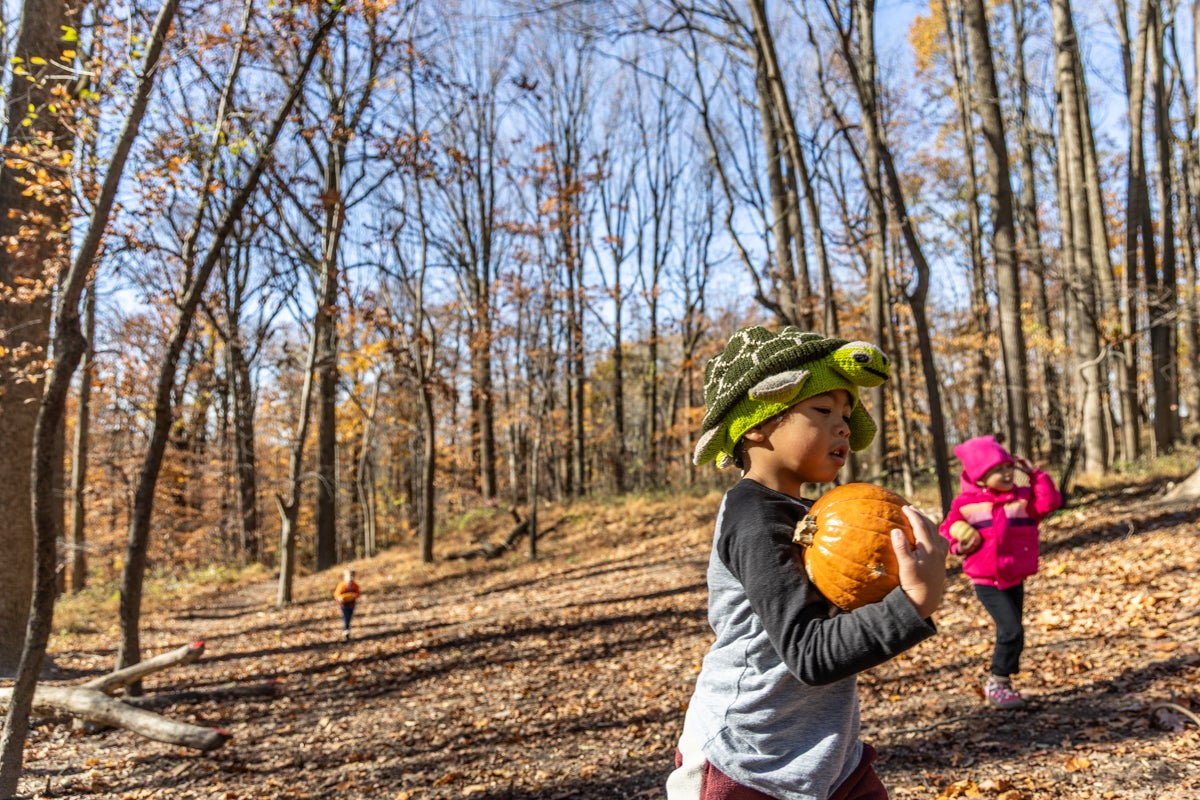
In a wooded area of northwest Philadelphia, four-year-old Alvin Lingat-Santiago demonstrates this potential. Under the autumn canopy, he enthusiastically declares, “I love marble runs!” as he watches a pumpkin roll down a hill. As a student at the Schuylkill Center for Environmental Education, Alvin and his peers spend a significant portion of their day outdoors, engaging with the natural world around them.
Learning in this setting is not confined to traditional classroom activities. Instead, children are encouraged to make their own discoveries. For instance, after Halloween, the preschool class utilized pumpkins for play, demonstrating how nature can inspire creativity in unexpected ways. According to Sarah Watrud, director of early childhood education at the Schuylkill Center, “If they’re tired and dirty at the end of the day, we’ve done our job.”
Unlocking Creative Potential Through Nature
The benefits of nature-based education extend beyond physical activity. Cathy Jordan, a professor of pediatrics at the University of Minnesota, highlights that nature stimulates children’s creativity through sensory engagement. “Nature provides many, many doors,” she states, emphasizing that the open-ended play opportunities in natural settings allow children to explore and express their creativity freely.
In a nearby clearing, five-year-old Sloane Dymond is busy constructing a fairy house using sticks and dirt. “This is a driveway to go to the vegetable store,” she explains as she clears the ground. Such imaginative play illustrates Jordan’s concept of creativity as a room with many doors, all of which remain open when children are given the freedom to explore.
Nature not only facilitates creativity but also encourages problem-solving and critical thinking. Linda Hestenes, a professor at the University of North Carolina at Greensboro, notes that effective nature-based education requires teachers to foster inquiry through open-ended questions and allow children to explore their surroundings. She asserts that high-quality teaching methods are essential for maximizing the benefits of outdoor learning.
Enhancing Access to Nature-Based Learning
Programs like Tiny Trekkers, founded by education advocate Elaine Wells, aim to bridge gaps in access to nature for underrepresented communities. Tiny Trekkers engages children aged 2 to 9 and their parents in outdoor activities such as kayaking and exploring local wildlife. Wells emphasizes the importance of allowing children to lead their learning experiences, which fosters a sense of adventure and curiosity.
Despite the recognized benefits of nature-based learning, research by the Natural Start Alliance indicates that such programs are predominantly attended by white children. Wells advocates for increasing access for Black and Hispanic families to outdoor activities, which she believes are often perceived as exclusive or financially inaccessible.
In Philadelphia, initiatives are underway to expose students to the benefits of nature. The School District of Philadelphia collaborates with organizations like Outward Bound to provide outdoor adventures, while some schools are redesigning spaces to include gardens and nature clubs. Still, Wells argues that more funding and support are necessary to ensure that all students can experience the advantages of nature.
The connection between nature and creativity is profound. As Cathy Jordan puts it, “There’s so much advantage across so many areas of kids’ lives and development through nature play and nature-based learning.” This sentiment underscores the necessity for equitable access to such enriching experiences, ensuring that children can explore their creativity in an environment that nurtures their development.
Incorporating nature into education not only benefits individual students but can also transform the educational landscape. As educators and advocates work together to enhance access to these opportunities, the potential for fostering creativity in future generations remains bright.












Revolutionary Photonic Ski-Jump Could Miniaturize LiDAR Systems

Couples Detox from Plastics in New Netflix Doc: Can It Boost Fertility?

Aventon Launches Affordable Full-Suspension Electric Mountain Bike

Discover Eight Must-Try Restaurants This Spring Season

UC Irvine Team Unveils Innovative Ion Pump for Water Treatment

One-Third of Americans Trim Daily Expenses for Healthcare Needs

Apple Secures First Oscar in Three Years with F1: The Movie

Fourth Graders Celebrate St. Patrick’s Day with Creative Weather Drawings

Kim Kardashian Dazzles at Vanity Fair Oscars Party 2026

Nostradamus’ 2026 Predictions: Star Death and Dark Events Loom

Breakthroughs and Challenges Await Science in 2026

Electric Moto Influencer Surronster Arrested in Tijuana

OpenAI to Implement Age Verification for ChatGPT by December 2025

Discover the Top 10 Calorie Counting Apps of 2025

Bella Hadid Shares Health Update After Treatment for Lyme Disease

Analysts Project Stronger Growth for Apple’s iPhone 17 Lineup

Japanese Study Finds Rose Oil Can Increase Brain Gray Matter

Top 10 Penny Stocks to Watch in 2026 for Strong Returns
-
 Science4 months ago
Nostradamus’ 2026 Predictions: Star Death and Dark Events Loom
-
 Science4 months ago
Breakthroughs and Challenges Await Science in 2026
-
 Technology7 months ago
Electric Moto Influencer Surronster Arrested in Tijuana
-
 Technology4 months ago
OpenAI to Implement Age Verification for ChatGPT by December 2025
-
 Technology9 months ago
Discover the Top 10 Calorie Counting Apps of 2025
-
 Health7 months ago
Bella Hadid Shares Health Update After Treatment for Lyme Disease
-
 Health7 months ago
Analysts Project Stronger Growth for Apple’s iPhone 17 Lineup
-
 Health7 months ago
Japanese Study Finds Rose Oil Can Increase Brain Gray Matter
-
 Technology4 months ago
Top 10 Penny Stocks to Watch in 2026 for Strong Returns
-

 Science6 months ago
Starship V3 Set for 2026 Launch After Successful Final Test of Version 2
-

 Technology1 month ago
Nvidia GTC 2026: Major Announcements Expected for AI and Hardware
-

 Education7 months ago
Harvard Secures Court Victory Over Federal Funding Cuts