
Science
NIH Cuts MOSAIC Program, Impacting Hundreds of Early-Career Researchers

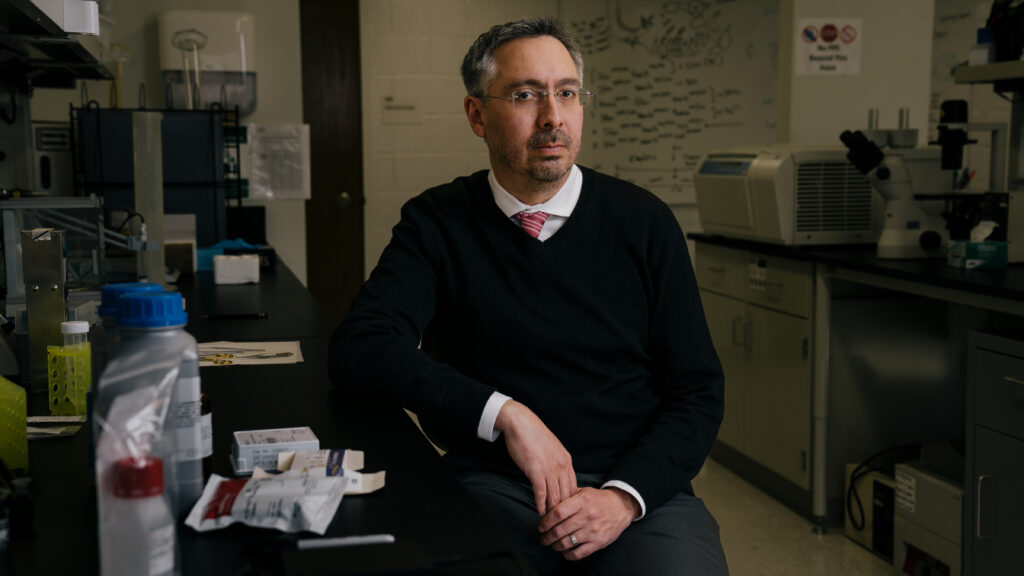
The National Institutes of Health (NIH) has discontinued the MOSAIC program, a grant initiative aimed at supporting early-career researchers, leaving hundreds of scientists in a precarious position. The program, which was designed to facilitate the transition of postdoctoral researchers to independent lab heads, was terminated due to perceived conflicts with the Trump administration’s executive order on diversity, equity, and inclusion (DEI) initiatives.
The MOSAIC program, formally known as Maximizing Opportunities for Scientific and Academic Independent Careers, was established to address two significant issues: the lack of diversity among NIH-funded investigators and the challenges faced by postdoctoral researchers. The funding model offered up to $125,000 per year for two years of postdoctoral research and subsequent support of up to $249,000 annually for three years as tenure-track professors.
During its brief existence, MOSAIC successfully helped numerous scholars navigate the complex landscape of early academic careers. However, the program’s elimination has left many researchers scrambling for financial support. According to Grant Witness, an independent project monitoring NIH grant terminations, a total of 104 researchers had their MOSAIC funding cut. Some of these grants have been temporarily restored under a court order, but many recipients, like Luis Rodriguez, are now facing uncertainty.
Rodriguez, a molecular biologist at George Washington University, noted that he depended on his MOSAIC grant to finance his research on lung diseases. “I think everyone has their own horror story,” he expressed, highlighting the emotional toll this funding loss has taken on early-career scientists. The NIH’s decision to terminate the program has coincided with a broader decline in funding for early-career researchers. A recent analysis by STAT revealed that the NIH awarded 172 fewer transition grants in the nine months leading up to the government shutdown compared to the previous year, marking a 10% decrease.
The NIH’s response to inquiries regarding the program’s elimination emphasized a shift in focus towards maximizing the impact of taxpayer dollars. NIH Director Jay Bhattacharya stated that the agency remains committed to supporting early-career researchers, despite the funding cuts. He has acknowledged the importance of providing career continuity for those in the early stages of their scientific careers.
Experts have raised concerns about the long-term implications of these funding cuts. Tara Schwetz, a former NIH deputy director, expressed her worries about the impact on the scientific workforce. “The interest in science is shifting in the wrong direction, and I don’t think that’s good for the country,” she said. Schwetz recalled the emotional strain of terminating grants, particularly those supporting early-career researchers.
Rodriguez’s research focuses on idiopathic pulmonary fibrosis (IPF), a condition characterized by progressive lung scarring. He had intended to expand his lab significantly, but the loss of funding has forced him to scale back his ambitions. “I’ve had to trim back a lot of my hiring,” he admitted, indicating that his plans to employ two postdoctoral researchers and two lab technicians have been reduced to just one technician and one postdoc.
The MOSAIC program was introduced as a response to the need for increased diversity within the scientific community. It aimed to support individuals from various disadvantaged backgrounds, encompassing not only racial and ethnic minorities but also those from rural areas or low-income families. Michael Sesma, who helped establish the program, emphasized its importance in addressing systemic biases in academia. “We tried to put the money where it would do the most good and help the most people,” he stated.
Despite the program’s success, its termination has raised questions about the administration’s commitment to fostering an inclusive scientific environment. Critics argue that the elimination of initiatives like MOSAIC undermines efforts to diversify the scientific workforce. Jeremy Berg, a former leader at the NIH, voiced his concerns about the misconceptions surrounding diversity programs. He noted that the MOSAIC program’s definition of diversity was broad and included various underrepresented groups.
In the wake of these funding cuts, many early-career researchers are grappling with the consequences. Sarah Vick, a postdoctoral researcher and former MOSAIC scholar, has found herself competing in an increasingly challenging job market. She stated that the loss of funding has made her less appealing to potential employers, despite her qualifications. “Having been awarded the [MOSAIC] grant doesn’t change the fact that I have no money to bring with me,” she explained.
As these scientists navigate uncertain futures, the broader implications of the NIH’s funding decisions remain to be seen. Observers like Donna Ginther, a labor economist at the University of Kansas, have highlighted the potential long-term effects on the scientific output of the nation. The combination of funding cuts and stringent immigration policies could result in a contraction of the scientific workforce, impacting the country’s ability to innovate and compete globally.
While the MOSAIC program has been removed from the NIH website, the dialogue surrounding early-career funding and diversity in science continues. The experiences of researchers like Rodriguez, Vick, and Cuarenta underscore the vital importance of support for emerging scientists in maintaining a robust and diverse scientific community. Despite the challenges they face, many remain committed to their careers in academia, even as they confront an uncertain landscape. “The potential for failure is far more realistic than it’s ever been,” Rodriguez admitted, reflecting the heightened anxiety among early-career scientists navigating this tumultuous period.












Revolutionary Photonic Ski-Jump Could Miniaturize LiDAR Systems

Couples Detox from Plastics in New Netflix Doc: Can It Boost Fertility?

Aventon Launches Affordable Full-Suspension Electric Mountain Bike

Discover Eight Must-Try Restaurants This Spring Season

UC Irvine Team Unveils Innovative Ion Pump for Water Treatment

One-Third of Americans Trim Daily Expenses for Healthcare Needs

Apple Secures First Oscar in Three Years with F1: The Movie

Fourth Graders Celebrate St. Patrick’s Day with Creative Weather Drawings

Kim Kardashian Dazzles at Vanity Fair Oscars Party 2026

Nostradamus’ 2026 Predictions: Star Death and Dark Events Loom

Breakthroughs and Challenges Await Science in 2026

OpenAI to Implement Age Verification for ChatGPT by December 2025

Electric Moto Influencer Surronster Arrested in Tijuana

Discover the Top 10 Calorie Counting Apps of 2025

Bella Hadid Shares Health Update After Treatment for Lyme Disease

Analysts Project Stronger Growth for Apple’s iPhone 17 Lineup

Top 10 Penny Stocks to Watch in 2026 for Strong Returns

Japanese Study Finds Rose Oil Can Increase Brain Gray Matter
-
 Science3 months ago
Nostradamus’ 2026 Predictions: Star Death and Dark Events Loom
-
 Science3 months ago
Breakthroughs and Challenges Await Science in 2026
-
 Technology4 months ago
OpenAI to Implement Age Verification for ChatGPT by December 2025
-
 Technology6 months ago
Electric Moto Influencer Surronster Arrested in Tijuana
-
 Technology8 months ago
Discover the Top 10 Calorie Counting Apps of 2025
-
 Health6 months ago
Bella Hadid Shares Health Update After Treatment for Lyme Disease
-
 Health7 months ago
Analysts Project Stronger Growth for Apple’s iPhone 17 Lineup
-
 Technology3 months ago
Top 10 Penny Stocks to Watch in 2026 for Strong Returns
-
 Health7 months ago
Japanese Study Finds Rose Oil Can Increase Brain Gray Matter
-

 Science5 months ago
Starship V3 Set for 2026 Launch After Successful Final Test of Version 2
-

 Technology4 weeks ago
Nvidia GTC 2026: Major Announcements Expected for AI and Hardware
-

 Education7 months ago
Harvard Secures Court Victory Over Federal Funding Cuts