
Science
Jellyfish Sleep Patterns Mirror Humans, Study Reveals

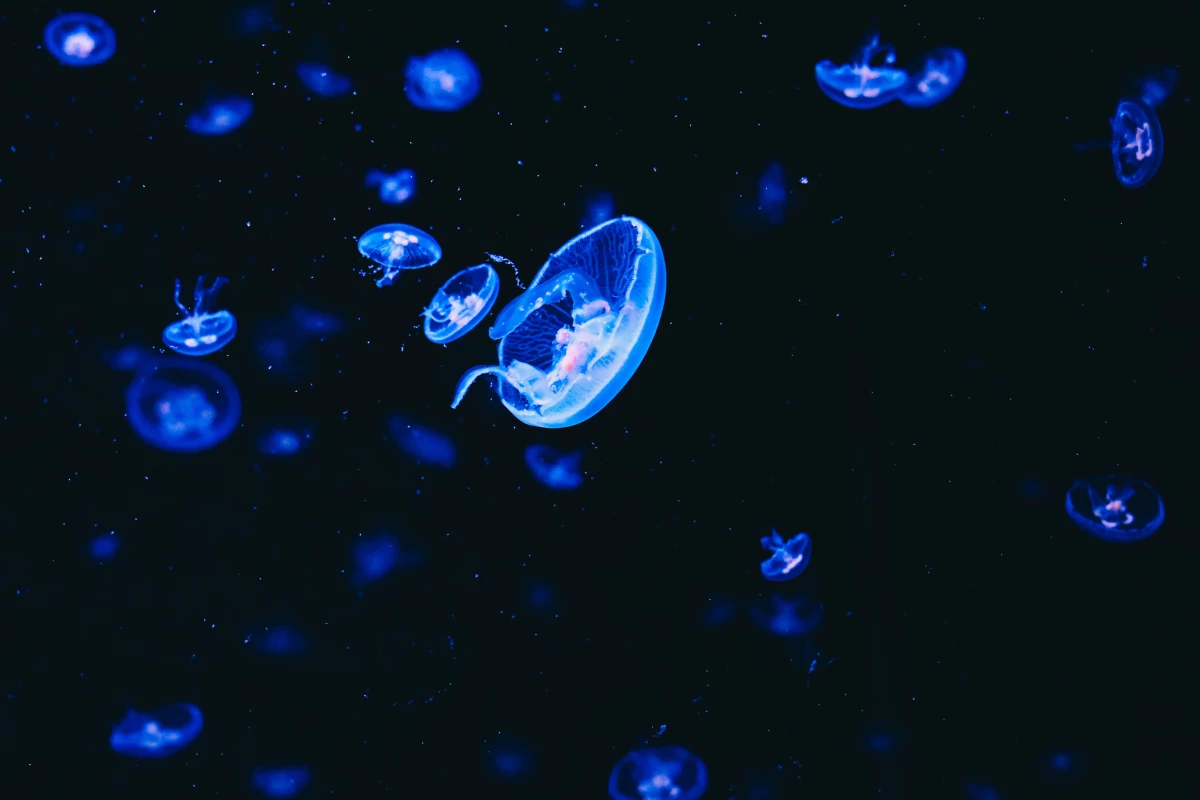
A recent study has unveiled that jellyfish and sea anemones exhibit sleep patterns remarkably similar to those of humans. The research, published in Nature Communications, indicates that these ancient marine creatures sleep for about one-third of the day, much like humans do. This discovery enhances our understanding of sleep, suggesting it evolved to help maintain cellular health even in animals without a brain.
Neurobiologist Lior Appelbaum from Bar-Ilan University emphasized the significance of the findings, stating, “Sleep is important even for animals without a brain. It helps them recover from cellular stress and carry out cellular maintenance.” The purpose of sleep has puzzled researchers for years, and while it is observed across various species, its evolutionary origins remain a topic of debate.
To investigate sleep in marine organisms, Appelbaum and his team focused on the upside-down jellyfish, Cassiopea andromeda, and the starlet sea anemone, Nematostella vectensis. They monitored the activity patterns of these cnidarians using infrared cameras and movement-tracking software across a standard 24-hour cycle consisting of 12 hours of light and 12 hours of darkness.
During the study, researchers observed that jellyfish are primarily active during the day and predominantly sleep at night. Interestingly, they also take midday naps, similar to human behavior after lunch. In contrast, the sea anemones showed increased activity during nighttime, with significant sleep occurring in the early morning hours.
Determining whether the animals were genuinely sleeping rather than merely resting posed a challenge. To address this, the team measured the responsiveness of the jellyfish and sea anemones to stimuli during their inactive phases. Appelbaum defined a sleep-like state for jellyfish as pulsing fewer than 37 times per minute for over three minutes. For sea anemones, eight minutes or more of stillness indicated sleep.
“What was surprising was that both animals sleep approximately eight hours, which is interesting because we also sleep approximately one-third of our lives,” Appelbaum noted. This parallel raises intriguing questions about the evolutionary significance of sleep across different species.
The study also delved into the factors that drive sleep in these organisms. Previous research has indicated that increased DNA damage in nerve cells promotes sleep in zebrafish. Building on this foundation, Appelbaum’s team exposed jellyfish and sea anemones to ultraviolet (UV) radiation and specific chemicals known to induce DNA damage. They also created subtle disruptions, such as water pulses, to deprive the animals of sleep.
The results demonstrated that DNA damage escalated during wake periods and diminished during nighttime sleep. Notably, both jellyfish and sea anemones responded to this DNA damage by increasing their sleep duration, suggesting that sleep plays a crucial role in facilitating necessary cellular repairs.
“Sleep evolved way before the brain – it’s essential for cells, cellular maintenance, and neurons,” Appelbaum concluded. This research not only sheds light on the sleep behaviors of jellyfish and sea anemones but also emphasizes the fundamental role of sleep in maintaining cellular integrity across diverse life forms.






Cadel Evans Great Ocean Road Race: Who Will Claim Victory?

Engage with the Etgar Quiz: Test Your Knowledge on the Torah

Workhorse Group and Proliance International: A Comparative Analysis

Michael Burry Labels Elon Musk a “Desperately Incentivized Futurist”

Decluttering Your Space: Improve Health and Well-Being Today

Community Leader Louise K. Breitung Passes Away at 87

Louise K. Breitung, Dedicated Community Leader, Passes Away at 87

Trump’s January: Power Plays and Political Backlash Unfold

Discover the Affordable Milani Skin Tint Stick Taking Over Drugstores

Nostradamus’ 2026 Predictions: Star Death and Dark Events Loom

OpenAI to Implement Age Verification for ChatGPT by December 2025

Discover the Top 10 Calorie Counting Apps of 2025

Bella Hadid Shares Health Update After Treatment for Lyme Disease

Analysts Project Stronger Growth for Apple’s iPhone 17 Lineup

Electric Moto Influencer Surronster Arrested in Tijuana

Harvard Secures Court Victory Over Federal Funding Cuts

Erin Bates Shares Recovery Update Following Sepsis Complications

Discover How to Reverse Image Search Using ChatGPT Effortlessly
-
 Science1 month ago
Nostradamus’ 2026 Predictions: Star Death and Dark Events Loom
-
 Technology2 months ago
OpenAI to Implement Age Verification for ChatGPT by December 2025
-
 Technology6 months ago
Discover the Top 10 Calorie Counting Apps of 2025
-
 Health4 months ago
Bella Hadid Shares Health Update After Treatment for Lyme Disease
-
 Health5 months ago
Analysts Project Stronger Growth for Apple’s iPhone 17 Lineup
-
 Technology4 months ago
Electric Moto Influencer Surronster Arrested in Tijuana
-
 Education5 months ago
Harvard Secures Court Victory Over Federal Funding Cuts
-
 Health5 months ago
Erin Bates Shares Recovery Update Following Sepsis Complications
-
 Technology6 months ago
Discover How to Reverse Image Search Using ChatGPT Effortlessly
-

 Technology7 months ago
Meta Initiates $60B AI Data Center Expansion, Starting in Ohio
-

 Technology7 months ago
Recovering a Suspended TikTok Account: A Step-by-Step Guide
-

 Science3 months ago
Starship V3 Set for 2026 Launch After Successful Final Test of Version 2