
Health
Pennsylvania Center for Adapted Sports Empowers Athletes with Disabilities

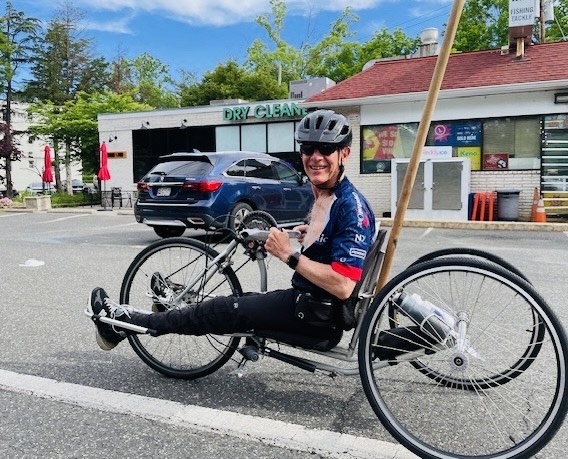
A nonprofit organization in Pennsylvania is transforming the lives of individuals with disabilities through a range of adaptive sports programs. The Pennsylvania Center for Adapted Sports (PCAS) provides year-round opportunities for athletes like Larry Way, who has found joy and community in cycling despite living with paralysis since childhood.
At 77 years old, Way has been actively participating in PCAS’s cycling program for the past eight years. His journey began on the Chester Valley Trail in Exton, where he experienced a sense of freedom on a hand-powered bike that he had not felt before. “It made me feel alive and energized,” he recalled. Way, a resident of Phoenixville, continues to lead an active lifestyle, swimming at the local YMCA and cycling on weekends, covering approximately 27 miles weekly.
PCAS, founded by Isabel Bohn and Jeff McGinnis, aims to improve the health and well-being of individuals with disabilities through inclusive sports and wellness programs. Since its inception, the organization has produced 11 Paralympians across various sports, showcasing the potential of athletes with disabilities. “We’re proud of our athletes who excel and change the way people perceive disability,” PCAS states on its website.
The organization caters to both children and adults, offering programs in cycling, skiing, snowboarding, rowing, kayaking, and climbing, among others. Participants benefit from a supportive environment that encourages them to explore their abilities. “PCAS provides cycles and there is always a volunteer that goes out with each athlete,” Way explained. Each Sunday, around eight to twelve athletes gather for cycling sessions, supported by knowledgeable volunteers who help determine the best equipment for each individual.
For Way, the experience is not just about physical fitness; it also fosters friendships and a sense of belonging. He participates in races, including the Marine Corps Marathon and the New York City Marathon, where he competes in the hand cycle division. “You feel good about yourself because it builds confidence and helps me maintain my weight,” he noted.
Beyond cycling, PCAS offers a range of programs designed to enhance the strength, function, and emotional well-being of its participants. By engaging in sports and recreational activities, individuals build lifelong friendships and a supportive community. Way emphasized the importance of these experiences, wishing for all disabled individuals to feel the same sense of accomplishment he has found through PCAS.
PCAS operates 13 sport-and-wellness programs annually, focusing on creating inclusive communities and barrier-free environments. They provide participants with equipment, venues, instruction, and training, along with a dedicated group of volunteers. The organization strives to create opportunities for veterans and young athletes, advocating for the integration of adaptive sports programs in schools.
In addition to their fitness initiatives, PCAS offers consultation services to agencies and educational institutions, positioning itself as an advocate for adapted sports. As a registered 501(c)(3) nonprofit organization, PCAS continues to champion the capabilities of athletes with disabilities, demonstrating that with the right support, everyone can achieve greatness.
For more information about the Pennsylvania Center for Adapted Sports, visit their website at www.centeronline.com.









Enhance Your Sleep: Experts Share Lighting Tips for Better Circadian Rhythm

NASA’s Artemis II Rehearsal Faces Record Cold on Florida Coast

Special Education Students Thrive at Wilmington’s Brew and Bake Cafe

Helena High School Retires Richard Fitts’ Jersey Number in Tribute

Dean Kamen Placed on Leave by FIRST Amid Epstein Revelations

J.E. Stokes Medical Centre Welcomes New Physician to North Shore

Asana Emphasizes Shared Memory for Effective AI Integration

Aurora Schools Contract Criticized for Lack of Academic Standards

Join the Fight Against Cancer at 24th Annual Candler Clays

Nostradamus’ 2026 Predictions: Star Death and Dark Events Loom

OpenAI to Implement Age Verification for ChatGPT by December 2025

Discover the Top 10 Calorie Counting Apps of 2025

Bella Hadid Shares Health Update After Treatment for Lyme Disease

Analysts Project Stronger Growth for Apple’s iPhone 17 Lineup

Electric Moto Influencer Surronster Arrested in Tijuana

Harvard Secures Court Victory Over Federal Funding Cuts

Erin Bates Shares Recovery Update Following Sepsis Complications

Discover How to Reverse Image Search Using ChatGPT Effortlessly
-
 Science1 month ago
Nostradamus’ 2026 Predictions: Star Death and Dark Events Loom
-
 Technology2 months ago
OpenAI to Implement Age Verification for ChatGPT by December 2025
-
 Technology7 months ago
Discover the Top 10 Calorie Counting Apps of 2025
-
 Health5 months ago
Bella Hadid Shares Health Update After Treatment for Lyme Disease
-
 Health5 months ago
Analysts Project Stronger Growth for Apple’s iPhone 17 Lineup
-
 Technology5 months ago
Electric Moto Influencer Surronster Arrested in Tijuana
-
 Education5 months ago
Harvard Secures Court Victory Over Federal Funding Cuts
-
 Health5 months ago
Erin Bates Shares Recovery Update Following Sepsis Complications
-
 Technology6 months ago
Discover How to Reverse Image Search Using ChatGPT Effortlessly
-

 Technology7 months ago
Meta Initiates $60B AI Data Center Expansion, Starting in Ohio
-

 Science4 months ago
Starship V3 Set for 2026 Launch After Successful Final Test of Version 2
-

 Technology7 months ago
Recovering a Suspended TikTok Account: A Step-by-Step Guide