
Health
Chicago Leaders Warn of Hospital Crisis as Health Tax Credits Expire

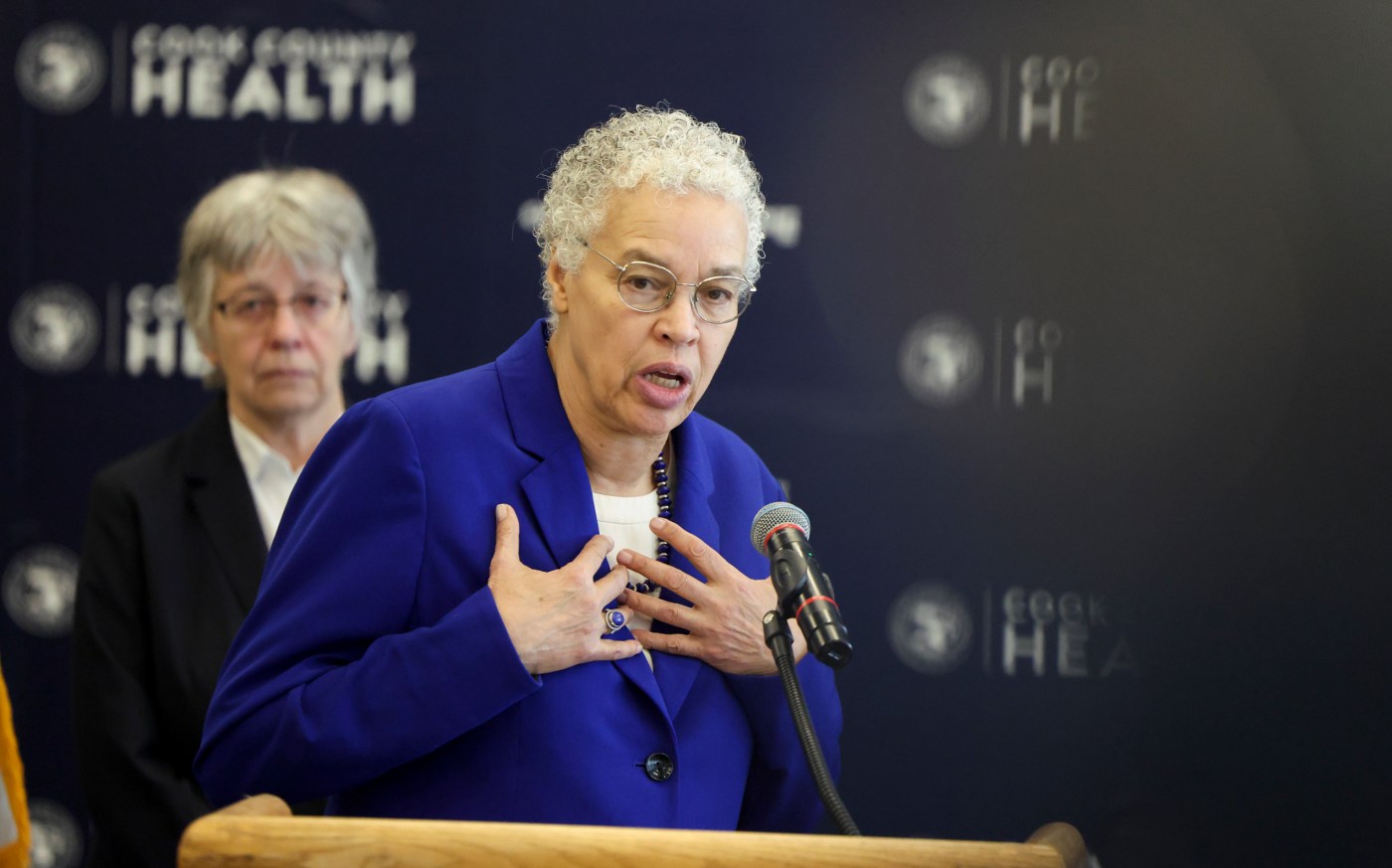
As health care subsidies approach their expiration at the start of 2025, leaders in the Chicago area are sounding alarms about the potential financial fallout for Cook County and hospitals across Illinois. Cook County Health officials, alongside political representatives, emphasized on Wednesday that the end of these subsidies will have dire consequences for millions of Americans and could severely strain the county’s health care system.
During the pandemic, Congress expanded eligibility for health care subsidies under the Affordable Care Act, significantly increasing the tax credit available to many. This expansion, initially set to last until December 31, 2025, is now at risk, leaving many families vulnerable to rising insurance premiums. Local officials assert that the expiration could lead to premiums doubling for those who rely on these federal supports, which could leave countless residents without affordable health coverage.
Congressional Democrats attempted to extend these premium tax credits during a recent government shutdown but were unsuccessful in securing an agreement. A bipartisan group of House members has introduced a discharge petition aimed at forcing a vote on the issue in early January, yet Senate Republicans have expressed opposition unless adjustments are made to reduce federal costs. The Congressional Budget Office estimates that simply extending the subsidies would incur costs exceeding $100 billion annually.
At a news conference held at the John H. Stroger Hospital, Cook County Board President Toni Preckwinkle highlighted the immediate and personal nature of these cuts. “We know exactly who bears the brunt of these cuts: working families, seniors on fixed incomes, people managing chronic conditions, and communities that have already faced too many barriers to care,” she stated.
U.S. Representative Raja Krishnamoorthi, one of the candidates vying for a U.S. Senate seat, warned that average monthly premiums for those enrolled in the Affordable Care Act are projected to nearly double. He noted that approximately 360,000 residents of Cook County currently rely on ACA coverage, with 90% depending on tax credits to afford their premiums.
The expiration of these subsidies will not only affect individual households but could also lead to increased costs for the health care system overall. “Some will need to choose between food on their table and seeing a doctor,” said Donnica Austin-Cathey, Chief Hospital Executive at Stroger.
The Affordable Care Act has played a pivotal role in improving health care access in Cook County, resulting in more insured patients receiving preventive care and fewer costly emergency room visits for chronic conditions. The county has committed to treating all patients, regardless of their ability to pay. The ACA facilitated payments for insured care and enabled Cook County to operate its own Medicaid managed care program, known as CountyCare. However, the anticipated expiration of premium subsidies, coupled with changes to Medicaid under previous administrations, threatens to reverse these advancements.
Health officials predict a significant rise in charity care, estimating it will increase from a pandemic low of $134 million in 2022 to $380 million by 2026. Preckwinkle assured that Cook County will continue to provide care for all patients and is enhancing outreach efforts to help residents understand their options for maintaining coverage or transitioning to CountyCare and other programs.
Krishnamoorthi expressed optimism about the discharge petition passing in the U.S. House next week. “At that point, I think the pressure will be on the Senate to act,” he said. If the Senate approves a deal, he added, there may still be an opportunity to apply the credits retroactively. However, those who have opted out of insurance due to costs may find themselves without options.
In light of the impending expiration of these subsidies, Krishnamoorthi urged insurance companies to take measures to support their customers during this transition. The potential for increased financial strain on hospitals and families alike underscores the urgency of addressing this critical issue in the coming months.











Revolutionary Photonic Ski-Jump Could Miniaturize LiDAR Systems

Couples Detox from Plastics in New Netflix Doc: Can It Boost Fertility?

Aventon Launches Affordable Full-Suspension Electric Mountain Bike

Discover Eight Must-Try Restaurants This Spring Season

UC Irvine Team Unveils Innovative Ion Pump for Water Treatment

One-Third of Americans Trim Daily Expenses for Healthcare Needs

Apple Secures First Oscar in Three Years with F1: The Movie

Fourth Graders Celebrate St. Patrick’s Day with Creative Weather Drawings

Kim Kardashian Dazzles at Vanity Fair Oscars Party 2026

Nostradamus’ 2026 Predictions: Star Death and Dark Events Loom

Breakthroughs and Challenges Await Science in 2026

Electric Moto Influencer Surronster Arrested in Tijuana

OpenAI to Implement Age Verification for ChatGPT by December 2025

Discover the Top 10 Calorie Counting Apps of 2025

Bella Hadid Shares Health Update After Treatment for Lyme Disease

Analysts Project Stronger Growth for Apple’s iPhone 17 Lineup

Japanese Study Finds Rose Oil Can Increase Brain Gray Matter

Top 10 Penny Stocks to Watch in 2026 for Strong Returns
-
 Science3 months ago
Nostradamus’ 2026 Predictions: Star Death and Dark Events Loom
-
 Science4 months ago
Breakthroughs and Challenges Await Science in 2026
-
 Technology7 months ago
Electric Moto Influencer Surronster Arrested in Tijuana
-
 Technology4 months ago
OpenAI to Implement Age Verification for ChatGPT by December 2025
-
 Technology9 months ago
Discover the Top 10 Calorie Counting Apps of 2025
-
 Health7 months ago
Bella Hadid Shares Health Update After Treatment for Lyme Disease
-
 Health7 months ago
Analysts Project Stronger Growth for Apple’s iPhone 17 Lineup
-
 Health7 months ago
Japanese Study Finds Rose Oil Can Increase Brain Gray Matter
-
 Technology4 months ago
Top 10 Penny Stocks to Watch in 2026 for Strong Returns
-

 Science6 months ago
Starship V3 Set for 2026 Launch After Successful Final Test of Version 2
-

 Technology1 month ago
Nvidia GTC 2026: Major Announcements Expected for AI and Hardware
-

 Education7 months ago
Harvard Secures Court Victory Over Federal Funding Cuts