
Education
Ph.D. Student David Nartey Transforms Research During Intel Internship

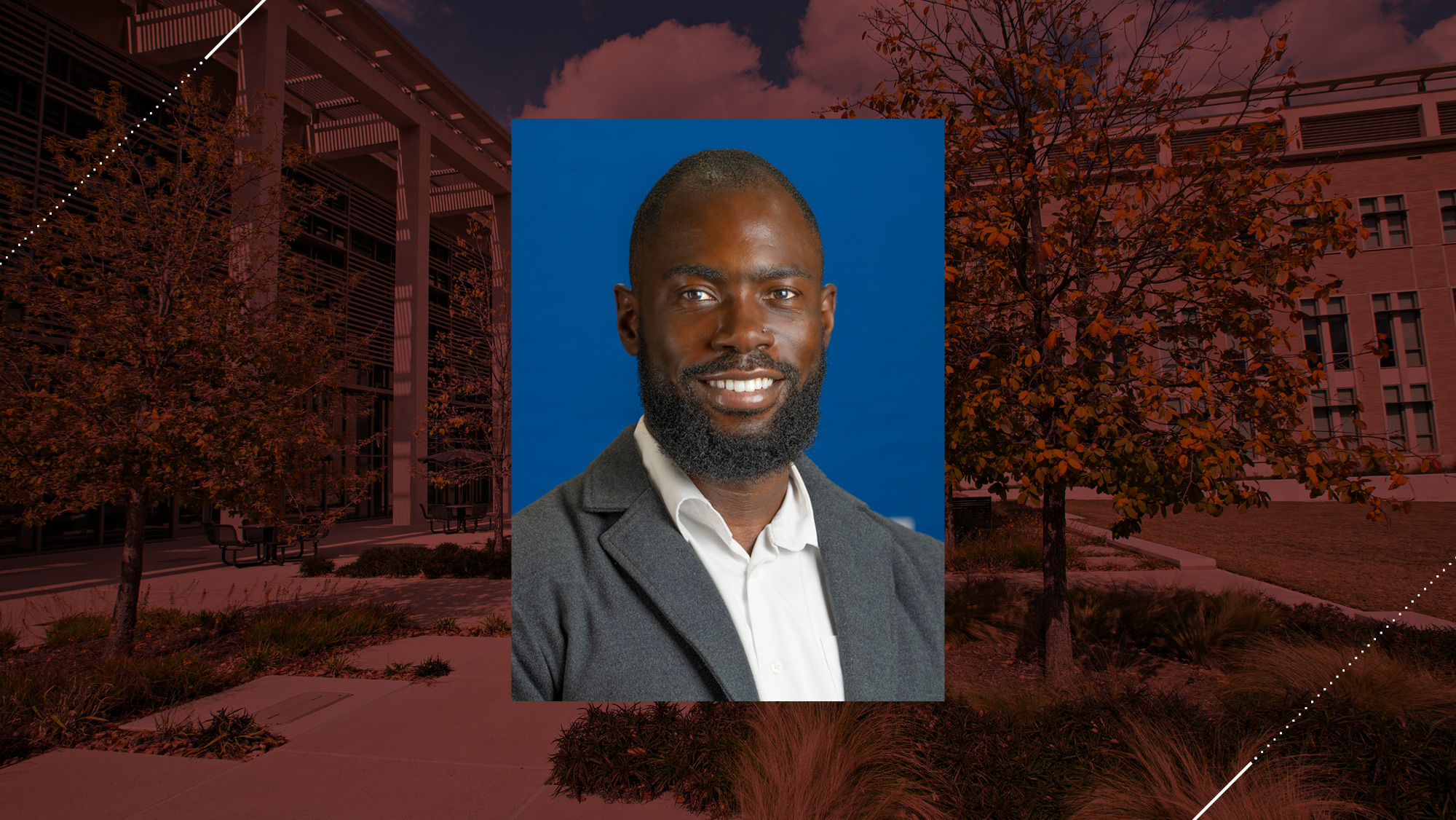
Ph.D. student David Nartey has made significant strides in his academic journey through an impactful summer internship at Intel Corporation in Hillsboro, Oregon. During this period, he successfully bridged the gap between his research and real-world applications, validating a manufacturing process change that is projected to save the company hundreds of thousands of dollars annually.
Currently pursuing his doctorate in industrial engineering at Texas A&M University, Nartey specializes in the intersection of artificial intelligence and machine learning, particularly in forecasting human fatigue and enhancing system performance. His research emphasizes a blend of human factors, data analytics, and process optimization, equipping him with a unique perspective on designing efficient and user-friendly systems.
Making an Impact at Intel
At Intel, Nartey worked with the Chemical Mechanical Planarization team, where he applied his analytical skills to validate a manufacturing process change. In addition, he designed innovative gauges and conducted gage repeatability and reproducibility (R&R) analyses. His efforts led to the development of best practices for 3D printing these gauges at a significantly reduced cost of 99%. Nartey emphasized the importance of small technical optimizations in improving both operational and financial outcomes, stating, “This project demonstrated how small technical optimizations go a long way to improve operational and financial outcomes.”
His internship also involved automating a defect detection tool across various modules, a task that required a careful balance of efficiency and usability to ensure practical solutions for operators. “My internship gave me the chance to see how technical work translates into real-world results,” Nartey noted. “Designing gauges and optimizing processes was one thing in theory, but seeing it actually save money and improve workflow was incredibly rewarding.”
Academic Growth and Leadership
Through his internship, Nartey refined skills critical to his doctoral studies. He employed data analytics, 3D modeling, and human-system design principles to approach problems from multiple angles. He credited his coursework, particularly ISEN 613 for data analysis and ISEN 630 for health and human systems, as vital in his ability to create meaningful insights and ergonomic designs.
Nartey’s experience as a teaching assistant for ISEN 210, where he taught 3D modeling fundamentals, further contributed to his ability to design functional and user-friendly tools. “That experience helped me think critically about how to make tools both functional and user-friendly,” he explained.
In addition to his academic and internship commitments, Nartey advanced to Ph.D. candidacy after passing his preliminary exam and proposal under the guidance of faculty members Dr. Ranjana Mehta and Dr. Farzan Sasangohar. He expressed gratitude for their support, saying, “My advisors and committee were very supportive. They provided feedback while giving me space to focus on my internship.”
Nartey also serves as president of the Human Factors and Ergonomics Society (HFES) student chapter and is involved in the Applied Cognitive Ergonomics (ACE) Lab and NeuroErgonomics Lab at the University of Wisconsin-Madison. He acknowledged that leading the TAMU HFES has strengthened his leadership skills and fostered collaboration among students and professionals. “The ACE and NeuroErgonomics Labs have given me a community of researchers who support each other,” he added.
Balancing his internship, research, and leadership roles has instilled in Nartey the significance of intention and resilience. “Internships, research, and leadership require different skill sets,” he advised fellow students. “Be intentional with your choices, give yourself space to rest, and build a network of mentors and peers who understand what you’re going through.”
After completing his Ph.D., Nartey aims to merge data science, human factors, and system optimization in his career. “Ultimately, I want to lead research and innovation efforts that translate data into solutions that optimize systems,” he stated. His ambition extends beyond academia, as he aims to ensure that the impact of his work translates effectively from the lab to practical applications.
While he remains active in research publications and prepares to defend his dissertation, Nartey is determined to carry his passion for data-driven innovation into the next phase of his career. His experiences at Texas A&M University and Intel have not only shaped his professional goals but also laid a strong foundation for the contributions he hopes to make in the field.




Lightrun Launches AI Site Reliability Engineer for Real-Time Software Solutions

Connecticut College Students Call for More Visual Art Spaces

Hailey Bieber Stuns in Sommer Swim Bikini with Gold Accents

Antarctica’s Gravity Anomaly Sheds Light on Earth’s Interior Dynamics

Muscle Power Linked to Longevity: A New Health Insight

LightPath Technologies Outperforms Axion Power in Key Metrics

Dive into Self-Discovery with Proust on The Cosmic Library

Kendall Jenner Dazzles in Bold Crop Top for Vogue France

Avidity Biosciences Set to Release Q4 Earnings on February 26

Nostradamus’ 2026 Predictions: Star Death and Dark Events Loom

OpenAI to Implement Age Verification for ChatGPT by December 2025

Discover the Top 10 Calorie Counting Apps of 2025

Electric Moto Influencer Surronster Arrested in Tijuana

Bella Hadid Shares Health Update After Treatment for Lyme Disease

Breakthroughs and Challenges Await Science in 2026

Analysts Project Stronger Growth for Apple’s iPhone 17 Lineup

Top 10 Penny Stocks to Watch in 2026 for Strong Returns

Harvard Secures Court Victory Over Federal Funding Cuts
-
 Science2 months ago
Nostradamus’ 2026 Predictions: Star Death and Dark Events Loom
-
 Technology3 months ago
OpenAI to Implement Age Verification for ChatGPT by December 2025
-
 Technology7 months ago
Discover the Top 10 Calorie Counting Apps of 2025
-
 Technology5 months ago
Electric Moto Influencer Surronster Arrested in Tijuana
-
 Health5 months ago
Bella Hadid Shares Health Update After Treatment for Lyme Disease
-
 Science2 months ago
Breakthroughs and Challenges Await Science in 2026
-
 Health6 months ago
Analysts Project Stronger Growth for Apple’s iPhone 17 Lineup
-
 Technology2 months ago
Top 10 Penny Stocks to Watch in 2026 for Strong Returns
-
 Education6 months ago
Harvard Secures Court Victory Over Federal Funding Cuts
-

 Science4 months ago
Starship V3 Set for 2026 Launch After Successful Final Test of Version 2
-

 Health6 months ago
Erin Bates Shares Recovery Update Following Sepsis Complications
-

 Technology8 months ago
Meta Initiates $60B AI Data Center Expansion, Starting in Ohio