
Education
Cornell Researchers Uncover Electron Behavior in Quantum Materials

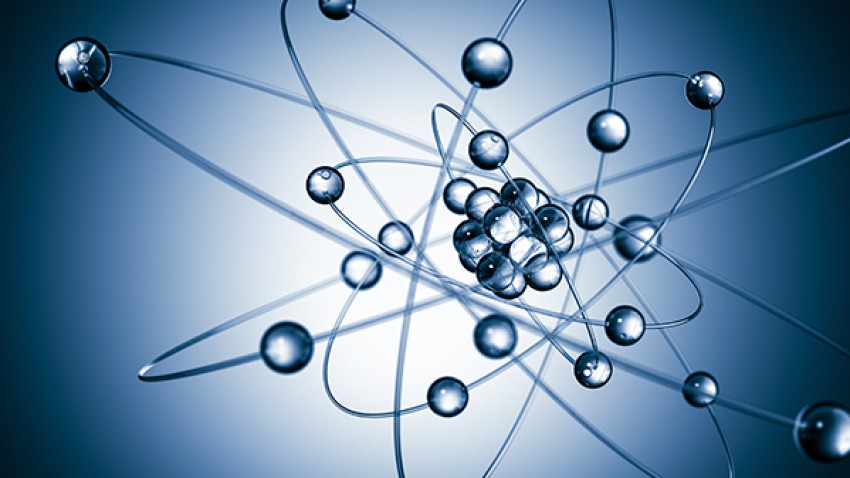
Researchers at Cornell University have made a significant breakthrough in understanding electron behavior in certain layered quantum materials, known as “misfits.” These materials have mismatched crystal structures, similar to LEGO pieces that do not fit together perfectly. The team utilized a new computational method to demonstrate that electrons in these structures predominantly remain within their respective layers rather than moving between them, challenging previous assumptions in the field.
For years, scientists believed that large shifts in energy bands in misfit materials indicated that electrons were physically transferring from one layer to another. This recent study overturns that theory, revealing that the bonding between mismatched layers causes electrons to rearrange locally, resulting in an increase in high-energy electrons, while minimal movement occurs between layers. Tomás Arias, a physics professor and principal investigator of the study, emphasized the significance of this research in understanding materials that exhibit quantum properties, including superconductivity.
The findings, detailed in the study titled “Unmasking Charge Transfer in the Misfits: ARPES and Ab Initio Prediction of Electronic Structure in Layered Incommensurate Systems without Artificial Strain,” were published on November 14, 2023, in Physical Review Letters. The first author, Drake Niedzielski, along with colleagues from the Platform for the Accelerated Realization, Analysis and Discovery of Interface Materials (PARADIM), and late professor Lena Kourkoutis, contributed to this essential work.
The study involved analyzing misfit layered heterostructures, which alternate a rare-earth rock salt layer with square symmetry and another material exhibiting hexagonal symmetry. Observations indicated a notable increase in high-energy electrons within the hexagonal material. However, upon calculating the electron distribution in these mixed-layer systems, Niedzielski encountered unexpected results.
“Though it seemed that many electrons were moving to the hexagonal layer, our calculations revealed that actual movement was about six times less than previously thought,” Niedzielski noted. The electrons were found to be rearranging within their layers rather than transitioning between them, a revelation made possible by the new computational method, MINT-Sandwich.
This innovative technique enables precise calculations of electron locations and energies, providing insights comparable to those obtained from controlled experiments. Arias described the method as an experimental approach carried out in a computational environment, representing a third source of information for material systems alongside traditional experimental and theoretical methods.
The research underscores the complex behavior of electrons in crowded environments, likening their interactions to waves in a pool filled with swimmers, where only the immediate surroundings influence their behavior. As the researchers continue to explore misfit materials, they aim to unlock new avenues for developing technologies with advanced electronic properties, including efficient electrical cooling systems.
The work received support from the National Science Foundation, reflecting the growing interest in materials science focused on enhancing our understanding of quantum phenomena. As the community of physicists and engineers expands its knowledge, this discovery paves the way for future innovations in quantum materials and devices.







UCLA Students Drive Global Change Through Engineering Projects

Grab Bose QuietComfort Headphones at Record Low Price Today

NASA Reveals New Insights from Interstellar Comet 3I/ATLAS

French Study Confirms mRNA Vaccine Effectiveness Against Severe COVID

Netflix Seals $72 Billion Deal to Acquire Warner Bros. Assets

UCLA Engineers Impact Global Communities Through Innovative Projects

Join Statesville Police in Toy Drive at Walmart on December 6

Alkaline Microbes Pave Way for Safer Nuclear Waste Management

Call for Urgent Reform of Pharmacy Benefit Managers to Lower Drug Costs

Discover the Top 10 Calorie Counting Apps of 2025

Bella Hadid Shares Health Update After Treatment for Lyme Disease

Erin Bates Shares Recovery Update Following Sepsis Complications

Discover How to Reverse Image Search Using ChatGPT Effortlessly

Discover 2025’s Top GPUs for Exceptional 4K Gaming Performance

Electric Moto Influencer Surronster Arrested in Tijuana

Meta Initiates $60B AI Data Center Expansion, Starting in Ohio

Recovering a Suspended TikTok Account: A Step-by-Step Guide

Tested: Rab Firewall Mountain Jacket Survives Harsh Conditions
-
 Technology5 months ago
Discover the Top 10 Calorie Counting Apps of 2025
-
 Health3 months ago
Bella Hadid Shares Health Update After Treatment for Lyme Disease
-
 Health3 months ago
Erin Bates Shares Recovery Update Following Sepsis Complications
-
 Technology4 months ago
Discover How to Reverse Image Search Using ChatGPT Effortlessly
-
 Technology1 month ago
Discover 2025’s Top GPUs for Exceptional 4K Gaming Performance
-
 Technology3 months ago
Electric Moto Influencer Surronster Arrested in Tijuana
-
 Technology5 months ago
Meta Initiates $60B AI Data Center Expansion, Starting in Ohio
-
 Technology5 months ago
Recovering a Suspended TikTok Account: A Step-by-Step Guide
-
 Health4 months ago
Tested: Rab Firewall Mountain Jacket Survives Harsh Conditions
-

 Lifestyle5 months ago
Belton Family Reunites After Daughter Survives Hill Country Floods
-

 Technology4 months ago
Harmonic Launches AI Chatbot App to Transform Mathematical Reasoning
-

 Health3 months ago
Analysts Project Stronger Growth for Apple’s iPhone 17 Lineup