
Top Stories
NASA’s Moon Rocket Returns for Repairs, Delays Artemis II Launch

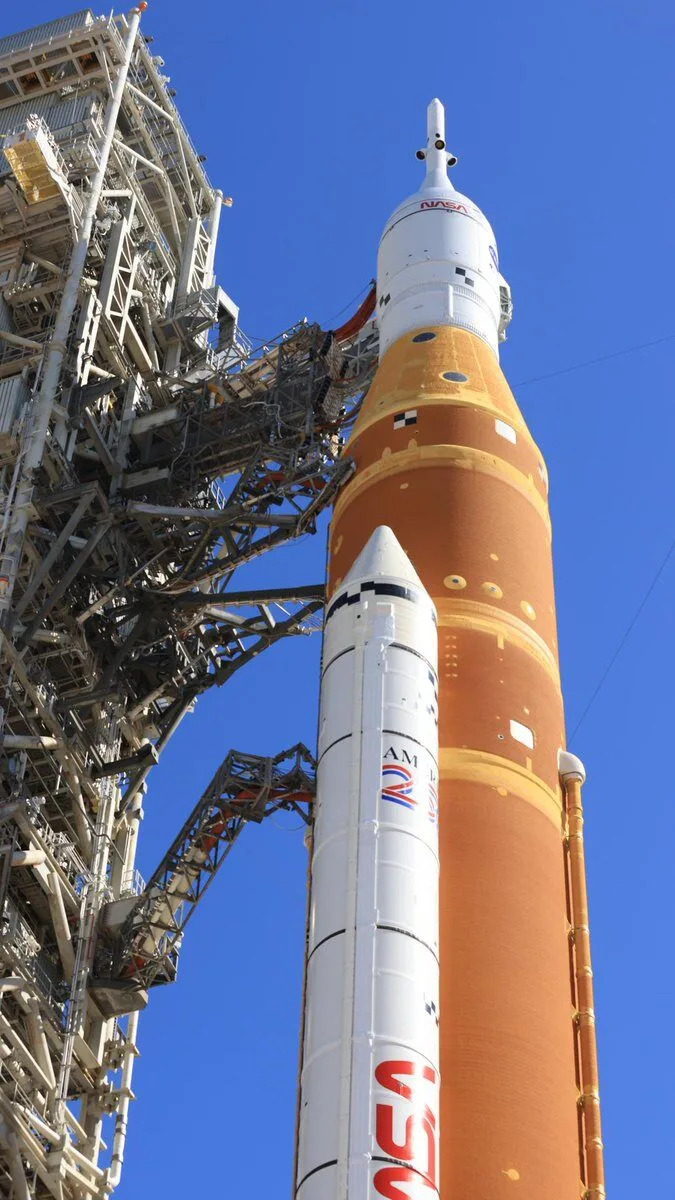
NASA’s moon rocket is set to return to the hangar for additional repairs, delaying the Artemis II mission until at least April. The decision follows the detection of a malfunction in the rocket’s helium system, which is essential for purging engines and pressurizing fuel tanks. The space agency announced that the rocket will make a slow, four-mile (6.4-kilometer) journey across the Kennedy Space Center, targeting Tuesday for the move, contingent on weather conditions.
This latest setback comes just days after NASA completed a repeat fueling test to address hazardous hydrogen fuel leaks. The agency had aimed for a launch date of March 6, 2024, but the helium issue emerged, further postponing the astronauts’ first journey to the moon in over 50 years.
Technical Challenges Delay Historic Mission
According to NASA, the return to the Vehicle Assembly Building is necessary to diagnose and resolve the helium flow disruption. Engineers had recently managed to fix the hydrogen leaks, only to face this new complication. “Returning to the Vehicle Assembly Building at Kennedy is required to determine the cause of the issue and fix it,” NASA stated in a press release.
The Artemis II mission is particularly significant as it will mark the first crewed flight to the moon since the Apollo program, which sent 24 astronauts to lunar destinations between 1968 and 1972. The crew, consisting of three Americans and one Canadian, remains on standby in Houston, awaiting further updates on the launch timeline.
NASA has limited opportunities each month to conduct the mission, with specific launch windows that must align with various logistical and technical requirements. While the swift rollback aims to maintain the possibility of an April launch attempt, the agency emphasized that this will largely depend on the efficiency of the repairs.
As the space agency navigates these technical challenges, the excitement surrounding the Artemis II mission continues to build. This mission aims not only to return humans to lunar orbit but also to pave the way for future explorations deeper into space.
The Artemis II astronauts are poised to make history, bridging a significant gap in lunar exploration. Their anticipated journey is a major step forward in NASA’s efforts to return humans to the moon and eventually pursue missions to Mars. While the current delays are frustrating, they also underscore the rigorous safety standards that NASA upholds in its quest for exploration.








Algonquin Students Craft Canoe for Hammarskjold High School

NAA Reveals Finalists for 2025 Robert J. Collier Trophy

Scientists Unveil ‘BioConNet’ to Revolutionize Brain Circuit Engineering

Surge in Cannabis Hyperemesis Syndrome: Key Symptoms to Recognize

Assessing Layover Options Amid Changes in Doha’s Flight Status

Applications Open for 2026 National Youth Science Camp

Sa Su Phi Unveils Chic Fall 2026 Collection at Milan Fashion Week

NASA Rover Discovers Mars Features Echoing David Bowie Lyrics

Xiaomi Unveils Leica Leitzphone, Aims at Premium Market

Nostradamus’ 2026 Predictions: Star Death and Dark Events Loom

OpenAI to Implement Age Verification for ChatGPT by December 2025

Discover the Top 10 Calorie Counting Apps of 2025

Breakthroughs and Challenges Await Science in 2026

Electric Moto Influencer Surronster Arrested in Tijuana

Bella Hadid Shares Health Update After Treatment for Lyme Disease

Analysts Project Stronger Growth for Apple’s iPhone 17 Lineup

Top 10 Penny Stocks to Watch in 2026 for Strong Returns

Japanese Study Finds Rose Oil Can Increase Brain Gray Matter
-
 Science2 months ago
Nostradamus’ 2026 Predictions: Star Death and Dark Events Loom
-
 Technology3 months ago
OpenAI to Implement Age Verification for ChatGPT by December 2025
-
 Technology7 months ago
Discover the Top 10 Calorie Counting Apps of 2025
-
 Science2 months ago
Breakthroughs and Challenges Await Science in 2026
-
 Technology5 months ago
Electric Moto Influencer Surronster Arrested in Tijuana
-
 Health5 months ago
Bella Hadid Shares Health Update After Treatment for Lyme Disease
-
 Health6 months ago
Analysts Project Stronger Growth for Apple’s iPhone 17 Lineup
-
 Technology2 months ago
Top 10 Penny Stocks to Watch in 2026 for Strong Returns
-
 Health6 months ago
Japanese Study Finds Rose Oil Can Increase Brain Gray Matter
-

 Science4 months ago
Starship V3 Set for 2026 Launch After Successful Final Test of Version 2
-

 Education6 months ago
Harvard Secures Court Victory Over Federal Funding Cuts
-

 Health6 months ago
Erin Bates Shares Recovery Update Following Sepsis Complications