
Science
U.S. Army Teams Up with University of Tulsa to Innovate Soldier Gear

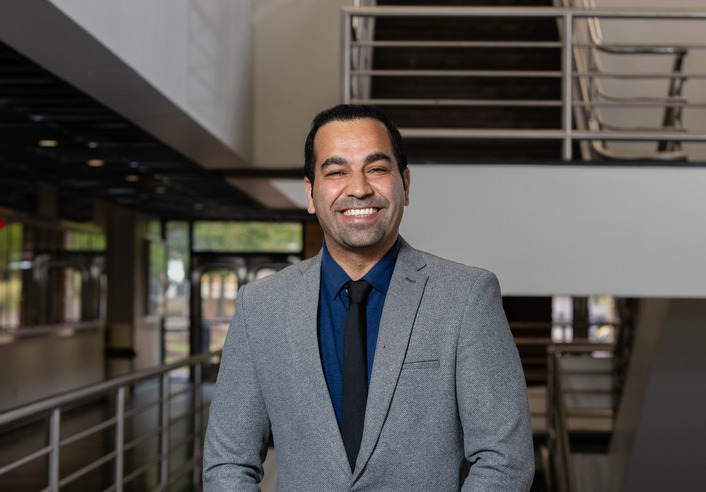
A research team at The University of Tulsa has embarked on a significant collaboration with the U.S. Army to develop innovative battery-powered solutions aimed at enhancing military gear and uniforms. This initiative seeks to create equipment that is not only safer but also lighter and more durable for soldiers in the field.
Leading the project is Ahmad Amiri, Ph.D., an assistant professor of chemical and mechanical engineering. He is joined by co-principal investigators Andreas Polycarpou, Ph.D., the dean of the College of Engineering & Computer Science, and Jacob Meyer, Ph.D., vice president of technology at ATSP Innovations.
Innovative Research and Development
Amiri explained that the collaboration combines expertise in materials science, battery technology, and advanced polymer manufacturing to create the next generation of energy storage solutions. He noted that the funding awarded for this project is a culmination of years of foundational research and innovation within the team, specifically in developing advanced battery materials. Each team member brings extensive experience in structural and low-temperature batteries, having worked on projects for NASA, the U.S. National Science Foundation, and the U.S. Department of Defense.
“Our proposed concept not only enhances battery safety and performance but also integrates energy more effectively into wearable systems,” Amiri stated. The grant was awarded based on the team’s technical innovation, feasibility, and interdisciplinary expertise. With support from the Army, this work aligns closely with the Pentagon’s priorities in advanced materials and microelectronics.
The technology being developed has the potential for applications beyond the military, extending into sectors such as defense, aerospace, consumer electronics, and medical wearables. Following the prototype phase, the team intends to scale production in collaboration with Army research centers and industry partners.
Significance and Future Aspirations
Amiri expressed that receiving this grant is particularly meaningful. He highlighted the support from UTulsa’s Russell School of Chemical Engineering, which has fostered an environment conducive to research. He also acknowledged the contributions of his doctoral students, Akif Rahman, Hossein Shahali, and Shahnewaz Khan, for their dedication and innovative ideas, as well as ATSP Innovations for facilitating the connection between academic research and industrial applications.
“Professionally, this project validates our team’s vision and the university’s growing role in advancing next-generation energy technologies,” Amiri remarked. He emphasized the personal satisfaction derived from addressing practical, high-impact problems that can significantly benefit society, including improving soldiers’ safety and endurance while fostering sustainable energy systems.
For those inspired by his research journey, Amiri shared a motivating message: “Stay focused on your goal and keep pushing forward, even when the path feels uncertain. Research can be challenging and unpredictable, but every obstacle teaches you something valuable. Keep powering your ‘battery’ with persistence and passion and never give up.”
This collaboration between The University of Tulsa and the U.S. Army marks a vital step towards innovation in military gear, promising advancements that could reshape the future of soldier equipment and beyond.













Revolutionary Photonic Ski-Jump Could Miniaturize LiDAR Systems

Couples Detox from Plastics in New Netflix Doc: Can It Boost Fertility?

Aventon Launches Affordable Full-Suspension Electric Mountain Bike

Discover Eight Must-Try Restaurants This Spring Season

UC Irvine Team Unveils Innovative Ion Pump for Water Treatment

One-Third of Americans Trim Daily Expenses for Healthcare Needs

Apple Secures First Oscar in Three Years with F1: The Movie

Fourth Graders Celebrate St. Patrick’s Day with Creative Weather Drawings

Kim Kardashian Dazzles at Vanity Fair Oscars Party 2026

Nostradamus’ 2026 Predictions: Star Death and Dark Events Loom

Breakthroughs and Challenges Await Science in 2026

Electric Moto Influencer Surronster Arrested in Tijuana

OpenAI to Implement Age Verification for ChatGPT by December 2025

Discover the Top 10 Calorie Counting Apps of 2025

Bella Hadid Shares Health Update After Treatment for Lyme Disease

Analysts Project Stronger Growth for Apple’s iPhone 17 Lineup

Japanese Study Finds Rose Oil Can Increase Brain Gray Matter

Top 10 Penny Stocks to Watch in 2026 for Strong Returns
-
 Science3 months ago
Nostradamus’ 2026 Predictions: Star Death and Dark Events Loom
-
 Science4 months ago
Breakthroughs and Challenges Await Science in 2026
-
 Technology7 months ago
Electric Moto Influencer Surronster Arrested in Tijuana
-
 Technology4 months ago
OpenAI to Implement Age Verification for ChatGPT by December 2025
-
 Technology9 months ago
Discover the Top 10 Calorie Counting Apps of 2025
-
 Health7 months ago
Bella Hadid Shares Health Update After Treatment for Lyme Disease
-
 Health7 months ago
Analysts Project Stronger Growth for Apple’s iPhone 17 Lineup
-
 Health7 months ago
Japanese Study Finds Rose Oil Can Increase Brain Gray Matter
-
 Technology4 months ago
Top 10 Penny Stocks to Watch in 2026 for Strong Returns
-

 Science6 months ago
Starship V3 Set for 2026 Launch After Successful Final Test of Version 2
-

 Technology1 month ago
Nvidia GTC 2026: Major Announcements Expected for AI and Hardware
-

 Education7 months ago
Harvard Secures Court Victory Over Federal Funding Cuts