
Science
New Research Reinterprets the Bayeux Tapestry’s Original Purpose

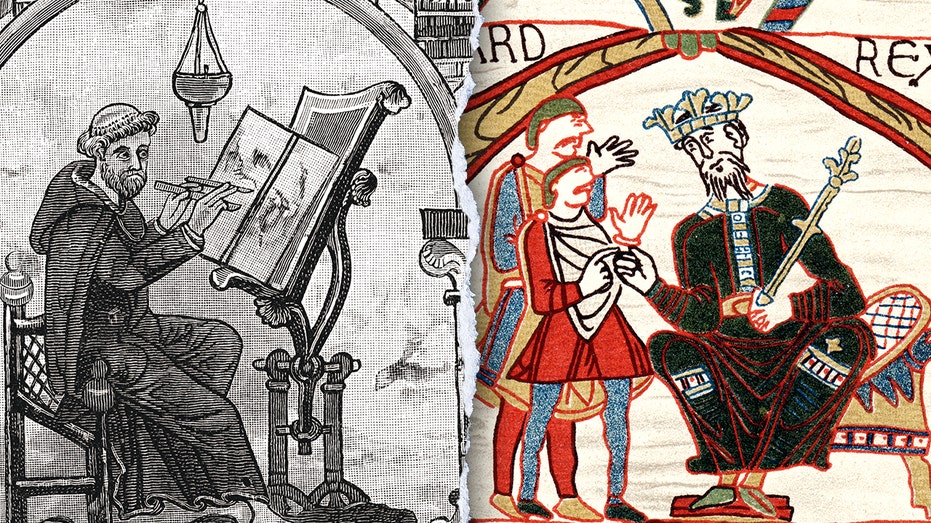
Archaeological findings in Brussels, Belgium, have sparked a reevaluation of the Bayeux Tapestry, one of history’s most famous pieces of medieval art. Recent research suggests that this iconic tapestry, which vividly depicts the Norman Conquest and the Battle of Hastings, may not have been intended for display in a cathedral as previously thought.
Traditionally believed to have been meant for hanging in the nave of Bayeux Cathedral, constructed in 1077, new evidence points to the tapestry being designed instead for the monastic refectory at St. Augustine’s Abbey in Canterbury. Professor Benjamin Pohl from the University of Bristol published his findings in the journal Historical Research on December 12, challenging long-held assumptions.
Historical Context and New Findings
The Bayeux Tapestry is thought to date back to the 1070s and illustrates the Normans’ invasion of England, culminating in the death of Harold Godwinson at the Battle of Hastings in 1066. Pohl argues that the tapestry’s length and weight make it unsuitable for a cathedral nave, where it would be difficult to display in a manner that would allow viewers to appreciate its intricate details. Instead, he posits that a monastic refectory would have provided a more appropriate setting.
“A monastic refectory would have been a much better-suited space, allowing the tapestry to be suspended at head height for optimal viewing,” Pohl explained. He also noted that the tapestry’s inscriptions are written in a specific type of Latin that aligns with the varied literacy levels found in a medieval monastery.
Pohl suggests that the narrative of the tapestry could serve as a moral lesson, complementing the religious texts typically read during monastic meals. The structure of St. Augustine’s Abbey would likely have allowed for the tapestry to cover most of its four internal walls, providing a focal point for contemplation during meals.
Monastic Life and Viewing Practices
Contrary to popular imagination, the viewing of the Bayeux Tapestry in this context would not have involved monks enjoying lavish feasts. Instead, Pohl indicates that the monks would have dined in silence, consuming simple fare such as bread, fish, and occasionally meat, while a designated reader recited the day’s religious texts.
Following the rule of St. Benedict, which governed monastic life across much of medieval Europe, monks were expected to refrain from speaking during meals, except for the voice of the reader. Pohl emphasized, “The visual imagery of the tapestry would have reinforced the spoken words and provided a focus for reflection.”
If Pohl’s theory holds true, it implies that the refectory at St. Augustine’s was intended to be constructed in the 1080s. He suggests that the tapestry may have been stored away and largely forgotten until the refectory’s completion in 1120.
Recent headlines further highlight the tapestry’s significance. In July 2026, the Bayeux Tapestry will be displayed at the British Museum for the first time in centuries, allowing a new generation to witness this remarkable artifact. Earlier in 2025, Newcastle University announced the discovery of Harold Godwinson’s residence in Bosham, a site depicted in the tapestry.
Pohl’s research not only sheds light on the historical context of the Bayeux Tapestry but also opens up new avenues for understanding the cultural practices of medieval monastic life. As the narrative continues to unfold, the tapestry remains a critical piece of art that connects the past with contemporary scholarship.













Revolutionary Photonic Ski-Jump Could Miniaturize LiDAR Systems

Couples Detox from Plastics in New Netflix Doc: Can It Boost Fertility?

Aventon Launches Affordable Full-Suspension Electric Mountain Bike

Discover Eight Must-Try Restaurants This Spring Season

UC Irvine Team Unveils Innovative Ion Pump for Water Treatment

One-Third of Americans Trim Daily Expenses for Healthcare Needs

Apple Secures First Oscar in Three Years with F1: The Movie

Fourth Graders Celebrate St. Patrick’s Day with Creative Weather Drawings

Kim Kardashian Dazzles at Vanity Fair Oscars Party 2026

Nostradamus’ 2026 Predictions: Star Death and Dark Events Loom

Breakthroughs and Challenges Await Science in 2026

Electric Moto Influencer Surronster Arrested in Tijuana

OpenAI to Implement Age Verification for ChatGPT by December 2025

Discover the Top 10 Calorie Counting Apps of 2025

Bella Hadid Shares Health Update After Treatment for Lyme Disease

Analysts Project Stronger Growth for Apple’s iPhone 17 Lineup

Japanese Study Finds Rose Oil Can Increase Brain Gray Matter

Top 10 Penny Stocks to Watch in 2026 for Strong Returns
-
 Science4 months ago
Nostradamus’ 2026 Predictions: Star Death and Dark Events Loom
-
 Science4 months ago
Breakthroughs and Challenges Await Science in 2026
-
 Technology7 months ago
Electric Moto Influencer Surronster Arrested in Tijuana
-
 Technology4 months ago
OpenAI to Implement Age Verification for ChatGPT by December 2025
-
 Technology9 months ago
Discover the Top 10 Calorie Counting Apps of 2025
-
 Health7 months ago
Bella Hadid Shares Health Update After Treatment for Lyme Disease
-
 Health7 months ago
Analysts Project Stronger Growth for Apple’s iPhone 17 Lineup
-
 Health7 months ago
Japanese Study Finds Rose Oil Can Increase Brain Gray Matter
-
 Technology4 months ago
Top 10 Penny Stocks to Watch in 2026 for Strong Returns
-

 Science6 months ago
Starship V3 Set for 2026 Launch After Successful Final Test of Version 2
-

 Technology1 month ago
Nvidia GTC 2026: Major Announcements Expected for AI and Hardware
-

 Education7 months ago
Harvard Secures Court Victory Over Federal Funding Cuts