
Science
NASA Astronaut Advances DNA Nanomaterials Manufacturing in Space

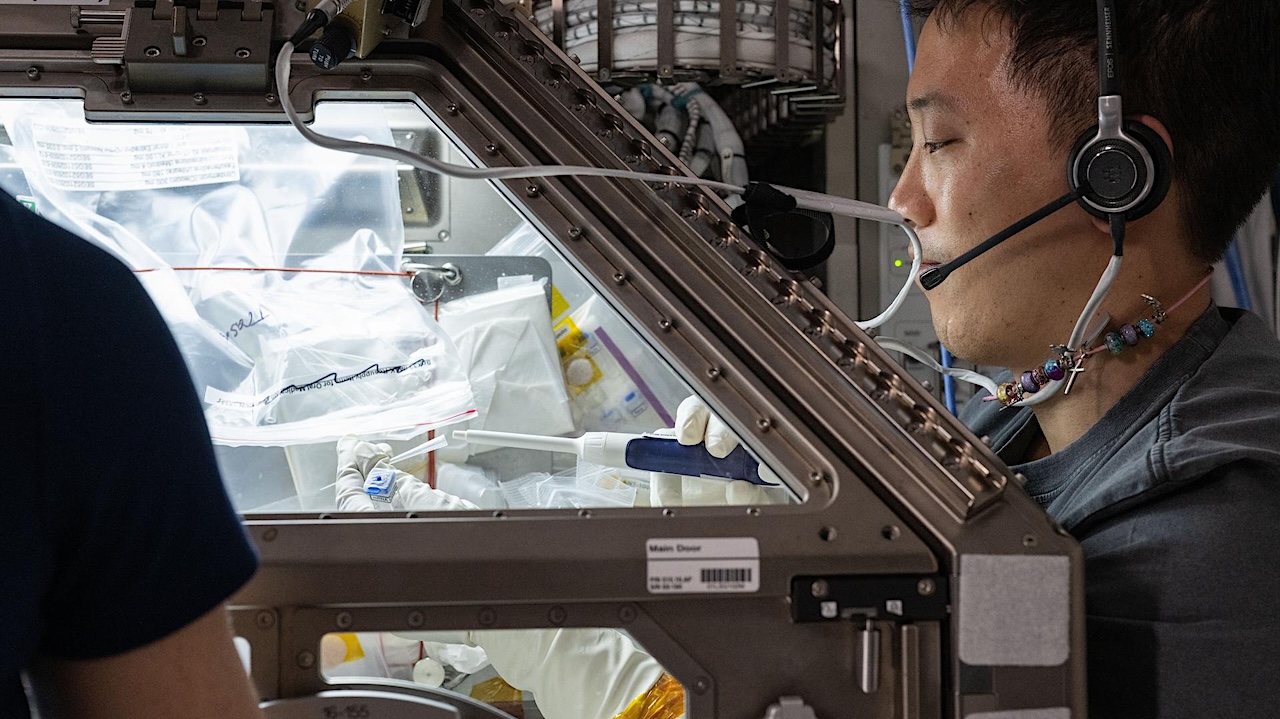
NASA astronaut Jonny Kim is currently engaged in a groundbreaking experiment aboard the International Space Station (ISS) as part of the DNA Nano Therapeutics-Mission 2. Utilizing the space station’s Microgravity Science Glovebox, Kim is mixing proteins with Janus base nanomaterials, which are small molecules designed to replicate DNA base pairs. This mission aims to enhance the in-space manufacturing of nanomaterials that are anticipated to be less toxic, more stable, and more biocompatible than existing drug delivery systems.
The investigation builds on prior research and seeks to pioneer advanced methods for creating nanomaterials in microgravity. The potential benefits of this project could extend beyond space applications, offering improved drug delivery options and potentially enhancing quality of life for patients on Earth. The focus on developing nanomaterials that mimic DNA could revolutionize therapeutic delivery and vaccine implementation, as well as contribute significantly to the field of regenerative medicine.
Advancing In-Space Manufacturing Techniques
The DNA Nano Therapeutics-Demo 2 project evaluates the feasibility of manufacturing these innovative nanomaterials through a process known as biomimetic fabrication. This technique involves the controlled self-assembly of DNA-inspired structures in the unique environment of outer space. Current manufacturing methods for similar nanomaterials face significant challenges, including high toxicity, instability at room temperature, and limited biocompatibility.
By conducting these experiments in microgravity, researchers hope to overcome these obstacles. The ISS provides an ideal setting for studying the properties and behaviors of nanomaterials, as the absence of gravitational forces can lead to different interactions and formations than those observed on Earth.
Potential Applications and Future Implications
The implications of successfully developing these nanomaterials are vast. They hold promise not only for delivering therapeutics and vaccines more effectively but also for applications in regenerative medicine. The ability to produce safer and more stable nanomaterials could lead to breakthroughs in how medications are administered, potentially improving patient outcomes both in space and on the ground.
This work represents a significant step forward in the field of astrobiology and space life science. As researchers continue to explore the possibilities of in-space manufacturing, the data gathered from these experiments could inform future missions and contribute to our understanding of biological processes in extreme environments.
In summary, Jonny Kim’s work on the DNA Nano Therapeutics-Mission 2 is not only advancing our knowledge of nanomaterials but also paving the way for innovative medical technologies that could benefit humanity as a whole.





Revolutionary Photonic Ski-Jump Could Miniaturize LiDAR Systems

Couples Detox from Plastics in New Netflix Doc: Can It Boost Fertility?

Aventon Launches Affordable Full-Suspension Electric Mountain Bike

Discover Eight Must-Try Restaurants This Spring Season

UC Irvine Team Unveils Innovative Ion Pump for Water Treatment

One-Third of Americans Trim Daily Expenses for Healthcare Needs

Apple Secures First Oscar in Three Years with F1: The Movie

Fourth Graders Celebrate St. Patrick’s Day with Creative Weather Drawings

Kim Kardashian Dazzles at Vanity Fair Oscars Party 2026

Nostradamus’ 2026 Predictions: Star Death and Dark Events Loom

Breakthroughs and Challenges Await Science in 2026

Electric Moto Influencer Surronster Arrested in Tijuana

OpenAI to Implement Age Verification for ChatGPT by December 2025

Discover the Top 10 Calorie Counting Apps of 2025

Bella Hadid Shares Health Update After Treatment for Lyme Disease

Analysts Project Stronger Growth for Apple’s iPhone 17 Lineup

Japanese Study Finds Rose Oil Can Increase Brain Gray Matter

Top 10 Penny Stocks to Watch in 2026 for Strong Returns
-
 Science3 months ago
Nostradamus’ 2026 Predictions: Star Death and Dark Events Loom
-
 Science4 months ago
Breakthroughs and Challenges Await Science in 2026
-
 Technology7 months ago
Electric Moto Influencer Surronster Arrested in Tijuana
-
 Technology4 months ago
OpenAI to Implement Age Verification for ChatGPT by December 2025
-
 Technology9 months ago
Discover the Top 10 Calorie Counting Apps of 2025
-
 Health7 months ago
Bella Hadid Shares Health Update After Treatment for Lyme Disease
-
 Health7 months ago
Analysts Project Stronger Growth for Apple’s iPhone 17 Lineup
-
 Health7 months ago
Japanese Study Finds Rose Oil Can Increase Brain Gray Matter
-
 Technology4 months ago
Top 10 Penny Stocks to Watch in 2026 for Strong Returns
-

 Science6 months ago
Starship V3 Set for 2026 Launch After Successful Final Test of Version 2
-

 Technology1 month ago
Nvidia GTC 2026: Major Announcements Expected for AI and Hardware
-

 Education7 months ago
Harvard Secures Court Victory Over Federal Funding Cuts