
Science
ETRI Unveils No-Code Machine Learning Tools to Boost AI Adoption

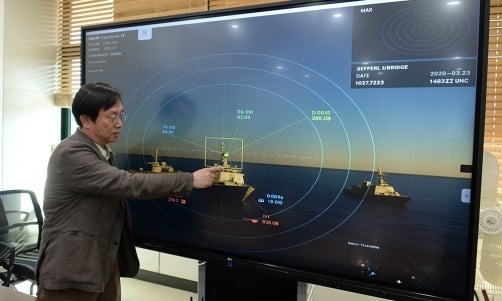
The Electronics and Telecommunications Research Institute (ETRI) has launched a no-code machine learning development framework designed to empower users with limited AI expertise across various industries. This initiative aims to enhance application development in sectors such as manufacturing, healthcare, and maritime operations. The core technology of this framework, known as TANGO, has been made available as open source on GitHub, facilitating wider access and adoption.
On November 6, 2023, ETRI hosted its fourth public seminar at the Science and Technology Center in Gangnam-gu, Seoul, aimed at fostering the TANGO community. The TANGO framework automates the development and deployment of AI applications, making it particularly beneficial for domain experts unfamiliar with neural networks. This user-friendly tool allows for immediate setup through a simple installation command, enabling users to operate it via a web interface.
The framework addresses significant challenges in applying AI to tasks that require expert judgment. For instance, while identifying defective steel during inspections is straightforward, integrating AI solutions has traditionally posed difficulties. Similarly, although doctors can diagnose tuberculosis from X-ray images, leveraging AI for predictive modeling in medical contexts has been complex. TANGO simplifies these processes, making AI accessible to professionals in these fields.
ETRI has also introduced a neural network automation algorithm specifically optimized for object recognition, reflecting the needs of domestic industries. This development comes at a time when demand for AI applications is surging, yet qualified AI and software specialists remain in short supply. The newly released LLMOps tools further support the development of generative AI applications.
Throughout the development of TANGO, ETRI has secured 24 patents, published 3 papers at the NeurIPS conference, and produced 13 SCI papers. The initiative has also led to KRW 10 billion in commercialization revenue. Notably, the autonomous maritime navigation company Avenotics has been selected for a project by the Ministry of Science and ICT, aimed at commercializing research outputs through TANGO technology transfer. Avenotics received an investment of 1.3 billion won from various stakeholders, including Korea Science and Technology Holdings.
Through this technology transfer, Avenotics has implemented TANGO’s on-device deployment technology and AI performance optimization, facilitating the commercial rollout of AI that generates contextual information for navigators.
ETRI’s research team is focused on expanding the framework’s applications through pilot demonstrations with partner institutions. For instance, Weda Co., Ltd. is developing an AI service for in-field employees in the steel and automotive parts sectors, specifically targeting vision-based inspections of complex shapes such as automotive bumper rolls. Meanwhile, Lablup Inc. collaborated with KT Cloud to launch an optimization service supporting the latest domestic AI acceleration engine, ATOM-Max.
In healthcare, Seoul National University Hospital is developing AI technology to analyze large-scale chest CT images, aiming to generate diagnostic reports automatically. This technology is set to be tested in four hospitals, including several branches of Seoul National University Hospital, to provide early predictions for cardiopulmonary diseases.
The LLMOps tool, essential for developing generative AI, is being co-developed with Acryl Inc.. The source code for Acryl’s product, Jonathan, is openly available on GitHub, with ongoing enhancements to its core algorithms to support industry-specific applications.
Kim Tae-ho, Software PM at the Institute of Information & Communications Technology Planning & Evaluation (IITP), remarked, “TANGO technology is truly the best open source project in Korea and is contributing greatly to enhancing the competitiveness of the domestic software industry in the field of AI development tools.” Jo Chang Sik, Principal Researcher at ETRI, emphasized the intention to broaden the TANGO project into LLMOps tools, ensuring that future developments remain accessible for commercial application.
Looking ahead, ETRI plans to release new versions of the source code on GitHub every six months and host annual public seminars to share technological advancements and practical insights. The recent public seminar attracted 944 participants from 552 institutions, reflecting a robust interest in AI technology.
This initiative has been made possible through support from the Ministry of Science and ICT and IITP, focusing on the automatic generation of neural network applications and the optimization of execution environments. ETRI continues to position itself as a leader in the global ICT landscape, striving to enhance Korea’s technological prowess in the field of artificial intelligence.











Revolutionary Photonic Ski-Jump Could Miniaturize LiDAR Systems

Couples Detox from Plastics in New Netflix Doc: Can It Boost Fertility?

Aventon Launches Affordable Full-Suspension Electric Mountain Bike

Discover Eight Must-Try Restaurants This Spring Season

UC Irvine Team Unveils Innovative Ion Pump for Water Treatment

One-Third of Americans Trim Daily Expenses for Healthcare Needs

Apple Secures First Oscar in Three Years with F1: The Movie

Fourth Graders Celebrate St. Patrick’s Day with Creative Weather Drawings

Kim Kardashian Dazzles at Vanity Fair Oscars Party 2026

Nostradamus’ 2026 Predictions: Star Death and Dark Events Loom

Breakthroughs and Challenges Await Science in 2026

Electric Moto Influencer Surronster Arrested in Tijuana

OpenAI to Implement Age Verification for ChatGPT by December 2025

Discover the Top 10 Calorie Counting Apps of 2025

Bella Hadid Shares Health Update After Treatment for Lyme Disease

Analysts Project Stronger Growth for Apple’s iPhone 17 Lineup

Japanese Study Finds Rose Oil Can Increase Brain Gray Matter

Top 10 Penny Stocks to Watch in 2026 for Strong Returns
-
 Science3 months ago
Nostradamus’ 2026 Predictions: Star Death and Dark Events Loom
-
 Science3 months ago
Breakthroughs and Challenges Await Science in 2026
-
 Technology7 months ago
Electric Moto Influencer Surronster Arrested in Tijuana
-
 Technology4 months ago
OpenAI to Implement Age Verification for ChatGPT by December 2025
-
 Technology9 months ago
Discover the Top 10 Calorie Counting Apps of 2025
-
 Health7 months ago
Bella Hadid Shares Health Update After Treatment for Lyme Disease
-
 Health7 months ago
Analysts Project Stronger Growth for Apple’s iPhone 17 Lineup
-
 Health7 months ago
Japanese Study Finds Rose Oil Can Increase Brain Gray Matter
-
 Technology4 months ago
Top 10 Penny Stocks to Watch in 2026 for Strong Returns
-

 Science6 months ago
Starship V3 Set for 2026 Launch After Successful Final Test of Version 2
-

 Technology1 month ago
Nvidia GTC 2026: Major Announcements Expected for AI and Hardware
-

 Education7 months ago
Harvard Secures Court Victory Over Federal Funding Cuts