
Science
Earth Faces Hidden Threat from Frequent Cosmic Airbursts

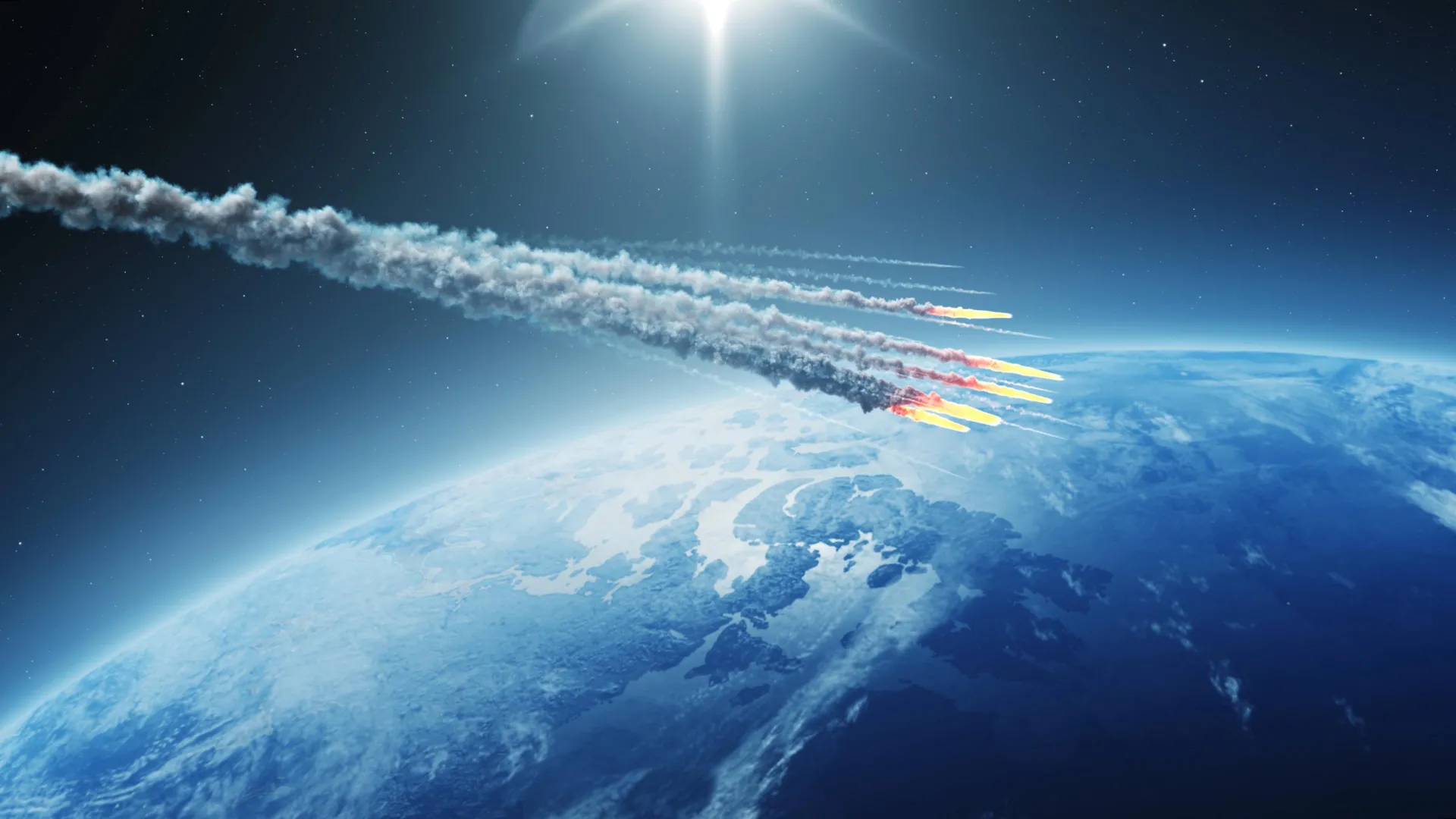
Research from the University of California – Santa Barbara suggests that Earth has likely been subjected to frequent and destructive cosmic “touchdown airbursts.” These events, characterized by explosions of comets or asteroids high above the surface, may occur more often than the crater-forming impacts traditionally associated with mass extinctions. The findings indicate that these “invisible” explosions unleash intense heat and pressure, posing a significant threat that remains largely underexplored.
In a series of studies led by James Kennett, Emeritus Professor of Earth Science at UC Santa Barbara, researchers have uncovered evidence that these airbursts can cause substantial damage without leaving visible scars. “Touchdown events can cause extreme damage through very high temperatures and pressures,” Kennett explained, emphasizing the need for greater attention to such phenomena.
The research team has documented several past airburst events, highlighting their potential destructive capabilities. Evidence was collected from diverse locations, including deep ocean sediments in the North Atlantic and remnants of an ancient desert city. Among the materials discovered were rare elements linked to the original cosmic objects, glassy substances formed from melted Earth sediments, and shocked quartz displaying distinctive fracture patterns.
New Findings on the Younger Dryas Impact Hypothesis
One of the significant revelations comes from a study published in the journal PLOS One, which details the first discovery of airburst-related impact markers in marine sediments associated with the Younger Dryas Impact Hypothesis (YDIH). This evidence was found in deep-sea cores extracted from Baffin Bay, located off Greenland’s western coast. Kennett noted the importance of this site, marking it as the first instance of cosmic impact evidence in marine records related to the Younger Dryas.
The Younger Dryas, occurring approximately 12,800 years ago, is believed to have been triggered by the explosion of comet fragments, resulting in a sudden global cooling period. This time frame coincides with the extinction of many large animal species and significant shifts in human populations and cultures. As the comet disintegrated, multiple explosions likely ignited widespread fires, leaving behind a carbon-rich layer known as a “black mat,” found primarily across the Northern Hemisphere.
Challenges in Detecting Cosmic Airbursts
Cosmic impacts can vary from the continuous fall of fine extraterrestrial dust to rare but massive collisions. While large impacts usually leave behind craters, touchdown airbursts often do not deform the landscape significantly, making them challenging to identify. Kennett pointed out that no evidence for a crater associated with the Younger Dryas boundary event had been confirmed until now.
Interestingly, a shallow seasonal lake near Perkins, Louisiana, may represent the first known crater dating to the Younger Dryas Boundary. Researchers revisited claims made as early as 1938, when a landowner noted the lake’s circular shape and distinct rim. Since then, sediment studies have confirmed the presence of meltglass, spherules, and shocked quartz, with radiocarbon dating linking these materials to the Younger Dryas period. Nonetheless, the team advocates for further research to validate the hypothesis of a cosmic impact at this site.
The research also revisited notable cosmic events, including the Tunguska explosion in 1908 and the destruction of Tall el-Hammam, an ancient city in the Levant, approximately 3,600 years ago. At Tunguska, researchers identified shocked quartz and other impact-related materials, representing a comprehensive analysis of the airburst phenomenon.
Kennett remarked, “The interesting thing about Tunguska is that it is the only recorded historical touchdown event.” Despite extensive studies focusing on the visible damage, this new research aims to uncover the microscopic evidence of impact.
The findings underscore that cosmic impacts, particularly touchdown airbursts, might be more frequent and dangerous than previously acknowledged. “They’re far more common, but also possess much more destructive potential than the more localized, classic crater-forming asteroidal impacts,” Kennett concluded, highlighting the need for increased scientific focus on these explosive encounters. As researchers continue to delve into this area, the potential implications for humanity’s understanding of cosmic threats remain significant.









Revolutionary Photonic Ski-Jump Could Miniaturize LiDAR Systems

Couples Detox from Plastics in New Netflix Doc: Can It Boost Fertility?

Aventon Launches Affordable Full-Suspension Electric Mountain Bike

Discover Eight Must-Try Restaurants This Spring Season

UC Irvine Team Unveils Innovative Ion Pump for Water Treatment

One-Third of Americans Trim Daily Expenses for Healthcare Needs

Apple Secures First Oscar in Three Years with F1: The Movie

Fourth Graders Celebrate St. Patrick’s Day with Creative Weather Drawings

Kim Kardashian Dazzles at Vanity Fair Oscars Party 2026

Nostradamus’ 2026 Predictions: Star Death and Dark Events Loom

Breakthroughs and Challenges Await Science in 2026

Electric Moto Influencer Surronster Arrested in Tijuana

OpenAI to Implement Age Verification for ChatGPT by December 2025

Discover the Top 10 Calorie Counting Apps of 2025

Bella Hadid Shares Health Update After Treatment for Lyme Disease

Analysts Project Stronger Growth for Apple’s iPhone 17 Lineup

Japanese Study Finds Rose Oil Can Increase Brain Gray Matter

Top 10 Penny Stocks to Watch in 2026 for Strong Returns
-
 Science3 months ago
Nostradamus’ 2026 Predictions: Star Death and Dark Events Loom
-
 Science4 months ago
Breakthroughs and Challenges Await Science in 2026
-
 Technology7 months ago
Electric Moto Influencer Surronster Arrested in Tijuana
-
 Technology4 months ago
OpenAI to Implement Age Verification for ChatGPT by December 2025
-
 Technology9 months ago
Discover the Top 10 Calorie Counting Apps of 2025
-
 Health7 months ago
Bella Hadid Shares Health Update After Treatment for Lyme Disease
-
 Health7 months ago
Analysts Project Stronger Growth for Apple’s iPhone 17 Lineup
-
 Health7 months ago
Japanese Study Finds Rose Oil Can Increase Brain Gray Matter
-
 Technology4 months ago
Top 10 Penny Stocks to Watch in 2026 for Strong Returns
-

 Science6 months ago
Starship V3 Set for 2026 Launch After Successful Final Test of Version 2
-

 Technology1 month ago
Nvidia GTC 2026: Major Announcements Expected for AI and Hardware
-

 Education7 months ago
Harvard Secures Court Victory Over Federal Funding Cuts