
Science
Darwin’s Personal Address Book Opens Up New Insights into His Life

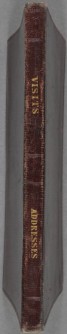
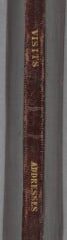
The National University of Singapore (NUS) has unveiled a significant historical document: Charles Darwin’s personal Address Book. This release marks the first time this intimate glimpse into Darwin’s life has been made publicly available. The project, known as Darwin Online, features scans of the entire 48-page notebook alongside a detailed transcription of Darwin’s handwriting, which is often difficult to read. Comprehensive editorial notes provide context for approximately 500 entries, shedding light on their relevance in Darwin’s extensive body of work.
Uncovering a Hidden Social History
The Address Book, initiated by Darwin’s wife, Emma Darwin, shortly after their marriage in January 1839, serves as a rich social history. While the Correspondence of Charles Darwin documents 15,000 letters exchanged during his lifetime, it is essential to recognize that many more letters have been lost. This notebook reveals connections to numerous individuals, businesses, and topics not previously noted in Darwin’s existing literature, even after a comprehensive 50-year correspondence project.
Among the intriguing contents are unique references to articles in the Gardeners’ Chronicle, which Darwin utilized for research. The notebook also contains practical notes related to his estate, including recipes for rat poison, cleaning animal skeletons, and ordering peat for his greenhouse. Additional entries reference various medical treatments, tools, and even a fireworks display for his village, emphasizing Darwin’s multifaceted interests beyond his scientific pursuits.
A Network of Influences and Connections
Noteworthy entries include those of pigeon breeders, tradesmen, and even the optician who provided eyewear to Queen Victoria and later to Winston Churchill. One particularly interesting entry lists Alfred Russel Wallace‘s shipping agent in Singapore, where Wallace conducted extensive fieldwork from 1854 to 1862. This connection highlights the collaborative environment in which Darwin and Wallace developed their concepts of evolution, culminating in their joint presentation before a scientific society in 1858.
The Address Book remained within Darwin’s family following his death in 1882, with most of his papers eventually donated to Cambridge University Library in 1942. In 1948, this particular notebook was deemed more suitable for public display at his former residence, Down House, where it is currently preserved.
Dr. John van Wyhe, a historian of science from the NUS Faculty of Science, expressed enthusiasm for this publication, stating, “It’s incredible that this little treasure-trove of details by Darwin has remained unpublished until now. It offers fascinating new insights into his life and the way he worked.”
Since its inception in 2005, the Darwin Online project has aimed to transcribe and edit the entirety of the Darwin Archive, culminating in the launch of his complete library online in 2024. The Address Book is now accessible to the public, providing a valuable resource for those interested in the life and work of one of history’s most significant scientists. For more information, the Address Book can be viewed online at Darwin Online.




West San Gabriel Valley YMCA Celebrates Grand Re-opening

OpenClaw Revolutionizes AI: Five Key Insights for Enterprises

Active Teens Face Hidden Heart Risks: The Importance of Cholesterol Screening

Alabama Senate Proposes Bills to Regulate Data Center Incentives

Central Kansas Christian Academy Expands to K-12 Education

Couples Embrace “Garden of Roses” for February Weddings

Researchers Uncover Genetic Links to Parkinson’s Disease Risk

Researchers Uncover Mechanism Behind Immunotherapy Resistance in Tumors

Major Therapy Apps Exposed: Data Leak Risks Millions of Users

Nostradamus’ 2026 Predictions: Star Death and Dark Events Loom

OpenAI to Implement Age Verification for ChatGPT by December 2025

Discover the Top 10 Calorie Counting Apps of 2025

Bella Hadid Shares Health Update After Treatment for Lyme Disease

Analysts Project Stronger Growth for Apple’s iPhone 17 Lineup

Electric Moto Influencer Surronster Arrested in Tijuana

Harvard Secures Court Victory Over Federal Funding Cuts

Erin Bates Shares Recovery Update Following Sepsis Complications

Breakthroughs and Challenges Await Science in 2026
-
 Science1 month ago
Nostradamus’ 2026 Predictions: Star Death and Dark Events Loom
-
 Technology2 months ago
OpenAI to Implement Age Verification for ChatGPT by December 2025
-
 Technology7 months ago
Discover the Top 10 Calorie Counting Apps of 2025
-
 Health5 months ago
Bella Hadid Shares Health Update After Treatment for Lyme Disease
-
 Health5 months ago
Analysts Project Stronger Growth for Apple’s iPhone 17 Lineup
-
 Technology5 months ago
Electric Moto Influencer Surronster Arrested in Tijuana
-
 Education5 months ago
Harvard Secures Court Victory Over Federal Funding Cuts
-
 Health5 months ago
Erin Bates Shares Recovery Update Following Sepsis Complications
-
 Science2 months ago
Breakthroughs and Challenges Await Science in 2026
-
 Technology7 months ago
Meta Initiates $60B AI Data Center Expansion, Starting in Ohio
-

 Technology6 months ago
Discover How to Reverse Image Search Using ChatGPT Effortlessly
-

 Science4 months ago
Starship V3 Set for 2026 Launch After Successful Final Test of Version 2