
Science
Black Hole Continues to Devour Star Remains, Expected to Peak by 2027


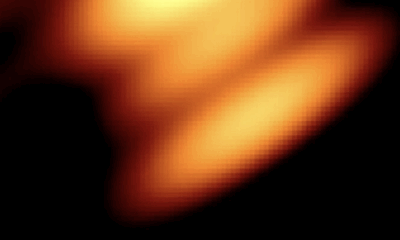
A supermassive black hole, located in the galaxy known as AT2020mrf, continues to consume the remnants of a star it shredded four years ago. Research conducted by a team led by an astrophysicist from the University of Oregon reveals that this cosmic phenomenon is not only ongoing but may reach a peak in its activity by 2027.
The black hole has been ejecting radio waves as it digests the star, providing a unique opportunity for scientists to observe the dynamics of such events in real-time. Known for its unusual behavior, this black hole has been likened to a case of cosmic indigestion, belching out the debris left behind as it feasts on a once-thriving star.
Understanding Cosmic Events
The research, published in the journal *Astrophysical Journal Letters*, outlines how the black hole’s jets are becoming increasingly powerful. As the black hole continues to consume material, the intensity of the emitted radio waves is expected to surge, potentially culminating in a peak that could be observed from Earth. The study emphasizes the importance of monitoring these patterns, as they can offer valuable insights into black hole behavior and the fundamental physics governing these celestial giants.
Astrophysicists have been investigating the life cycle of stars and how their death can lead to the formation of black holes. In this case, the star was so massive that upon its death, it was torn apart by the black hole’s immense gravitational pull. The resulting debris is being expelled at high speeds, forming jets that extend across vast distances in space.
A Window into the Universe
The implications of this research extend beyond just understanding a single black hole. The ongoing observations of the AT2020mrf black hole provide a rare glimpse into the processes that occur during and after a star’s demise. Such studies help scientists refine their models of black hole behavior and the impact these entities have on their surrounding environments.
As the research team continues to gather data, astronomers and astrophysicists worldwide will be watching closely. The expectation is that the black hole’s activity will lead to further discoveries, potentially reshaping our understanding of the universe and the forces at play within it. The ongoing study of this black hole could not only enhance knowledge of stellar dynamics but also contribute to the broader field of astrophysics.
In conclusion, the ongoing activity of this supermassive black hole presents an exciting opportunity for scientific exploration. With the next few years set to reveal more about its behavior, the astronomical community eagerly anticipates what new insights will emerge, particularly as it approaches its projected peak in 2027.








Saucony Launches Vibrant “Vizigold” Yellow ProGrid Omni 9

Terrain Shapes Wolf Control’s Impact on Caribou Calf Survival

Transdermal HRT Significantly Enhances Bone Density in Women

Top 10 Miniseries of the Last Decade That Redefined Television

Experts Examine Wire-Free Angiography for Coronary Assessments

Tanning Apps Promoting ‘Safe’ Sun Exposure Raise Health Concerns

Newton County Schools Honors 2025–26 HERO Award Nominees

Celebrate Love with Custom Conversation Hearts in Virginia Beach

Researchers Develop Medical-Grade Saline Production in Space

Nostradamus’ 2026 Predictions: Star Death and Dark Events Loom

OpenAI to Implement Age Verification for ChatGPT by December 2025

Discover the Top 10 Calorie Counting Apps of 2025

Bella Hadid Shares Health Update After Treatment for Lyme Disease

Analysts Project Stronger Growth for Apple’s iPhone 17 Lineup

Electric Moto Influencer Surronster Arrested in Tijuana

Harvard Secures Court Victory Over Federal Funding Cuts

Breakthroughs and Challenges Await Science in 2026

Erin Bates Shares Recovery Update Following Sepsis Complications
-
 Science1 month ago
Nostradamus’ 2026 Predictions: Star Death and Dark Events Loom
-
 Technology2 months ago
OpenAI to Implement Age Verification for ChatGPT by December 2025
-
 Technology7 months ago
Discover the Top 10 Calorie Counting Apps of 2025
-
 Health5 months ago
Bella Hadid Shares Health Update After Treatment for Lyme Disease
-
 Health5 months ago
Analysts Project Stronger Growth for Apple’s iPhone 17 Lineup
-
 Technology5 months ago
Electric Moto Influencer Surronster Arrested in Tijuana
-
 Education5 months ago
Harvard Secures Court Victory Over Federal Funding Cuts
-
 Science2 months ago
Breakthroughs and Challenges Await Science in 2026
-
 Health5 months ago
Erin Bates Shares Recovery Update Following Sepsis Complications
-

 Technology7 months ago
Meta Initiates $60B AI Data Center Expansion, Starting in Ohio
-

 Technology6 months ago
Discover How to Reverse Image Search Using ChatGPT Effortlessly
-

 Science4 months ago
Starship V3 Set for 2026 Launch After Successful Final Test of Version 2