
Science
Ancient Chinese Scribes Unveil Secrets of Solar Eclipse from 709 BCE

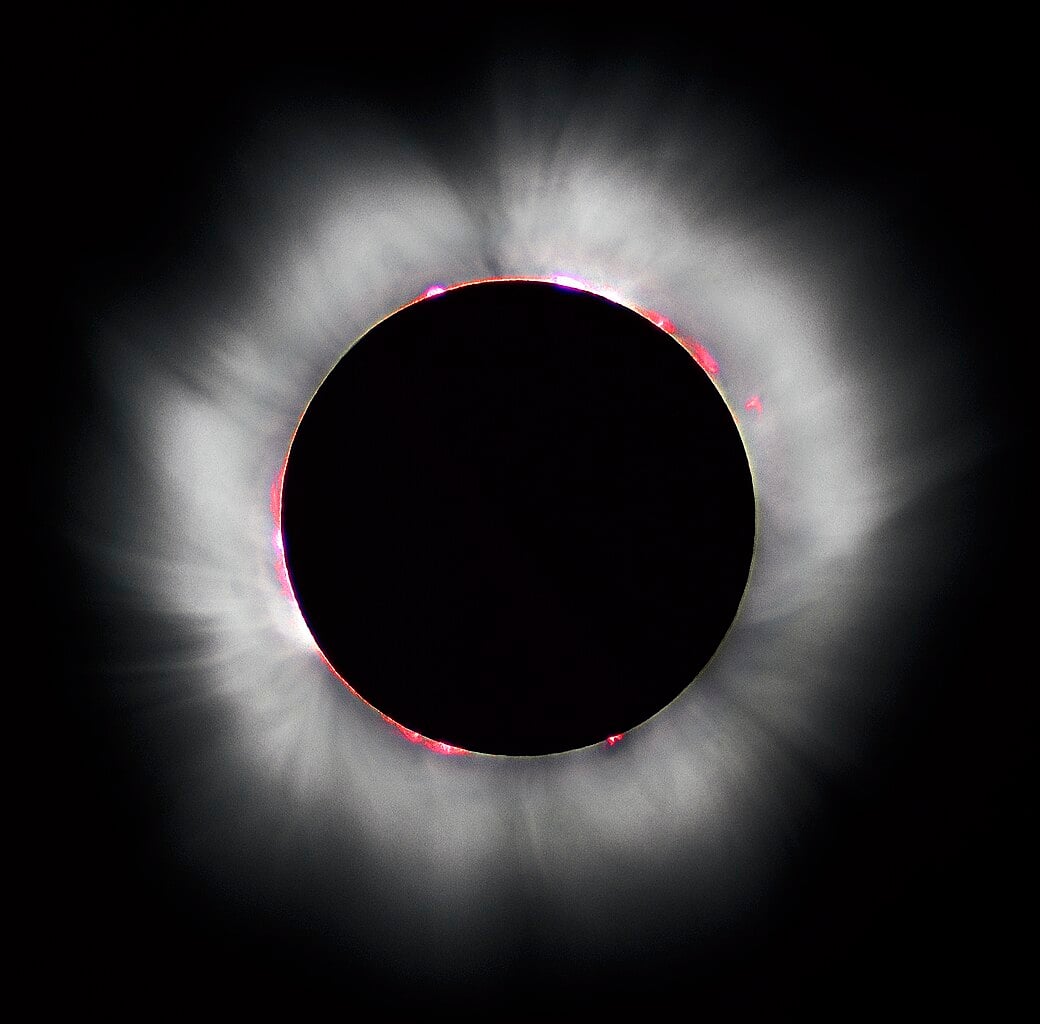
Ancient observations from Chinese scribes in 709 BCE have provided modern scientists with valuable insights into both Earth’s rotation and solar activity. These scribes, working at the Lu Duchy Court in what is now Qufu, China, documented a total solar eclipse that left an indelible mark on historical records. Their meticulous notes included a description of the eclipsed Sun appearing “completely yellow above and below,” a detail that has now been linked to significant scientific findings.
Researchers led by Hisashi Hayakawa from Nagoya University encountered a challenge when trying to verify the eclipse’s visibility using contemporary astronomical calculations. Their analysis initially suggested that a total eclipse should not have been visible from Qufu. However, a breakthrough came through archaeological evidence indicating that previous studies had relied on incorrect coordinates for the ancient city. By consulting excavation reports, the team discovered that the actual site of the Lu Court was eight kilometers from the previously referenced location.
With the accurate coordinates in hand, the researchers recalibrated their calculations. This adjustment allowed them to measure Earth’s rotation speed during the eclipse with remarkable precision. They concluded that, approximately 2,700 years ago, the planet was spinning slightly faster than it does today. This difference is primarily attributed to tidal friction caused by the Moon’s gravitational pull, which has gradually slowed Earth’s rotation over the millennia.
The ancient account also offered unexpected insights into solar activity during that period. The description of the Sun’s appearance may refer to the solar corona, the Sun’s faint outer atmosphere that is visible only during total eclipses. This reference suggests that the scribes may have provided one of the earliest written descriptions of the corona.
Research indicates that solar activity follows an approximately 11-year cycle of varying intensity, interspersed with longer quiet periods known as grand minima, during which sunspots nearly vanish. According to radiocarbon measurements derived from tree rings, the Sun had just exited a quiet phase lasting from 808 to 717 BCE. The ancient observers’ account aligns with this data, indicating that by 709 BCE, the Sun was resuming its regular activity cycles and approaching peak intensity.
This convergence of ancient human observation and modern scientific analysis underscores the validity of both methodologies. Trees absorb radiocarbon during photosynthesis, and their concentration levels reflect cosmic ray exposure, which decreases during heightened solar activity. The matching findings validate the ancient scribes’ observations as well as the scientific methods employed today.
China’s rich tradition of astronomical record-keeping can be traced back to dynasties that engaged experts to monitor celestial events. These scholars believed that such occurrences were indicative of imperial conduct, leading to systematic documentation that has proven invaluable for contemporary researchers. The eclipse records preserved in the Spring and Autumn Annals stand as a testament to this dedication, illuminating events from millennia past and informing our understanding of the natural world today.








UCLA Students Drive Global Change Through Engineering Projects

Grab Bose QuietComfort Headphones at Record Low Price Today

NASA Reveals New Insights from Interstellar Comet 3I/ATLAS

French Study Confirms mRNA Vaccine Effectiveness Against Severe COVID

Netflix Seals $72 Billion Deal to Acquire Warner Bros. Assets

UCLA Engineers Impact Global Communities Through Innovative Projects

Join Statesville Police in Toy Drive at Walmart on December 6

Alkaline Microbes Pave Way for Safer Nuclear Waste Management

Call for Urgent Reform of Pharmacy Benefit Managers to Lower Drug Costs

Discover the Top 10 Calorie Counting Apps of 2025

Bella Hadid Shares Health Update After Treatment for Lyme Disease

Erin Bates Shares Recovery Update Following Sepsis Complications

Discover How to Reverse Image Search Using ChatGPT Effortlessly

Discover 2025’s Top GPUs for Exceptional 4K Gaming Performance

Electric Moto Influencer Surronster Arrested in Tijuana

Meta Initiates $60B AI Data Center Expansion, Starting in Ohio

Recovering a Suspended TikTok Account: A Step-by-Step Guide

Tested: Rab Firewall Mountain Jacket Survives Harsh Conditions
-
 Technology5 months ago
Discover the Top 10 Calorie Counting Apps of 2025
-
 Health3 months ago
Bella Hadid Shares Health Update After Treatment for Lyme Disease
-
 Health3 months ago
Erin Bates Shares Recovery Update Following Sepsis Complications
-
 Technology4 months ago
Discover How to Reverse Image Search Using ChatGPT Effortlessly
-
 Technology1 month ago
Discover 2025’s Top GPUs for Exceptional 4K Gaming Performance
-
 Technology3 months ago
Electric Moto Influencer Surronster Arrested in Tijuana
-
 Technology5 months ago
Meta Initiates $60B AI Data Center Expansion, Starting in Ohio
-
 Technology5 months ago
Recovering a Suspended TikTok Account: A Step-by-Step Guide
-
 Health4 months ago
Tested: Rab Firewall Mountain Jacket Survives Harsh Conditions
-

 Lifestyle5 months ago
Belton Family Reunites After Daughter Survives Hill Country Floods
-

 Technology4 months ago
Harmonic Launches AI Chatbot App to Transform Mathematical Reasoning
-

 Health3 months ago
Analysts Project Stronger Growth for Apple’s iPhone 17 Lineup