
Health
U.S. Government Launches Campaign Promoting Whole Milk Consumption

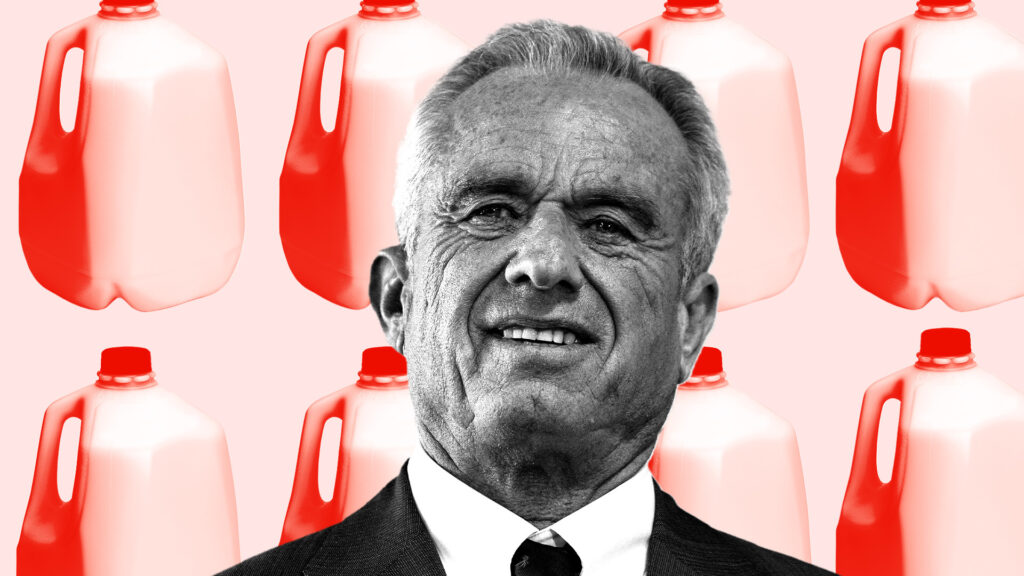
The U.S. government has initiated a campaign promoting whole milk consumption, coinciding with two significant developments: a law permitting schools to serve whole milk after over a decade and new dietary guidelines endorsing full-fat dairy options. The campaign highlights a cultural shift towards whole milk, featuring figures such as Robert F. Kennedy Jr. and athletes like swimmer Riley Gaines, who declared that the “milk mustache is back” in a promotional video.
While the campaign aims to revive interest in milk, it underscores a long-standing relationship between the government and the dairy industry. The U.S. Department of Agriculture (USDA) has a history of promoting dairy consumption through initiatives like the well-known “Got Milk?” campaign from the 1990s and 2000s. Michele Simon, a public health attorney, noted that government officials have previously engaged in similar promotional efforts, referencing then-Health Secretary Donna Shalala’s appearance in a “Got Milk?” advertisement.
The USDA claims the current campaign operates on a pro bono basis with no budget. However, the Milk Processor Education Program, which retired the “Got Milk?” campaign in 2014, stated that the USDA is free to utilize the slogan without permission, as they no longer own it. A USDA spokesperson emphasized that the campaign aligns with President Trump’s objective to enhance nutritious food options for Americans.
From a nutritional standpoint, whole milk is rich in essential nutrients, including calcium and vitamin D. Yet, experts like Marion Nestle, a professor emeritus of nutrition at New York University, maintain that these nutrients can be sourced from other foods, rendering dairy non-essential. A 2020 review led by Harvard researchers indicated that dairy’s health impacts vary depending on dietary comparisons, suggesting that while it may be preferable to sugary drinks, it does not measure up against healthier options like nuts.
The promotion of dairy raises concerns regarding health disparities, particularly among populations that struggle with lactose intolerance. Andrea Freeman, a professor at Southwestern Law School, highlighted that the government’s endorsement of dairy may exacerbate existing health inequities. She noted that milk has historically been associated with notions of whiteness and that its promotion could be interpreted as a disinformation campaign targeting communities unable to digest it.
The historical context of dairy promotion in the U.S. reveals deeper societal issues. In the early 20th century, the government actively encouraged milk consumption, linking its benefits to racial superiority. Herbert Hoover, as head of the Food Administration after World War I, advocated for milk as a protective food, framing its advantages in terms that reflected prevailing racial ideologies. Freeman pointed out that this legacy of promoting milk has persisted, manifesting in modern messaging that coincides with a resurgence of conservative values.
The dairy industry is keen to revitalize milk consumption as data indicates a significant decline in per capita milk consumption, which has dropped nearly by half from 1975 to 2024. Food economist Parke Wilde from Tufts University remarked that while there are economic incentives for promoting dairy, there must be careful consideration of the nutritional implications of such government messages.
As the campaign unfolds, it raises questions about whether other foods favored by the current administration might receive similar promotional treatment. Recent social media posts revealed Kennedy celebrating his birthday with a slab of steak, highlighting the potential for further government endorsements of specific food products.
Overall, the new whole milk campaign signifies a multifaceted interplay between health policy, agricultural interests, and cultural narratives, with implications for public health and social equity. The USDA’s efforts reflect ongoing debates about nutrition, equity, and the role of government in shaping dietary choices in America.












Revolutionary Photonic Ski-Jump Could Miniaturize LiDAR Systems

Couples Detox from Plastics in New Netflix Doc: Can It Boost Fertility?

Aventon Launches Affordable Full-Suspension Electric Mountain Bike

Discover Eight Must-Try Restaurants This Spring Season

UC Irvine Team Unveils Innovative Ion Pump for Water Treatment

One-Third of Americans Trim Daily Expenses for Healthcare Needs

Apple Secures First Oscar in Three Years with F1: The Movie

Fourth Graders Celebrate St. Patrick’s Day with Creative Weather Drawings

Kim Kardashian Dazzles at Vanity Fair Oscars Party 2026

Nostradamus’ 2026 Predictions: Star Death and Dark Events Loom

Breakthroughs and Challenges Await Science in 2026

Electric Moto Influencer Surronster Arrested in Tijuana

OpenAI to Implement Age Verification for ChatGPT by December 2025

Discover the Top 10 Calorie Counting Apps of 2025

Bella Hadid Shares Health Update After Treatment for Lyme Disease

Analysts Project Stronger Growth for Apple’s iPhone 17 Lineup

Japanese Study Finds Rose Oil Can Increase Brain Gray Matter

Top 10 Penny Stocks to Watch in 2026 for Strong Returns
-
 Science3 months ago
Nostradamus’ 2026 Predictions: Star Death and Dark Events Loom
-
 Science4 months ago
Breakthroughs and Challenges Await Science in 2026
-
 Technology7 months ago
Electric Moto Influencer Surronster Arrested in Tijuana
-
 Technology4 months ago
OpenAI to Implement Age Verification for ChatGPT by December 2025
-
 Technology9 months ago
Discover the Top 10 Calorie Counting Apps of 2025
-
 Health7 months ago
Bella Hadid Shares Health Update After Treatment for Lyme Disease
-
 Health7 months ago
Analysts Project Stronger Growth for Apple’s iPhone 17 Lineup
-
 Health7 months ago
Japanese Study Finds Rose Oil Can Increase Brain Gray Matter
-
 Technology4 months ago
Top 10 Penny Stocks to Watch in 2026 for Strong Returns
-

 Science6 months ago
Starship V3 Set for 2026 Launch After Successful Final Test of Version 2
-

 Technology1 month ago
Nvidia GTC 2026: Major Announcements Expected for AI and Hardware
-

 Education7 months ago
Harvard Secures Court Victory Over Federal Funding Cuts