
Health
NIH Cuts Funding for Young Scientists, Leaving Many Scrambling

The National Institutes of Health (NIH) has terminated funding for hundreds of young scientists through its MOSAIC program, a significant blow to early-career researchers aiming to establish their own laboratories. The program, which was designed to assist scientists during the transition from postdoctoral positions to independent faculty roles, was halted due to its perceived alignment with diversity, equity, and inclusion (DEI) initiatives, which the Trump administration sought to eliminate.
Jay Bhattacharya, Director of the NIH, had previously emphasized the importance of nurturing young biomedical scientists. The MOSAIC program aimed to provide essential funding for researchers from diverse backgrounds, addressing a critical gap in support during a pivotal moment in their careers. Despite its intentions, the program faced termination shortly after the administration took office, affecting 104 researchers who had been counting on these funds to launch their research projects.
The MOSAIC initiative, short for Maximizing Opportunities for Scientific and Academic Independent Careers, was established to tackle two significant challenges faced by the NIH: the lack of diversity among funded researchers and the unstable career paths for postdoctoral scholars. The program offered up to $125,000 per year for two years of postdoctoral research, followed by a potential $249,000 annually for three years as tenure-track professors.
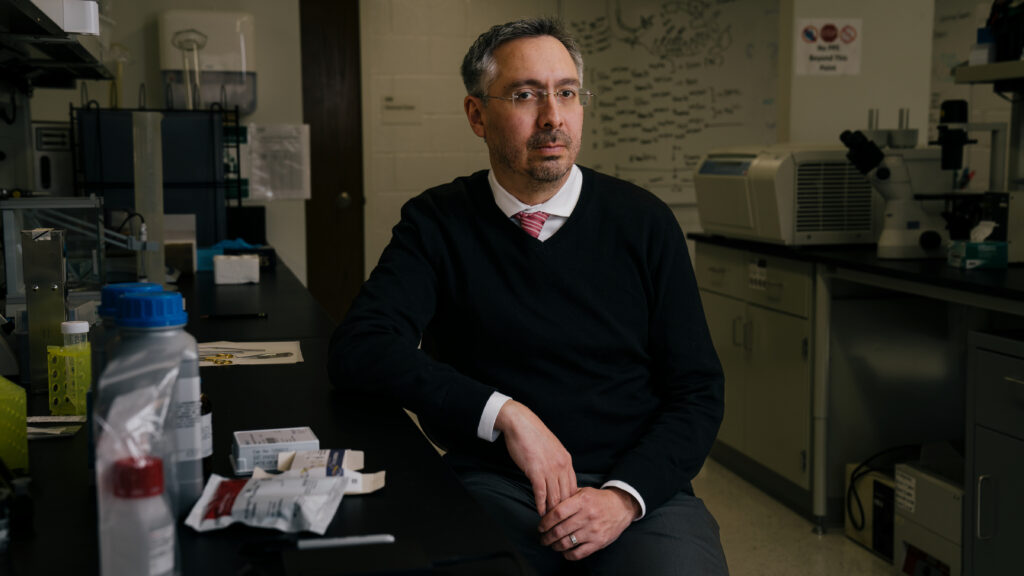
The abrupt cancellation of funding has left many researchers, including Luis Rodriguez, a molecular biologist at George Washington University, grappling with uncertainty. Rodriguez, who was poised to begin his lab work on lung disease research, expressed his disappointment, stating, “I think everyone has their own horror story.” His MOSAIC grant, which could have provided a total of $160,000 over four years, was terminated, forcing him to reduce his hiring plans and alter his research ambitions significantly.
In the nine months leading up to the recent government shutdown, the NIH awarded 172 fewer transition grants to postdoctoral researchers compared to the previous year, marking a 10% reduction. Overall, the agency funded 896 fewer early-career grants from January through September, resulting in the lowest number of awards since 2016.
Despite the setbacks, the NIH maintains that it is committed to supporting early-career researchers. An NIH spokesperson stated the agency is “shifting its portfolio to maximize the impact of federal taxpayer dollars” and to ensure proper oversight of funding, distancing itself from DEI initiatives. However, critics argue that the elimination of the MOSAIC program has exacerbated existing disparities in the scientific workforce.
Tara Schwetz, a former deputy director at the NIH, voiced her concerns about the implications of these funding cuts on the scientific community. She noted that the lack of support for early-career scientists could jeopardize a crucial pipeline that sustains the nation’s research capabilities. “I do worry a lot about early-career scientists,” Schwetz remarked, emphasizing the potential long-term consequences of these actions on the future of science in the United States.
The MOSAIC program had been recognized for its success in facilitating the transition of marginalized researchers into academia, countering biases that often hinder their career progression. Michael Sesma, who played a role in establishing the program, recalled his own experiences as one of the few researchers of color in his field. “We tried to put the money where it would do the most good and help the most people,” he stated.
The program’s broad definition of diversity encompassed individuals from various disadvantaged backgrounds, extending beyond race and ethnicity to include those from rural areas, first-generation college students, and individuals from the foster care system. The NIH’s previous commitment to fostering diversity among its grant recipients was evident in the program’s design, which required applicants to engage in community outreach—a requirement not found in traditional transition awards.
The termination of the MOSAIC program has left many researchers feeling disheartened and uncertain about their futures. Sarah Vick, a postdoctoral researcher and former MOSAIC scholar, expressed her frustration at the increased competition for faculty positions amidst funding uncertainties. “Some schools postponed job searches in the last cycle because of uncertainty around funding cuts,” she explained, highlighting the significant challenges faced by early-career scientists in the current environment.
As these researchers navigate the aftermath of funding cuts, many remain determined to continue their work in academia. Nevertheless, the specter of reduced opportunities looms large. Rodriguez, reflecting on his altered plans and increased stress, stated, “The potential for failure is far more realistic than it’s ever been.”
The implications of these changes extend beyond individual careers; they raise broader questions about the future of scientific research in the United States. Experts like Donna Ginther, a labor economist at the University of Kansas, have warned that the elimination of programs like MOSAIC not only disrupts the careers of young scientists but may also lead to a decline in the overall quality and quantity of scientific output.
In conclusion, the NIH’s decision to terminate the MOSAIC program underscores the delicate balance between funding and support for early-career scientists. As the landscape of research funding continues to evolve, the long-term impact of these changes on scientific innovation and diversity remains to be seen.











Recognizing Strength: Reframing the Narrative on Depression

AR and VR Transform Art Experiences, Sparking Legal Challenges

Princeton University Welcomes Two New Assistant Professors

Phoebe Yee Outlines Key Principles for Calming Apartment Design

Researchers Develop Stable Boron Compounds to Simplify Drug Design

Celebrating the Life and Legacy of Ruby Bryant Painter, 1935-2026

New Study Reveals Two Massive Rock Blobs Affect Earth’s Magnetic Field

TikTok Users Experiment with Hummus in Ninja Creami Machine

Empowering Educators: 5 Free Resources for Teaching Black History

Nostradamus’ 2026 Predictions: Star Death and Dark Events Loom

OpenAI to Implement Age Verification for ChatGPT by December 2025

Discover the Top 10 Calorie Counting Apps of 2025

Bella Hadid Shares Health Update After Treatment for Lyme Disease

Analysts Project Stronger Growth for Apple’s iPhone 17 Lineup

Electric Moto Influencer Surronster Arrested in Tijuana

Harvard Secures Court Victory Over Federal Funding Cuts

Erin Bates Shares Recovery Update Following Sepsis Complications

Discover How to Reverse Image Search Using ChatGPT Effortlessly
-
 Science1 month ago
Nostradamus’ 2026 Predictions: Star Death and Dark Events Loom
-
 Technology2 months ago
OpenAI to Implement Age Verification for ChatGPT by December 2025
-
 Technology7 months ago
Discover the Top 10 Calorie Counting Apps of 2025
-
 Health5 months ago
Bella Hadid Shares Health Update After Treatment for Lyme Disease
-
 Health5 months ago
Analysts Project Stronger Growth for Apple’s iPhone 17 Lineup
-
 Technology5 months ago
Electric Moto Influencer Surronster Arrested in Tijuana
-
 Education5 months ago
Harvard Secures Court Victory Over Federal Funding Cuts
-
 Health5 months ago
Erin Bates Shares Recovery Update Following Sepsis Complications
-
 Technology6 months ago
Discover How to Reverse Image Search Using ChatGPT Effortlessly
-

 Technology7 months ago
Meta Initiates $60B AI Data Center Expansion, Starting in Ohio
-

 Science4 months ago
Starship V3 Set for 2026 Launch After Successful Final Test of Version 2
-

 Technology7 months ago
Recovering a Suspended TikTok Account: A Step-by-Step Guide