
Science
U.S. Research Funding Faces Uncertainty Following Policy Changes

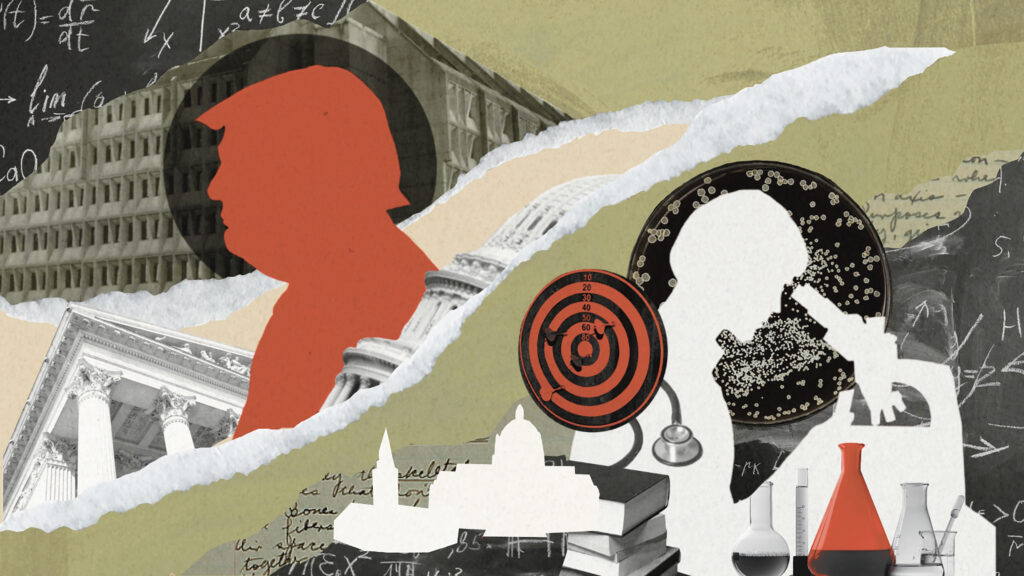
A significant shift in U.S. research funding has emerged as the Trump administration alters the longstanding relationship between the federal government and academic institutions. Researchers in the United States are grappling with the implications of these changes, which have disrupted funding streams essential for scientific advancement. As 2025 unfolds, many scholars are left questioning their future in the field.
The National Institutes of Health (NIH) has faced a tumultuous year, with funding for new grants dropping by 11.6% in comparison to the previous year. Analysis of nearly 750,000 NIH grants over the past decade reveals that the number of awards from January through September 2025 has decreased significantly. While the overall budget remains stable at approximately $37 billion, the shift in funding strategy has raised concerns about the sustainability of research initiatives.
Under the current administration, the NIH has shifted towards funding many multiyear grants upfront. This decision, while aimed at streamlining the funding process, has resulted in fewer projects receiving support. Areas such as vaccine research, health disparities, cancer, Alzheimer’s disease, and HIV/AIDS—fields that typically enjoy bipartisan backing—have all felt the impact, according to the STAT analysis.
In addition to the decline in overall grant numbers, funding for high-risk, high-reward projects has also seen a downturn. These grants are crucial for innovative research, yet the NIH funded only 364 such grants in the first nine months of 2025, down from 406 the previous year. This reduction poses a threat to the very foundation of creativity and exploration that drives scientific progress.
The repercussions of these funding changes extend beyond immediate financial concerns. Academic institutions are reacting defensively to the uncertain funding landscape, leading to hiring freezes, staff layoffs, and cutbacks in graduate training programs. Preliminary data from the National Student Clearinghouse Research Center indicates that enrollments in Ph.D. programs in life and biomedical sciences have stagnated, marking a significant shift in academic growth.
For many scientists, the most troubling aspect has been the erosion of trust in the government as a reliable partner in research. An NIH official expressed concern about the long-term effects of this breakdown, stating, “Why would anyone trust the NIH ever again?” This sentiment reflects a broader anxiety among researchers about the future of public investment in science.
Shirley Tilghman, a molecular biologist and former president of Princeton University, criticized the administration’s approach. She noted that while the intention may have been to challenge elite institutions, the consequences could dismantle the scientific infrastructure of the United States. “It’s one thing to destroy something. It is quite another to destroy it and have nothing to replace it with,” Tilghman remarked.
Despite the challenges, some within the administration view the current upheaval as an opportunity for reform. They argue that the shake-up could lead to necessary changes in how federal funding is allocated to universities and researchers. This perspective is echoed by various leaders in the scientific community, who see potential for progress amid the turmoil.
To gain a clearer understanding of this pivotal moment in U.S. scientific research, STAT conducted interviews with over two dozen experts, including current and former federal health officials, NIH directors, and science policy specialists. The consensus among these experts is that the partnership between government and academia is fundamentally altered, and there is no path back to the previous status quo.
As Larry Tabak, former principal deputy director of the NIH, stated, “Whatever comes next is never going to be what it used to be.” This reflection encapsulates the uncertainty that now defines the landscape of U.S. research funding, leaving scientists and academic institutions to navigate a new and challenging reality.











Ohio School District Aims to Exit Academic Distress Status

James Webb Space Telescope Unveils Earliest Galaxy Cluster Yet

Black Men Confront Prostate Cancer: Jerry McCormick’s Journey

OpenMind Unveils Innovative App Store for Robot Software

UGA Hosts Renowned Nobel and Pulitzer Winners for Spring Lectures

Scotland’s 13 Michelin Star Restaurants Gear Up for 2026 Guide

International Team Discovers New Dinosaur Foskeia pelendonum in Spain

Nebraska’s Miracle Quads Celebrate 18 Years of Joy

Stanford Daily Launches Volume 269 with New Editorial Team

Nostradamus’ 2026 Predictions: Star Death and Dark Events Loom

OpenAI to Implement Age Verification for ChatGPT by December 2025

Discover the Top 10 Calorie Counting Apps of 2025

Bella Hadid Shares Health Update After Treatment for Lyme Disease

Analysts Project Stronger Growth for Apple’s iPhone 17 Lineup

Electric Moto Influencer Surronster Arrested in Tijuana

Harvard Secures Court Victory Over Federal Funding Cuts

Erin Bates Shares Recovery Update Following Sepsis Complications

Discover How to Reverse Image Search Using ChatGPT Effortlessly
-
 Science1 month ago
Nostradamus’ 2026 Predictions: Star Death and Dark Events Loom
-
 Technology2 months ago
OpenAI to Implement Age Verification for ChatGPT by December 2025
-
 Technology7 months ago
Discover the Top 10 Calorie Counting Apps of 2025
-
 Health5 months ago
Bella Hadid Shares Health Update After Treatment for Lyme Disease
-
 Health5 months ago
Analysts Project Stronger Growth for Apple’s iPhone 17 Lineup
-
 Technology5 months ago
Electric Moto Influencer Surronster Arrested in Tijuana
-
 Education5 months ago
Harvard Secures Court Victory Over Federal Funding Cuts
-
 Health5 months ago
Erin Bates Shares Recovery Update Following Sepsis Complications
-
 Technology6 months ago
Discover How to Reverse Image Search Using ChatGPT Effortlessly
-
 Technology7 months ago
Meta Initiates $60B AI Data Center Expansion, Starting in Ohio
-

 Science4 months ago
Starship V3 Set for 2026 Launch After Successful Final Test of Version 2
-

 Technology7 months ago
Recovering a Suspended TikTok Account: A Step-by-Step Guide