
Science
Innovative ‘OCTOID’ Soft Robot Mimics Octopus Motion and Color

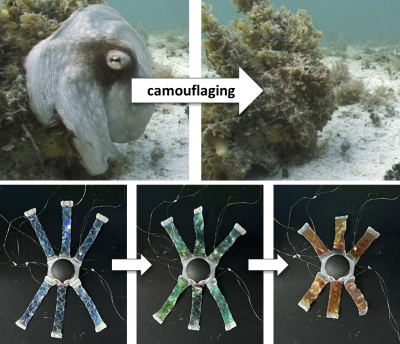
Researchers at the Korea Institute of Science and Technology (KIST) have unveiled an innovative soft robot named ‘OCTOID’. Led by Dr. Dae-Yoon Kim at the Functional Composite Materials Research Center, this robot mimics the remarkable camouflage and movement capabilities of octopuses. It is designed to change both color and shape dynamically, marking a significant advancement in soft robotics.
The OCTOID robot operates through a unique integration of materials that allows it to respond to electrical stimuli. Unlike traditional robots that simply bend or stretch, OCTOID can shift its color to blend into its environment while also manipulating its form for various tasks. This capability enables the robot to both navigate its surroundings and grasp objects effectively.
Transformative Design and Functionality
The design of OCTOID is inspired by the biological mechanisms of octopuses, which are known for their exceptional ability to camouflage and their fluid movement. The robot utilizes soft materials that allow for flexibility and adaptability, making it suitable for diverse applications, including environmental monitoring and human-robot interaction.
This development highlights a growing trend in robotics toward more organic movements and interactions. The KIST team’s work represents a leap forward in creating machines that can blend seamlessly into different environments, potentially transforming how robots are utilized in various fields.
Dr. Kim emphasized the potential implications of this research, stating, “OCTOID could lead to new applications in areas where adaptive camouflage and dexterous manipulation are essential.” The project has garnered attention for its innovative approach to robotics, and the implications of this technology could extend far beyond simple automation.
Future Applications and Impact
The ability of OCTOID to change color and shape could have significant impacts on multiple industries. For instance, in search and rescue missions, robots that can adapt to their surroundings might perform tasks more effectively without drawing attention. Additionally, the technology could enhance robotics in manufacturing, where flexibility and adaptability are increasingly important.
As the research continues, the team at KIST is exploring further enhancements to OCTOID’s capabilities. The goal is to refine its performance and expand its range of functions, making it a versatile tool in both industrial and research settings.
With ongoing advancements in soft robotics, the innovations from the KIST team may pave the way for smarter, more responsive robots capable of interacting with the world in ways previously thought impossible.








Black Men Confront Prostate Cancer: Jerry McCormick’s Journey

OpenMind Unveils Innovative App Store for Robot Software

UGA Hosts Renowned Nobel and Pulitzer Winners for Spring Lectures

Scotland’s 13 Michelin Star Restaurants Gear Up for 2026 Guide

International Team Discovers New Dinosaur Foskeia pelendonum in Spain

Nebraska’s Miracle Quads Celebrate 18 Years of Joy

Stanford Daily Launches Volume 269 with New Editorial Team

Community Events Bring Art, Education, and Culture to Ulster County

Claws Out Comedy Open Mic Night Wins Best Comedy Night Accolade

Nostradamus’ 2026 Predictions: Star Death and Dark Events Loom

OpenAI to Implement Age Verification for ChatGPT by December 2025

Discover the Top 10 Calorie Counting Apps of 2025

Bella Hadid Shares Health Update After Treatment for Lyme Disease

Analysts Project Stronger Growth for Apple’s iPhone 17 Lineup

Electric Moto Influencer Surronster Arrested in Tijuana

Harvard Secures Court Victory Over Federal Funding Cuts

Erin Bates Shares Recovery Update Following Sepsis Complications

Discover How to Reverse Image Search Using ChatGPT Effortlessly
-
 Science1 month ago
Nostradamus’ 2026 Predictions: Star Death and Dark Events Loom
-
 Technology2 months ago
OpenAI to Implement Age Verification for ChatGPT by December 2025
-
 Technology7 months ago
Discover the Top 10 Calorie Counting Apps of 2025
-
 Health5 months ago
Bella Hadid Shares Health Update After Treatment for Lyme Disease
-
 Health5 months ago
Analysts Project Stronger Growth for Apple’s iPhone 17 Lineup
-
 Technology5 months ago
Electric Moto Influencer Surronster Arrested in Tijuana
-
 Education5 months ago
Harvard Secures Court Victory Over Federal Funding Cuts
-
 Health5 months ago
Erin Bates Shares Recovery Update Following Sepsis Complications
-
 Technology6 months ago
Discover How to Reverse Image Search Using ChatGPT Effortlessly
-

 Technology7 months ago
Meta Initiates $60B AI Data Center Expansion, Starting in Ohio
-

 Science4 months ago
Starship V3 Set for 2026 Launch After Successful Final Test of Version 2
-

 Technology7 months ago
Recovering a Suspended TikTok Account: A Step-by-Step Guide