
Science
Breakthroughs in DNA Technology Solve Cold Cases in Minnesota

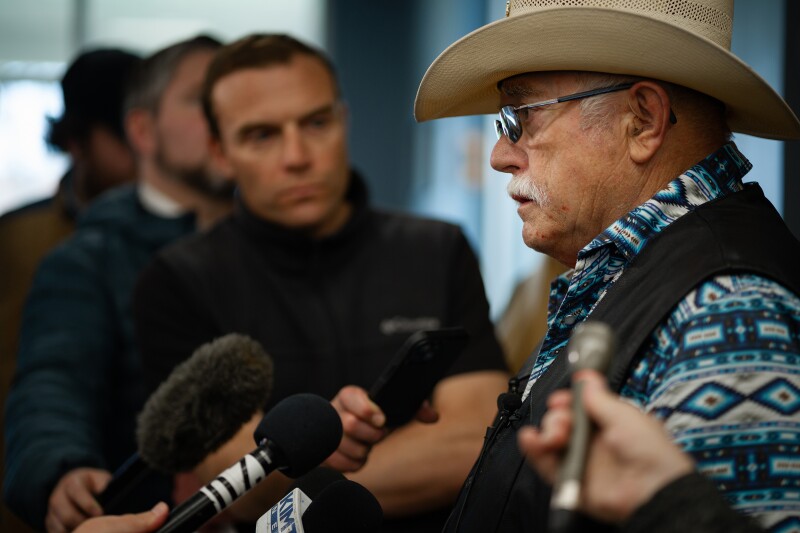
Advancements in DNA technology and forensic genealogy have transformed cold case investigations in the United States, yielding significant breakthroughs in Minnesota during 2025. These developments have provided closure in cases that had long baffled law enforcement and communities alike.
Major Cases Resolved Through DNA Technology
Three notable cases emerged this year, showcasing the power of collaboration among law enforcement, forensic laboratories, and genealogists. One of the most compelling stories involves the disappearance of Roy G. Benn, who vanished on September 25, 1967, at the age of 69. Benn was last seen leaving the King’s Supper Club in Sartell, where witnesses noted he was well-dressed, carrying a substantial amount of cash. His metallic blue 1963 Buick Electra went missing along with him, leaving authorities puzzled for decades.
The breakthrough came on August 10, 2025, when a fisherman discovered the vehicle submerged in the Mississippi River. Following this find, a dive team from the Stearns County Sheriff’s Office confirmed the presence of human remains inside the car two months later. A report from the Medical Examiner’s Office indicated that Benn likely died in a car accident, ruling out foul play.
In another case, the identity of a newborn found abandoned in Blaine, Minnesota, in 1983 was revealed through advanced DNA testing. The baby, known as Rachel Marie Doe, had been delivered by a teenage girl who remained anonymous for decades. Anoka County Attorney Brad John stated that, although the mother was located, no charges would be filed due to the circumstances surrounding the case. The young mother had left her baby in a high-traffic area, hoping someone would find her.
The autopsy revealed a tragic reality, but investigators were unable to determine if the baby was alive when abandoned. With the mother’s identity now known, this case provides a poignant conclusion to a long-standing mystery.
Community Impact and Ongoing Investigations
Perhaps the most heart-wrenching case to surface this year involves a baby girl discovered on September 5, 2011, along the Mississippi River. Initially dubbed “Baby Angel,” the infant was found deceased, wrapped in a green T-shirt inside a white tote bag. The small community of Winona, Minnesota, with a population of approximately 26,000, rallied around the case, conducting a public funeral attended by over 150 people.
In April 2025, the identity of Baby Angel’s mother, Jennifer Nichole Baechle, was uncovered through forensic genealogy. Baechle, an adjunct English professor at Winona State University, was charged with two counts of second-degree manslaughter. The revelation shocked the community, which had not only mourned the loss of Baby Angel but also maintained her gravesite with care.
As the case unfolds, Baechle’s defense attorney filed a motion to withhold evidence, highlighting discrepancies in the autopsy reports. The key question remains: was Baby Angel born alive, or was she stillborn? This legal battle will continue, with the next hearing scheduled for January 14, 2026.
These cases illustrate the profound impact of modern DNA technology on cold case investigations, offering hope for resolution and justice to families and communities that have waited decades for answers. The collaboration among law enforcement and forensic experts has not only brought closure to long-standing mysteries but also highlighted the ethical complexities involved in such sensitive matters.










Community Honors Jane Morris with Celebration of Life Service

NASA Tests Innovative CryoFILL System for Future Space Missions

CMS to Address Healthcare Fraud in Congressional Hearing

Heat Pumps Transform Heating and Cooling in Grand County

Indian River State College Hosts Free Open Houses This Spring

Louis Vuitton and Miu Miu Present Distinct Visions at Paris Fashion Week

Western Nevada College Faculty Members Awarded Tenure by Regents

Elwyn Raymond Van Enwyck, 98, Remembered for Kindness and Service

Blood Test Could Forecast Alzheimer’s Risk Up to 25 Years Ahead

Nostradamus’ 2026 Predictions: Star Death and Dark Events Loom

Breakthroughs and Challenges Await Science in 2026

OpenAI to Implement Age Verification for ChatGPT by December 2025

Electric Moto Influencer Surronster Arrested in Tijuana

Discover the Top 10 Calorie Counting Apps of 2025

Bella Hadid Shares Health Update After Treatment for Lyme Disease

Analysts Project Stronger Growth for Apple’s iPhone 17 Lineup

Top 10 Penny Stocks to Watch in 2026 for Strong Returns

Japanese Study Finds Rose Oil Can Increase Brain Gray Matter
-
 Science2 months ago
Nostradamus’ 2026 Predictions: Star Death and Dark Events Loom
-
 Science3 months ago
Breakthroughs and Challenges Await Science in 2026
-
 Technology3 months ago
OpenAI to Implement Age Verification for ChatGPT by December 2025
-
 Technology6 months ago
Electric Moto Influencer Surronster Arrested in Tijuana
-
 Technology8 months ago
Discover the Top 10 Calorie Counting Apps of 2025
-
 Health6 months ago
Bella Hadid Shares Health Update After Treatment for Lyme Disease
-
 Health6 months ago
Analysts Project Stronger Growth for Apple’s iPhone 17 Lineup
-
 Technology3 months ago
Top 10 Penny Stocks to Watch in 2026 for Strong Returns
-
 Health6 months ago
Japanese Study Finds Rose Oil Can Increase Brain Gray Matter
-

 Science5 months ago
Starship V3 Set for 2026 Launch After Successful Final Test of Version 2
-

 Education6 months ago
Harvard Secures Court Victory Over Federal Funding Cuts
-

 Health6 months ago
Erin Bates Shares Recovery Update Following Sepsis Complications