
Science
Ancient Peruvian Mountain Reveals 5,200 Holes of Mystery

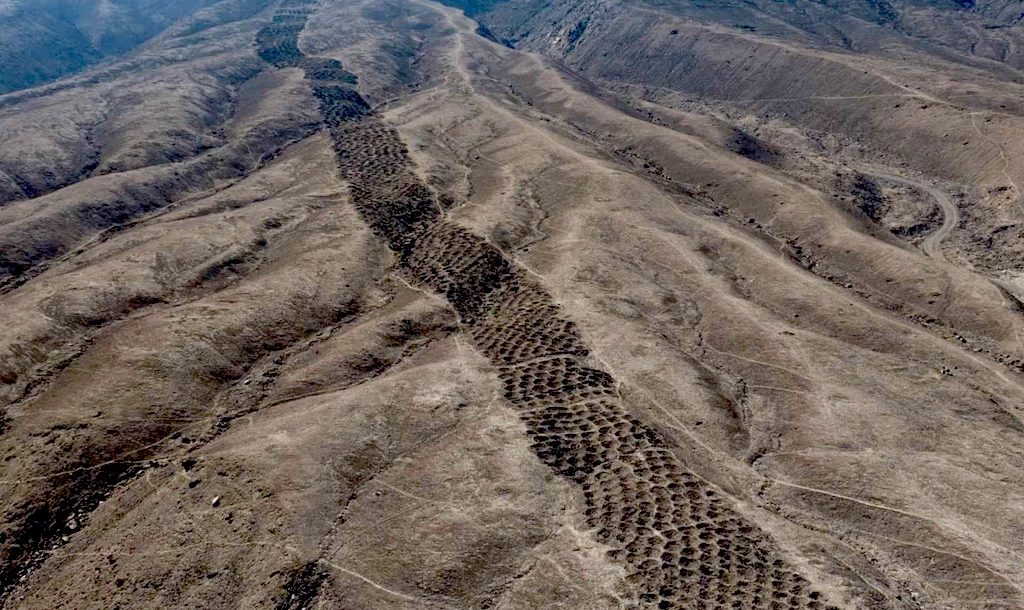
A remarkable discovery in the Pisco Valley of Peru has revealed approximately 5,200 holes carved into the hillside of Monte Sierpe, also known as “serpent mountain.” Researchers believe these enigmatic features, which stretch nearly a mile (1.5 km), were created by an ancient economy, although their exact purpose remains unclear.
The holes appear to form a deliberate and patterned design, suggesting a sophisticated understanding of mathematics and engineering by the people who inhabited the region centuries ago. Despite extensive studies, the significance of these formations has perplexed scientists and archaeologists, sparking curiosity about their role in the ancient agricultural practices of the area.
Unraveling the Mystery of Monte Sierpe
The investigation into the holes at Monte Sierpe has involved collaboration among various institutions, including the University of Sydney. Researchers have utilized modern technology and archaeological techniques to analyze the formations, yet they have not reached a consensus on their function. Some experts hypothesize that the holes may have been used for agricultural purposes, potentially assisting in irrigation or crop management.
The scale and precision of the holes point to a highly organized society that possessed advanced knowledge of their environment. While similar findings have been made in other parts of Peru, the sheer number of holes at Monte Sierpe is unprecedented. This discovery adds to the growing body of evidence that ancient civilizations in the Andes had complex economic systems.
The ongoing research aims to uncover more about the cultural and economic practices that led to the creation of these structures. Understanding the motivations behind such extensive labor may offer insights into the lives of the people who once thrived in this mountainous region.
Implications for Understanding Ancient Economies
The implications of this discovery extend beyond the immediate geographical area. As researchers delve deeper into the potential agricultural and economic frameworks of ancient Peru, they may shed light on how early societies adapted to their environments. The findings at Monte Sierpe could provide valuable context for understanding agricultural innovations and resource management strategies that supported these communities.
As the research continues, scientists hope to draw connections between the holes and broader trends in ancient Peruvian history. The study of Monte Sierpe represents not only an opportunity to explore the past but also a chance to appreciate the ingenuity of those who came before us.
In conclusion, the 5,200 holes in Monte Sierpe stand as a testament to the complex legacy of ancient Peruvian societies. As investigations progress, the hope is that these mysterious features will ultimately reveal their purpose, enriching our understanding of human history and the development of early economies.







Revolutionary Photonic Ski-Jump Could Miniaturize LiDAR Systems

Couples Detox from Plastics in New Netflix Doc: Can It Boost Fertility?

Aventon Launches Affordable Full-Suspension Electric Mountain Bike

Discover Eight Must-Try Restaurants This Spring Season

UC Irvine Team Unveils Innovative Ion Pump for Water Treatment

One-Third of Americans Trim Daily Expenses for Healthcare Needs

Apple Secures First Oscar in Three Years with F1: The Movie

Fourth Graders Celebrate St. Patrick’s Day with Creative Weather Drawings

Kim Kardashian Dazzles at Vanity Fair Oscars Party 2026

Nostradamus’ 2026 Predictions: Star Death and Dark Events Loom

Breakthroughs and Challenges Await Science in 2026

Electric Moto Influencer Surronster Arrested in Tijuana

OpenAI to Implement Age Verification for ChatGPT by December 2025

Discover the Top 10 Calorie Counting Apps of 2025

Bella Hadid Shares Health Update After Treatment for Lyme Disease

Analysts Project Stronger Growth for Apple’s iPhone 17 Lineup

Japanese Study Finds Rose Oil Can Increase Brain Gray Matter

Top 10 Penny Stocks to Watch in 2026 for Strong Returns
-
 Science3 months ago
Nostradamus’ 2026 Predictions: Star Death and Dark Events Loom
-
 Science4 months ago
Breakthroughs and Challenges Await Science in 2026
-
 Technology7 months ago
Electric Moto Influencer Surronster Arrested in Tijuana
-
 Technology4 months ago
OpenAI to Implement Age Verification for ChatGPT by December 2025
-
 Technology9 months ago
Discover the Top 10 Calorie Counting Apps of 2025
-
 Health7 months ago
Bella Hadid Shares Health Update After Treatment for Lyme Disease
-
 Health7 months ago
Analysts Project Stronger Growth for Apple’s iPhone 17 Lineup
-
 Health7 months ago
Japanese Study Finds Rose Oil Can Increase Brain Gray Matter
-
 Technology4 months ago
Top 10 Penny Stocks to Watch in 2026 for Strong Returns
-

 Science6 months ago
Starship V3 Set for 2026 Launch After Successful Final Test of Version 2
-

 Technology1 month ago
Nvidia GTC 2026: Major Announcements Expected for AI and Hardware
-

 Education7 months ago
Harvard Secures Court Victory Over Federal Funding Cuts