
Health
Trump Claims Cognitive Tests Prove Mental Fitness Amid Criticism

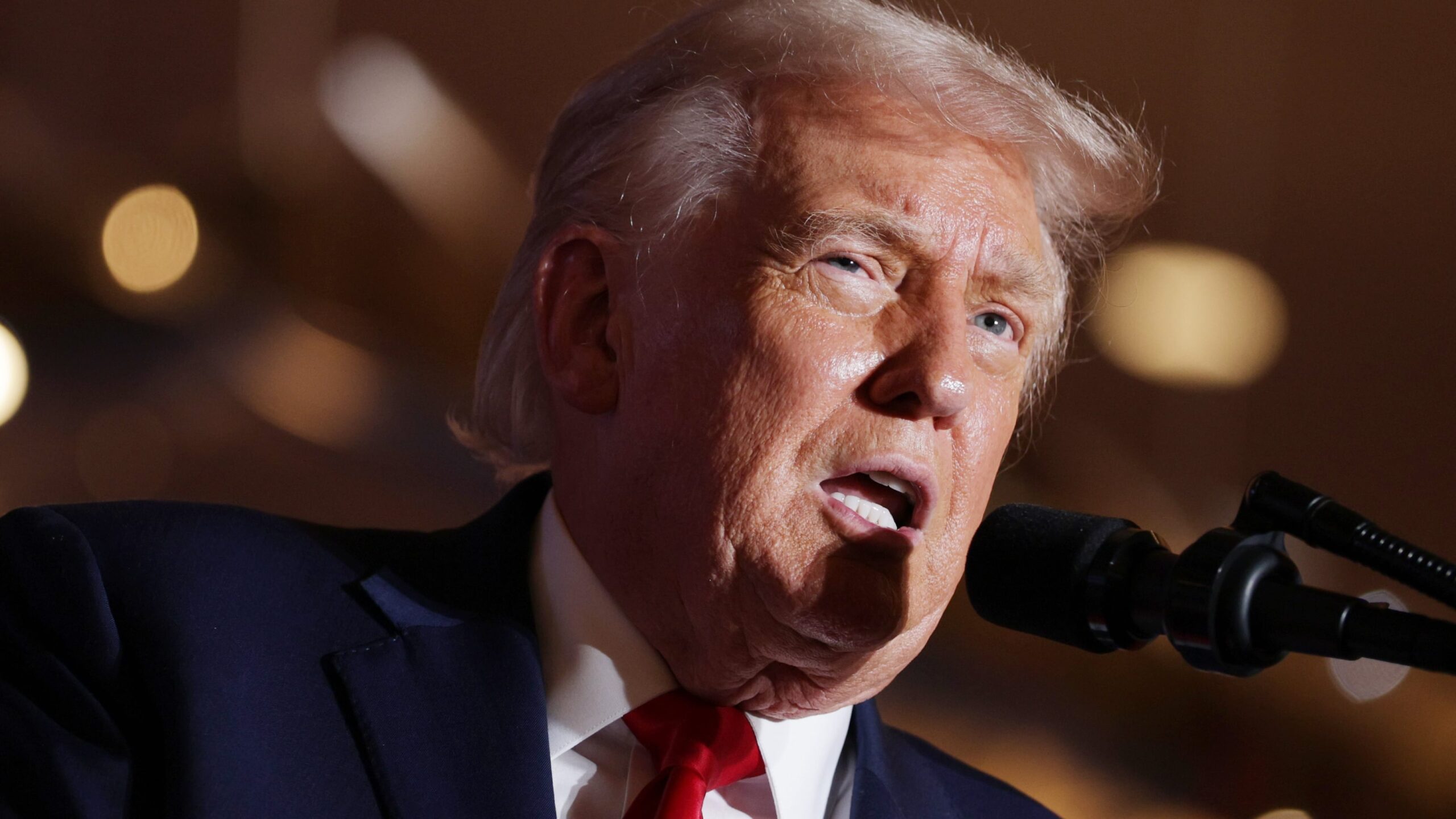
Former President Donald Trump asserted that he has taken more cognitive decline tests than any other U.S. president during a recent post on Truth Social. In a lengthy message shared on Tuesday, he emphasized that he has “aced” three Montreal Cognitive Assessments, which are designed to evaluate early dementia or mild cognitive impairment.
Trump’s post, which extended to 488 words, included a call for The New York Times to stop publication. He claimed, “In addition to the Medical assessments, I have done something that no other President has done,” referring to his cognitive examinations taken on three separate occasions. He stated that the tests were conducted in front of numerous medical professionals, most of whom he did not know, and he boasted about his perfect scores.
The assessments began in 2018 when Trump specifically requested the test from his physician, Dr. Ronny Jackson, to address concerns regarding his mental fitness. He achieved a score of 30 out of 30, which is considered normal, leading Jackson to declare him “fit for duty.” Jackson noted at the time that the president was “mentally very sharp, very intact.”
Trump underwent the cognitive assessment two additional times during his second term, once in April and again in October 2023. Following the April test, he could not recall specific details but stated to reporters, “It’s a pretty well-known test. Whatever it is. I got every one right.” After the October assessment, he remarked that he found the test “very hard” and challenged Democratic Representatives Jasmine Crockett and Alexandria Ocasio-Cortez to take the exam and compare their scores to his.
Despite Trump’s claims, concerns regarding his cognitive health have been voiced by medical professionals and family members. Dr. John Gartner, a psychologist and former professor at Johns Hopkins, stated that the president exhibits clinical signs of dementia and has shown “immense cognitive decline.” Additionally, Trump’s niece, Mary Trump, has expressed similar concerns, drawing parallels between her uncle and his father, Fred Trump Sr., who had Alzheimer’s disease. She noted, “There are times I look at him and I see my grandfather… His short-term memory seems to be deteriorating.”
During an October 2023 physical examination, Trump also underwent an MRI. Initially, he claimed to have “no idea” why the scan was necessary, but the White House later clarified that it was a precautionary measure due to his advanced age. This explanation faced skepticism from medical experts, who remarked that there was “nothing standard” about such a scan for someone of his age.
In his Truth Social post, Trump characterized reports about his health as “seditious, perhaps even treasonous,” particularly targeting The New York Times for its coverage. He referred to the publication as “Enemies of the People” and reiterated his belief that it should cease operations due to perceived bias in reporting, stating, “They have inaccurately reported on all of my Election Results and, in fact, were forced to apologize on much of what they wrote.”
As the discourse surrounding Trump’s cognitive abilities continues, both supporters and critics remain attentive to his claims and the implications of his health. The former president’s assertions and the contrasting concerns from medical professionals highlight a complex narrative that will likely persist in public discussion.










TikTok Users Experiment with Hummus in Ninja Creami Machine

Empowering Educators: 5 Free Resources for Teaching Black History

Frances Bledsoe: A Life Remembered in Legacy and Service

Pharma Marketing Faces New Challenges as Regulations Shift in 2026

Pharma Marketing’s Playbook Faces Overhaul Ahead of 2026

STARTRADER Revitalizes Youth Sports with New Court in Thailand

Engage with Art, History, and Community in the Mid-Hudson Valley

San Diego County Enjoys Warmer Weather Despite Phil’s Prediction

Researchers Uncover Why Cats Are True Carnivores, Not Vegan

Nostradamus’ 2026 Predictions: Star Death and Dark Events Loom

OpenAI to Implement Age Verification for ChatGPT by December 2025

Discover the Top 10 Calorie Counting Apps of 2025

Bella Hadid Shares Health Update After Treatment for Lyme Disease

Analysts Project Stronger Growth for Apple’s iPhone 17 Lineup

Electric Moto Influencer Surronster Arrested in Tijuana

Harvard Secures Court Victory Over Federal Funding Cuts

Erin Bates Shares Recovery Update Following Sepsis Complications

Meta Initiates $60B AI Data Center Expansion, Starting in Ohio
-
 Science1 month ago
Nostradamus’ 2026 Predictions: Star Death and Dark Events Loom
-
 Technology2 months ago
OpenAI to Implement Age Verification for ChatGPT by December 2025
-
 Technology7 months ago
Discover the Top 10 Calorie Counting Apps of 2025
-
 Health5 months ago
Bella Hadid Shares Health Update After Treatment for Lyme Disease
-
 Health5 months ago
Analysts Project Stronger Growth for Apple’s iPhone 17 Lineup
-
 Technology5 months ago
Electric Moto Influencer Surronster Arrested in Tijuana
-
 Education5 months ago
Harvard Secures Court Victory Over Federal Funding Cuts
-
 Health5 months ago
Erin Bates Shares Recovery Update Following Sepsis Complications
-
 Technology7 months ago
Meta Initiates $60B AI Data Center Expansion, Starting in Ohio
-

 Technology6 months ago
Discover How to Reverse Image Search Using ChatGPT Effortlessly
-

 Science4 months ago
Starship V3 Set for 2026 Launch After Successful Final Test of Version 2
-

 Technology7 months ago
Recovering a Suspended TikTok Account: A Step-by-Step Guide