
Health
Revolutionary Nanoparticles Target Cancer Cells While Sparing Healthy Ones

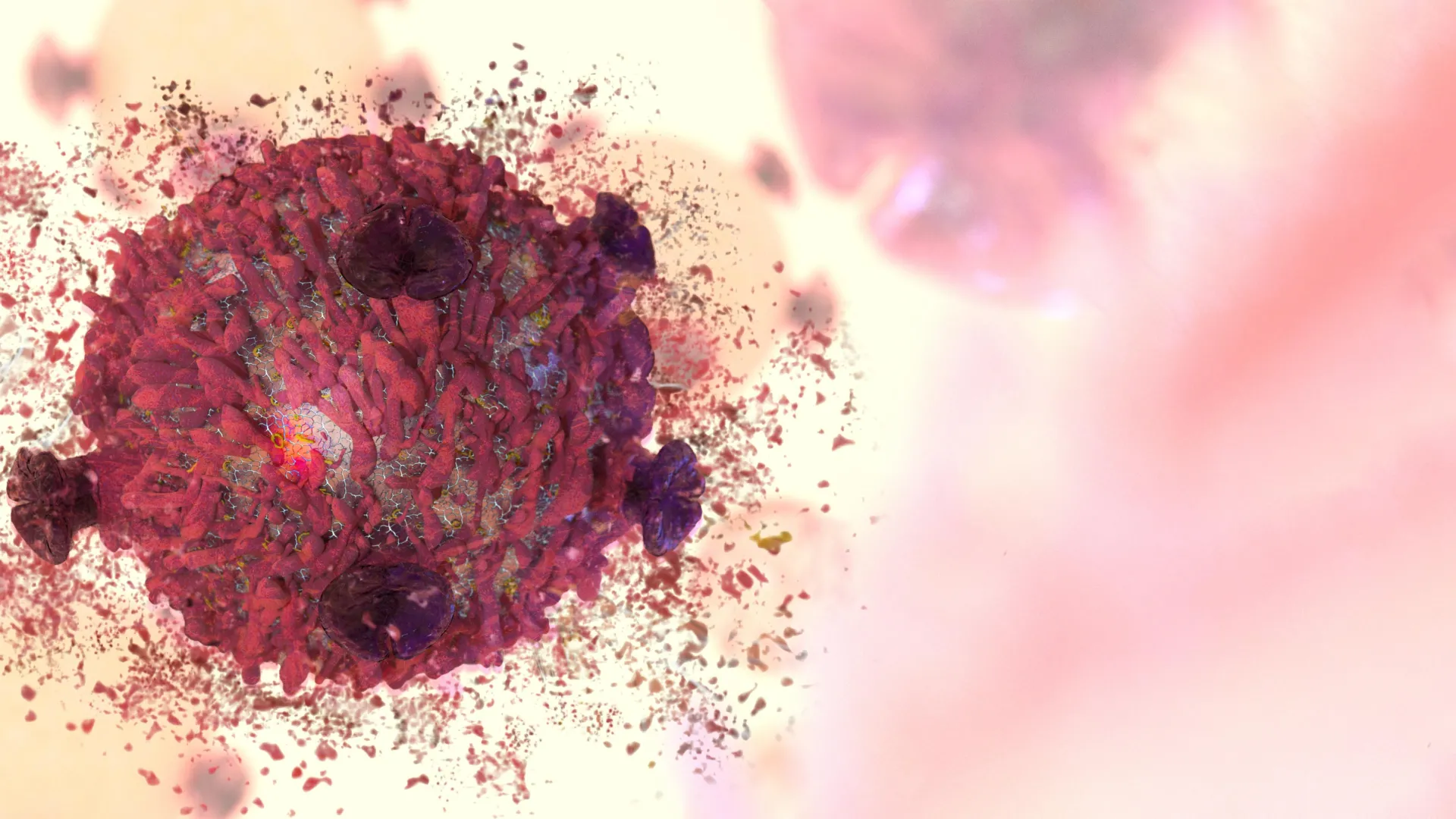
Researchers at RMIT University have developed innovative nanoparticles that effectively target and destroy cancer cells while largely preserving healthy cells. This breakthrough could lead to more precise and less harmful cancer treatments. The technology harnesses tiny metal-based particles that induce internal stress within cancer cells, triggering their self-destruction.
The nanoparticles, known as nanodots, are composed of molybdenum oxide, a compound commonly used in electronics and industrial alloys. The study, led by Professor Jian Zhen Ou and Dr. Baoyue Zhang from RMIT’s School of Engineering, found that modifications to the chemical structure of these particles enable them to release reactive oxygen molecules. These molecules can damage crucial cellular components, ultimately leading to cell death.
Laboratory Success and Selectivity
In laboratory experiments, the nanodots demonstrated a remarkable ability to kill cervical cancer cells at a rate three times greater than that of healthy cells over a 24-hour period. Notably, this effect occurred without the need for light activation, which is often a requirement for similar cancer-targeting technologies.
Dr. Baoyue Zhang explained, “Cancer cells already live under higher stress than healthy ones. Our particles push that stress a little further — enough to trigger self-destruction in cancer cells, while healthy cells cope just fine.”
Collaborative Research Efforts
The research involved collaboration among scientists from various institutions, including The Florey Institute of Neuroscience and Mental Health in Melbourne and several universities in China. Their work received support from the ARC Centre of Excellence in Optical Microcombs. This collaboration resulted in particles that selectively generate oxidative stress in cancer cells under laboratory conditions.
To achieve this effect, the team precisely adjusted the nanodots’ composition by incorporating small amounts of hydrogen and ammonium. This fine-tuning altered the particles’ electron management, leading to the production of higher levels of reactive oxygen molecules. These molecules play a crucial role in pushing cancer cells into apoptosis, the body’s natural method of eliminating damaged cells.
In a separate experiment, the same nanodots achieved a 90 percent breakdown of a blue dye in just 20 minutes, highlighting their powerful chemical reactions even in the absence of light.
A Step Towards Gentler Cancer Treatments
Current cancer therapies often harm healthy tissue alongside targeting tumors. The development of technologies that can selectively increase stress within cancer cells may pave the way for treatments that are both more effective and less damaging. Additionally, as the nanodots are made from a widely used metal oxide, they may present a more cost-effective and safer manufacturing alternative compared to noble metals like gold or silver.
The research team at RMIT continues to advance this promising technology, with plans for future studies that will eventually include testing in animal models and human subjects. As the project progresses, organizations interested in collaboration with RMIT researchers are encouraged to reach out to the team.
This groundbreaking research marks a significant step forward in cancer treatment, potentially transforming the landscape of oncology with more targeted therapies that prioritize patient safety.



Revolutionary Photonic Ski-Jump Could Miniaturize LiDAR Systems

Couples Detox from Plastics in New Netflix Doc: Can It Boost Fertility?

Aventon Launches Affordable Full-Suspension Electric Mountain Bike

Discover Eight Must-Try Restaurants This Spring Season

UC Irvine Team Unveils Innovative Ion Pump for Water Treatment

One-Third of Americans Trim Daily Expenses for Healthcare Needs

Apple Secures First Oscar in Three Years with F1: The Movie

Fourth Graders Celebrate St. Patrick’s Day with Creative Weather Drawings

Kim Kardashian Dazzles at Vanity Fair Oscars Party 2026

Nostradamus’ 2026 Predictions: Star Death and Dark Events Loom

Breakthroughs and Challenges Await Science in 2026

Electric Moto Influencer Surronster Arrested in Tijuana

OpenAI to Implement Age Verification for ChatGPT by December 2025

Discover the Top 10 Calorie Counting Apps of 2025

Bella Hadid Shares Health Update After Treatment for Lyme Disease

Analysts Project Stronger Growth for Apple’s iPhone 17 Lineup

Japanese Study Finds Rose Oil Can Increase Brain Gray Matter

Top 10 Penny Stocks to Watch in 2026 for Strong Returns
-
 Science4 months ago
Nostradamus’ 2026 Predictions: Star Death and Dark Events Loom
-
 Science4 months ago
Breakthroughs and Challenges Await Science in 2026
-
 Technology7 months ago
Electric Moto Influencer Surronster Arrested in Tijuana
-
 Technology4 months ago
OpenAI to Implement Age Verification for ChatGPT by December 2025
-
 Technology9 months ago
Discover the Top 10 Calorie Counting Apps of 2025
-
 Health7 months ago
Bella Hadid Shares Health Update After Treatment for Lyme Disease
-
 Health7 months ago
Analysts Project Stronger Growth for Apple’s iPhone 17 Lineup
-
 Health7 months ago
Japanese Study Finds Rose Oil Can Increase Brain Gray Matter
-
 Technology4 months ago
Top 10 Penny Stocks to Watch in 2026 for Strong Returns
-

 Science6 months ago
Starship V3 Set for 2026 Launch After Successful Final Test of Version 2
-

 Technology1 month ago
Nvidia GTC 2026: Major Announcements Expected for AI and Hardware
-

 Education7 months ago
Harvard Secures Court Victory Over Federal Funding Cuts