
Health
Congress Fails to Extend Health Care Subsidies, Millions at Risk

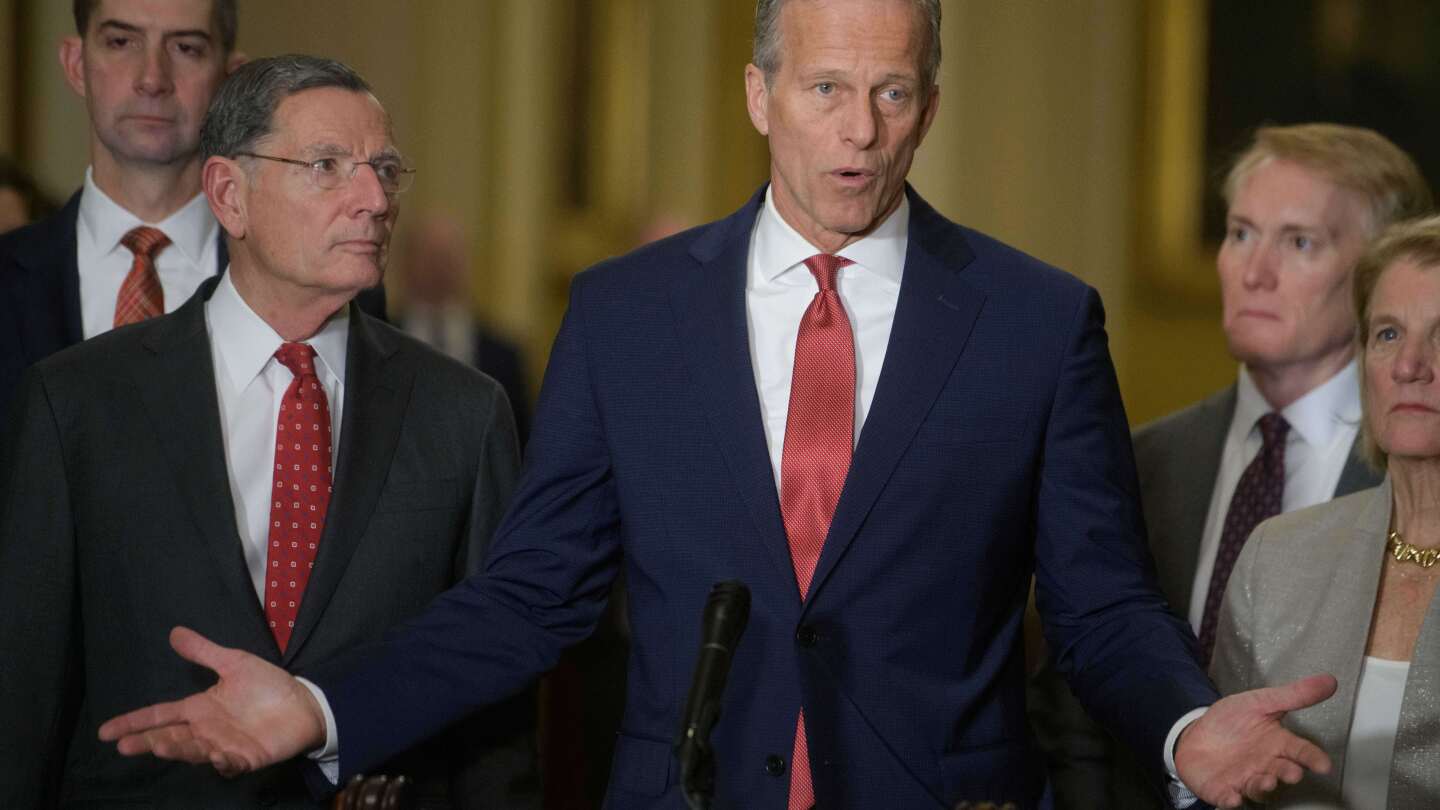
Millions of Americans face potential health insurance premium increases starting on January 1, 2024, as bipartisan negotiations in Congress stall over health care subsidies. The discussions aimed to extend COVID-era tax credits under the Affordable Care Act (ACA), which have helped many individuals afford their health coverage. As lawmakers from both parties retreat into longstanding partisan disputes, the likelihood of a resolution appears increasingly remote.
Initially, Democrats hoped to leverage an agreement to reopen the government for a vote on health care subsidies. Senate Democratic Leader Chuck Schumer indicated that the party is seeking a straightforward extension of the subsidies without additional restrictions. Yet, this proposal has already met with resistance from Republicans. “So far, the Republicans are in total disarray and have no plan,” Schumer stated, emphasizing his party’s readiness to negotiate.
The lack of a cohesive strategy among Republicans complicates the situation further. Senate Majority Leader John Thune expressed uncertainty, remarking, “I don’t think at this point we have a clear path forward.” With the Senate vote anticipated next week, it is likely to become a party-line exercise rather than a genuine attempt at bipartisan legislation.
Republicans have long sought to overhaul or abolish the ACA. Recent discussions among GOP senators have revealed competing proposals, including ideas for new health savings accounts and income limits on subsidies. Louisiana Sen. Bill Cassidy and Florida Sen. Rick Scott have suggested changes that would fundamentally alter how insurance is purchased, an initiative endorsed by former President Donald Trump in social media posts.
Despite these ongoing discussions, a significant roadblock remains: the contentious issue of abortion funding. Many Republicans insist that stricter abortion restrictions must be part of any negotiations regarding the ACA. Independent Sen. Angus King, who aligns with Democrats, noted that this demand has stalled informal bipartisan talks. “They have set up a red line that is also a red line for the Democrats,” King remarked, warning that Republicans will be held accountable for any premium increases.
Sen. Peter Welch of Vermont pointed to the influence of Trump as pivotal to advancing discussions. “Our Republican colleagues aren’t going to engage with us unless Trump weighs in,” he explained. Currently, Trump has not officially endorsed any specific legislation. Last week, the White House floated a proposal to extend the subsidies, but it included income caps and a requirement for recipients to pay a premium. This plan was never formally released, and Trump suggested he would prefer not to extend the subsidies at all.
In the House of Representatives, lawmakers are also exploring various ideas, yet there is little indication that any proposal will gain sufficient bipartisan support by the end of the year. House Speaker Mike Johnson stated, “Health care is a very complicated issue,” while assuring that Republicans are still formulating ideas.
As the deadline approaches, millions of Americans who depend on these subsidies may face significant financial burdens. The ongoing gridlock in Congress highlights the complexities of health care reform and the divergent priorities of the two parties. Without swift action, the consequences could be profound, leaving many to wonder what the future holds for their health care coverage.













West Rusk ISD Board Names Jake Jackson as Lone Finalist for Superintendent

Scientists Uncover Mechanism Behind Touch Sensation in Humans

Study Reveals How Gut Proteins Foster Food Tolerance

Five 3D Printed Innovations Outperform Amazon Purchases

LSU Hosts Region VII Science and Engineering Fair Showcasing Young Innovators

Celebrating Beverly Schmidt Blossom: A Dance Innovator’s Legacy

Michael Anthony Ortega Remembered for His Loving Spirit

Use Body Language to Reconnect With Your Partner After a Dispute

Tech Repair: Restoring the Onkyo TX-SR806 Receiver to Life

Nostradamus’ 2026 Predictions: Star Death and Dark Events Loom

Breakthroughs and Challenges Await Science in 2026

OpenAI to Implement Age Verification for ChatGPT by December 2025

Discover the Top 10 Calorie Counting Apps of 2025

Electric Moto Influencer Surronster Arrested in Tijuana

Bella Hadid Shares Health Update After Treatment for Lyme Disease

Analysts Project Stronger Growth for Apple’s iPhone 17 Lineup

Top 10 Penny Stocks to Watch in 2026 for Strong Returns

Japanese Study Finds Rose Oil Can Increase Brain Gray Matter
-
 Science2 months ago
Nostradamus’ 2026 Predictions: Star Death and Dark Events Loom
-
 Science2 months ago
Breakthroughs and Challenges Await Science in 2026
-
 Technology3 months ago
OpenAI to Implement Age Verification for ChatGPT by December 2025
-
 Technology8 months ago
Discover the Top 10 Calorie Counting Apps of 2025
-
 Technology6 months ago
Electric Moto Influencer Surronster Arrested in Tijuana
-
 Health6 months ago
Bella Hadid Shares Health Update After Treatment for Lyme Disease
-
 Health6 months ago
Analysts Project Stronger Growth for Apple’s iPhone 17 Lineup
-
 Technology3 months ago
Top 10 Penny Stocks to Watch in 2026 for Strong Returns
-
 Health6 months ago
Japanese Study Finds Rose Oil Can Increase Brain Gray Matter
-

 Science5 months ago
Starship V3 Set for 2026 Launch After Successful Final Test of Version 2
-

 Education6 months ago
Harvard Secures Court Victory Over Federal Funding Cuts
-

 Health6 months ago
Erin Bates Shares Recovery Update Following Sepsis Complications