
Education
CCSL Sees Positive Change with New Cellphone Policy Enforcement

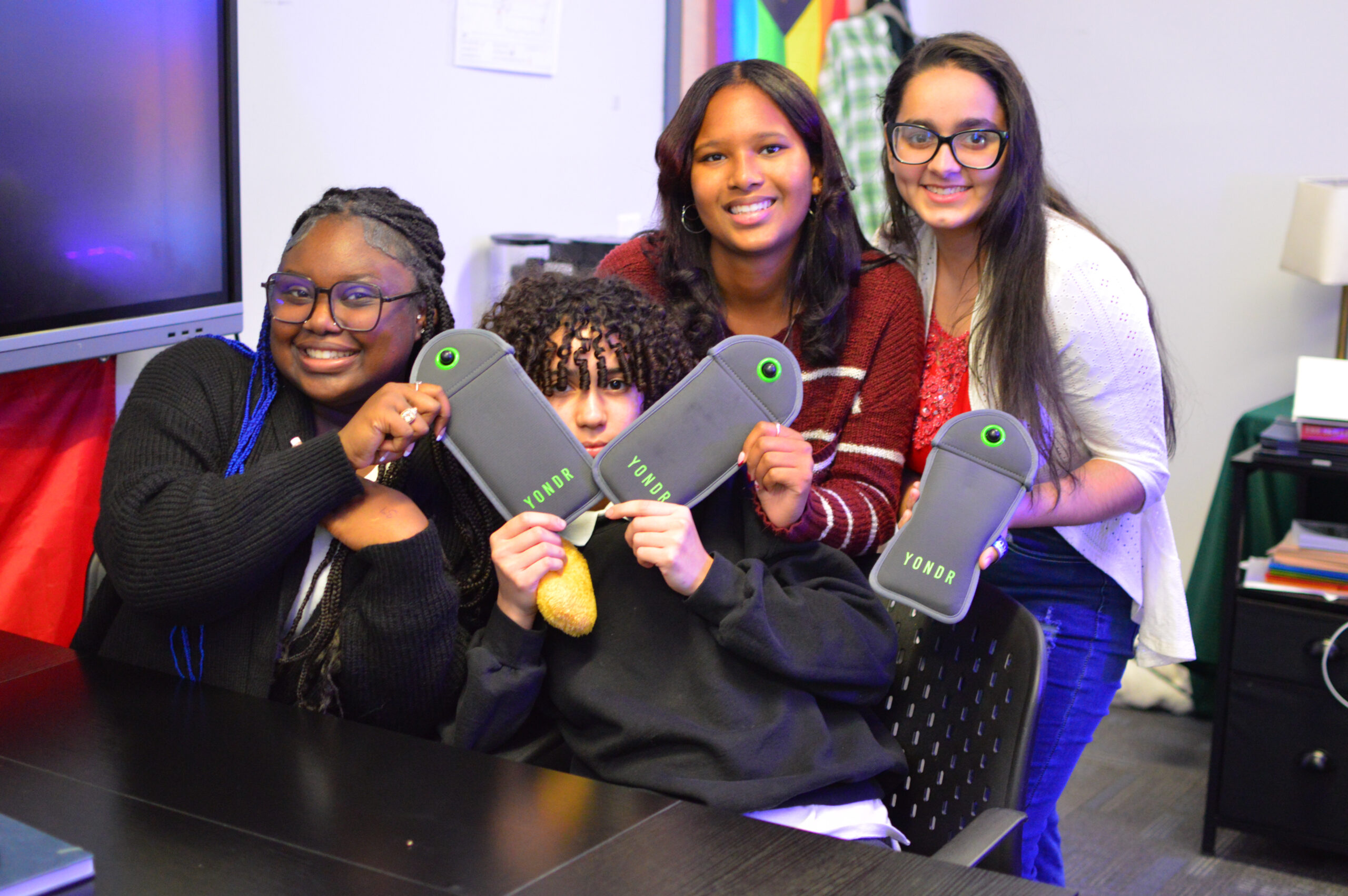
The Collegiate Charter School of Lowell (CCSL) has reported significant improvements since implementing a strict cellphone ban at the start of the current academic year. Following months of speculation, students learned that the policy would indeed be enforced as part of an initiative to enhance focus and engagement in classrooms. This change comes in the wake of similar measures taken by Lowell Public Schools (LPS) at the beginning of 2024, where students are required to store their phones in designated lockboxes during class.
The new cellphone policy at CCSL mandates that students use magnetically locked pouches, provided by the company Yondr, to secure their devices throughout the school day. These pouches are only opened at specific locations and times, with exceptions made for emergencies. While parents initially expressed concern over communication during emergencies, many have found reassurance knowing their children’s phones remain with them in a locked state.
The policy was met with mixed feelings among students at first, but recent reports indicate a growing acceptance. Senior Anabeatriz Pereira noted that her initial worries about communication with her parents have been alleviated, as she can still unlock her phone to send messages when necessary. More importantly, students have observed a noticeable reduction in distractions during class. “The teachers are gaining more control over the class. They’re not worried about, ‘Hey, get off your phone,’” shared sophomore Janalis Sanchez. “Everybody in the class is engaging now. The classroom environments have changed.”
The positive effects extend beyond the classroom. Students and staff have reported an increase in social interactions throughout the school, particularly in hallways and the cafeteria. Pereira highlighted that students are now more focused on relationships with each other rather than being absorbed in their screens. Senior Schinera Pierre mentioned the previous prevalence of “confession pages,” which often led to drama and cyberbullying. With phones largely inaccessible, these issues have reportedly diminished.
Educators at CCSL have emphasized the need for a shift in student focus. Steve Martin, the Grade 9-12 Associate Principal, explained that students were presented with data showing they typically spend an average of 7.5 hours per day on their phones. This statistic resonated with many, helping them understand the extent of their screen time. “If you live until you are 65, that is 22 years of staring at a screen,” Martin pointed out.
While many students have adjusted to the policy, some challenges persist. Students have raised concerns about the limited number of pouches available for unlocking at the end of the school day, leading to daily crowds outside the main office. Despite this, Martin noted that students typically exit the building within three minutes.
Attempts to bypass the policy were common in the early days, with some students bringing fake phones or attempting to use voice command features to access their devices. However, many have since abandoned these efforts in favor of embracing the new structure. Pereira remarked, “They all say it is a good thing for focusing, activities, and socializing. The only bad thing people mention is the crowd.”
CCSL Director Adam Bakr explained that the decision to implement a stricter policy was influenced by discussions with faculty regarding the negative impacts of cellphone use on student well-being and attention spans. “They heard the teachers’ frustration, they saw the constant conflicts that were really just unnecessary battles,” Bakr stated. He emphasized the importance of giving students time to interact with their peers and teachers without the distraction of devices.
Board President Kathleen McCarthy echoed Bakr’s sentiments, noting that social media has significantly affected student interactions. “Social media has absolutely crushed the social part of education,” she remarked, highlighting the school’s commitment to prioritizing social engagement among students. McCarthy believes that the full-day ban on phones is crucial for restoring meaningful connections during school hours.
As CCSL moves forward with its cellphone policy, the school community is witnessing a transformation in student engagement and focus. The early challenges are increasingly overshadowed by the positive outcomes, suggesting that the school’s proactive approach may serve as a model for other educational institutions considering similar measures.




Revolutionary Photonic Ski-Jump Could Miniaturize LiDAR Systems

Couples Detox from Plastics in New Netflix Doc: Can It Boost Fertility?

Aventon Launches Affordable Full-Suspension Electric Mountain Bike

Discover Eight Must-Try Restaurants This Spring Season

UC Irvine Team Unveils Innovative Ion Pump for Water Treatment

One-Third of Americans Trim Daily Expenses for Healthcare Needs

Apple Secures First Oscar in Three Years with F1: The Movie

Fourth Graders Celebrate St. Patrick’s Day with Creative Weather Drawings

Kim Kardashian Dazzles at Vanity Fair Oscars Party 2026

Nostradamus’ 2026 Predictions: Star Death and Dark Events Loom

Breakthroughs and Challenges Await Science in 2026

Electric Moto Influencer Surronster Arrested in Tijuana

OpenAI to Implement Age Verification for ChatGPT by December 2025

Discover the Top 10 Calorie Counting Apps of 2025

Bella Hadid Shares Health Update After Treatment for Lyme Disease

Analysts Project Stronger Growth for Apple’s iPhone 17 Lineup

Japanese Study Finds Rose Oil Can Increase Brain Gray Matter

Top 10 Penny Stocks to Watch in 2026 for Strong Returns
-
 Science3 months ago
Nostradamus’ 2026 Predictions: Star Death and Dark Events Loom
-
 Science3 months ago
Breakthroughs and Challenges Await Science in 2026
-
 Technology7 months ago
Electric Moto Influencer Surronster Arrested in Tijuana
-
 Technology4 months ago
OpenAI to Implement Age Verification for ChatGPT by December 2025
-
 Technology9 months ago
Discover the Top 10 Calorie Counting Apps of 2025
-
 Health7 months ago
Bella Hadid Shares Health Update After Treatment for Lyme Disease
-
 Health7 months ago
Analysts Project Stronger Growth for Apple’s iPhone 17 Lineup
-
 Health7 months ago
Japanese Study Finds Rose Oil Can Increase Brain Gray Matter
-
 Technology4 months ago
Top 10 Penny Stocks to Watch in 2026 for Strong Returns
-

 Science6 months ago
Starship V3 Set for 2026 Launch After Successful Final Test of Version 2
-

 Technology1 month ago
Nvidia GTC 2026: Major Announcements Expected for AI and Hardware
-

 Education7 months ago
Harvard Secures Court Victory Over Federal Funding Cuts