
Health
NIH Cancels MOSAIC Grants, Leaving Young Scientists in Limbo

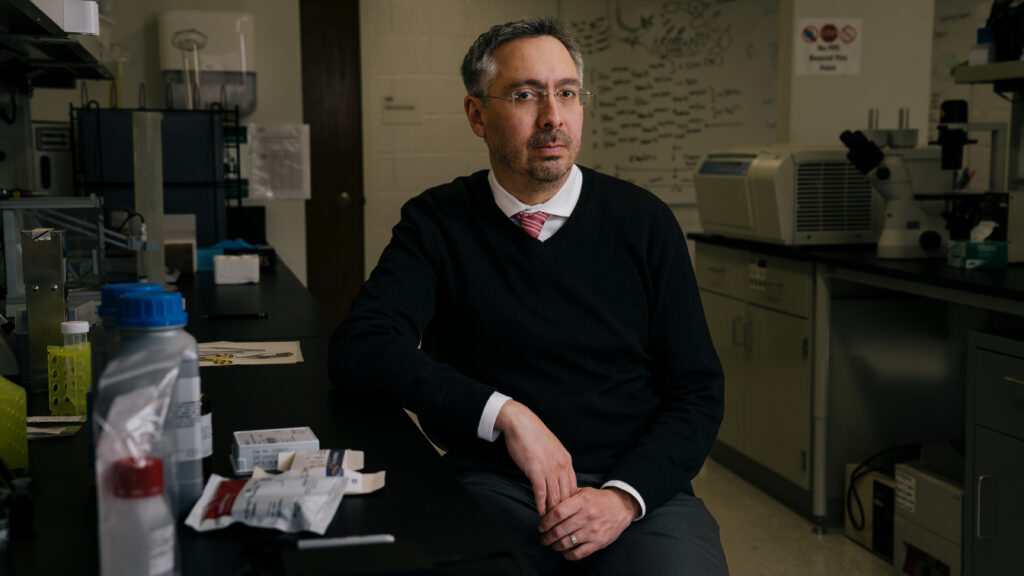
The National Institutes of Health (NIH) has terminated the MOSAIC program, a key funding initiative aimed at supporting early-career scientists transitioning to independent lab leadership. This decision has left hundreds of young researchers, including those from diverse backgrounds, scrambling for alternative funding and jobs.
The MOSAIC program, which stands for Maximizing Opportunities for Scientific and Academic Independent Careers, was designed to address two critical issues: the lack of diversity among NIH grant recipients and the precarious career paths of postdoctoral researchers. The program allocated up to $125,000 annually for two years to support postdoctoral research, followed by up to $249,000 annually for three years for tenure-track professors. This initiative aimed to provide a safety net during a crucial stage in scientists’ careers when innovative research is often conducted.
Under the leadership of NIH Director Jay Bhattacharya, the program was positioned as an essential vehicle for nurturing the next generation of biomedical scientists. Bhattacharya has emphasized the importance of fostering talent during early career stages, believing that this is when researchers are most innovative. However, the program faced an abrupt demise due to the Trump administration’s directive to eliminate diversity, equity, and inclusion (DEI) initiatives from federal funding programs.
The termination of MOSAIC has affected 104 researchers, who saw their funding disappear without warning, according to data from Grant Witness, an independent project tracking NIH grant terminations. Although some scholars have had their grants temporarily restored by court order, many others remain in limbo. A recent analysis by STAT revealed that the NIH awarded 172 fewer transition grants to postdoctoral researchers in the nine months leading up to the government shutdown, marking a 10% decrease compared to the previous year.
The impact on early-career scientists is profound. Luis Rodriguez, a molecular biologist at George Washington University, expressed frustration over the program’s cancellation, which he believed would have jumpstarted his research on lung disease. “I think everyone has their own horror story,” he noted, reflecting the disappointment shared by many affected researchers.
The NIH has defended its choice to eliminate the MOSAIC program, stating that it seeks to optimize federal taxpayer dollars for scientific excellence, rather than what it deems politicized DEI initiatives. Bhattacharya has maintained that the agency remains committed to supporting all early-career researchers, despite the substantial reduction in funding opportunities.
Concerns have been raised about the potential long-term effects of these funding cuts on the scientific workforce. Tara Schwetz, a former NIH deputy director, highlighted her worries about the diminishing interest in science careers among young researchers, which could ultimately harm the country’s scientific future. “The interest is shifting in the wrong direction, and I don’t think that’s good for the country,” she warned.
The MOSAIC program was not only designed to address funding disparities but also aimed to broaden the applicant pool by including individuals from various disadvantaged backgrounds, such as those raised in rural areas or from families without higher education. This inclusive approach was championed by Michael Sesma, who played a key role in establishing the program. He noted that the program was effective in helping researchers transition into academia, as it successfully targeted the barriers faced by marginalized groups.
Despite the program’s evident success, the administration’s broad approach to cutting funding did not allow for a nuanced evaluation of its merits. Jeremy Berg, a former leader at NIH, lamented the lack of analysis that led to the program’s termination. “There’s a perception that they’re not based on merit,” he said, emphasizing the need for a more informed understanding of diversity programs.
Many affected scholars, such as Sarah Vick, a postdoctoral researcher at the Fred Hutchinson Cancer Center, are now facing increased competition in the job market due to the funding cuts. Vick had anticipated using her MOSAIC funding to publish her research on immune responses and secure a faculty position. However, she has found herself applying for jobs earlier than expected, with the added pressure of competing against colleagues who may still have funding support.
The cancellation of the MOSAIC program not only disrupts the careers of individual researchers but may also have broader implications for the diversity and innovation in the scientific community. As young scientists adapt to these changes, the future of research in the United States remains uncertain. Researchers like Rodriguez and Vick continue to express determination despite the setbacks, but they acknowledge that the path forward is fraught with challenges.
“I definitely worry more and have more stress,” Rodriguez admitted. “The potential for failure is far more realistic than it’s ever been.” As the landscape of funding for early-career scientists shifts, the repercussions of these policy changes will likely be felt for years to come, impacting not just individual careers but the overall health of scientific inquiry in the country.










Revolutionary Photonic Ski-Jump Could Miniaturize LiDAR Systems

Couples Detox from Plastics in New Netflix Doc: Can It Boost Fertility?

Aventon Launches Affordable Full-Suspension Electric Mountain Bike

Discover Eight Must-Try Restaurants This Spring Season

UC Irvine Team Unveils Innovative Ion Pump for Water Treatment

One-Third of Americans Trim Daily Expenses for Healthcare Needs

Apple Secures First Oscar in Three Years with F1: The Movie

Fourth Graders Celebrate St. Patrick’s Day with Creative Weather Drawings

Kim Kardashian Dazzles at Vanity Fair Oscars Party 2026

Nostradamus’ 2026 Predictions: Star Death and Dark Events Loom

Breakthroughs and Challenges Await Science in 2026

OpenAI to Implement Age Verification for ChatGPT by December 2025

Electric Moto Influencer Surronster Arrested in Tijuana

Discover the Top 10 Calorie Counting Apps of 2025

Bella Hadid Shares Health Update After Treatment for Lyme Disease

Analysts Project Stronger Growth for Apple’s iPhone 17 Lineup

Top 10 Penny Stocks to Watch in 2026 for Strong Returns

Japanese Study Finds Rose Oil Can Increase Brain Gray Matter
-
 Science3 months ago
Nostradamus’ 2026 Predictions: Star Death and Dark Events Loom
-
 Science3 months ago
Breakthroughs and Challenges Await Science in 2026
-
 Technology4 months ago
OpenAI to Implement Age Verification for ChatGPT by December 2025
-
 Technology6 months ago
Electric Moto Influencer Surronster Arrested in Tijuana
-
 Technology8 months ago
Discover the Top 10 Calorie Counting Apps of 2025
-
 Health6 months ago
Bella Hadid Shares Health Update After Treatment for Lyme Disease
-
 Health7 months ago
Analysts Project Stronger Growth for Apple’s iPhone 17 Lineup
-
 Technology3 months ago
Top 10 Penny Stocks to Watch in 2026 for Strong Returns
-
 Health7 months ago
Japanese Study Finds Rose Oil Can Increase Brain Gray Matter
-

 Science5 months ago
Starship V3 Set for 2026 Launch After Successful Final Test of Version 2
-

 Technology4 weeks ago
Nvidia GTC 2026: Major Announcements Expected for AI and Hardware
-

 Education7 months ago
Harvard Secures Court Victory Over Federal Funding Cuts