
Health
Gaza Amputees Face Dire Prosthetic Shortages Amid Recovery Struggles

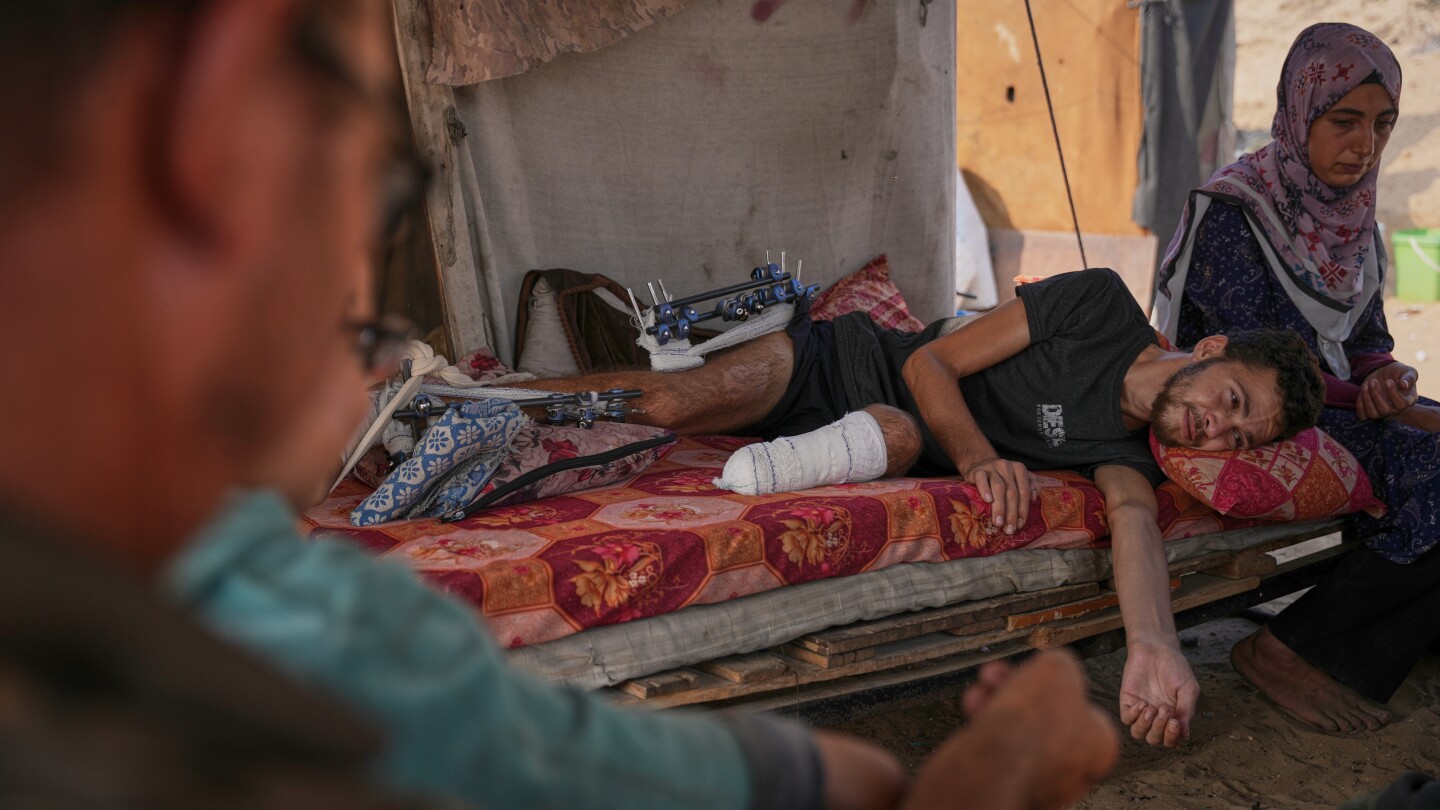
In the Gaza Strip, the lives of amputees hang in the balance as a critical shortage of prosthetic limbs hinders recovery efforts. The ongoing humanitarian crisis has left many, like Haneen al-Mabhouh, yearning for the ability to walk again and rebuild their lives. Al-Mabhouh, who lost her leg in a July 2024 Israeli airstrike that also claimed the lives of her four daughters, illustrates the profound challenges faced by those suffering from war-related injuries.
The airstrike destroyed her home in Nuseirat, where she was sleeping with her infant daughter. Al-Mabhouh’s right leg was amputated above the knee, leaving her reliant on a wheelchair. “For the past year and a half, I have been unable to move around, to live like others. For the past year and a half, I have been without children,” she lamented, expressing her despair at the loss of her family and her dreams.
Despite a two-month ceasefire, aid for the thousands of amputees remains insufficient. The World Health Organization estimates that between 5,000 to 6,000 people in Gaza are amputees due to the conflict, with nearly a quarter of them being children. The lack of prosthetic limbs and significant delays in medical evacuations have left many struggling to adapt to their new realities.
Recently, the WHO confirmed that a shipment of essential prosthetic supplies had entered Gaza, marking the first significant delivery in two years. According to Loay Abu Saif, head of the disability program at Medical Aid for Palestinians, Israel had previously restricted almost all supplies necessary for making prosthetic limbs. The Israeli military body responsible for coordinating aid, known as COGAT, did not respond to inquiries regarding the volume of prosthetic supplies allowed into Gaza.
As al-Mabhouh waits for medical evacuation to receive further treatment, her condition remains dire. She has been on the evacuation list for ten months, yet has received no approval to leave. Living with her parents, she struggles with daily tasks and longs for the chance to have another child. “It’s my right to live, to have another child, to regain what I lost, to walk, just to walk again,” she declared. “Now my future is paralyzed. They destroyed my dreams.”
Medical evacuations have not seen a significant uptick since the ceasefire began in October. The United Nations reports that approximately 16,500 Palestinians are awaiting critical medical treatment, which includes not only amputees but also those with chronic conditions. As of December 1, only 235 patients had been evacuated, averaging just under five per day—a slight increase from the pre-ceasefire average of three daily.
Dr. Richard Peeperkorn, the WHO’s representative in the occupied Palestinian territory, emphasized that the backlog is primarily due to a lack of countries willing to accept evacuated patients. He highlighted the urgent need for new medical evacuation routes, particularly to the Israeli-occupied West Bank and east Jerusalem, where hospitals are prepared to provide treatment.
Among those waiting for assistance is Yassin Marouf, a 23-year-old who lost his left foot to an Israeli shelling in May. He lies in a tent in central Gaza, struggling with severe injuries and a lack of resources. “If I want to go to the bathroom, I need two or three people to carry me,” he explained, reflecting the grim realities faced by many in similar situations.
Similarly, Mohamed al-Naggar, a 21-year-old who was pursuing an IT degree before the war, suffered a severe leg injury when shrapnel pierced his left leg. Despite undergoing multiple surgeries, he remains unable to move independently and dreams of traveling abroad for a prosthetic limb so he can resume his education.
The WHO reports that around 42,000 Palestinians have sustained life-altering injuries in the conflict, including amputations and severe burns. While assistance needs have improved slightly, there is still a substantial shortage of essential products such as wheelchairs and crutches. The situation is exacerbated by the limited number of prosthetists in Gaza, with only eight professionals available to manufacture and fit artificial limbs.
At the Artificial Limbs and Polio Center in Gaza City, director Nevin Al Ghussein noted that the center received a small shipment of materials before the war began in 2023. Since then, they have managed to provide artificial limbs for only 250 cases, but supplies are dwindling. Al Ghussein confirmed that no pre-made prosthetic limbs have entered Gaza during the conflict.
As families like that of Ibrahim Khalif face uncertainty, the need for immediate action and international support is clear. Khalif lost his leg during an Israeli airstrike in January while out for food. Now, he hopes for a prosthetic limb to regain his independence and support his pregnant wife and children. “I used to be the provider for my kids, but now I’m sitting here,” he said, grappling with his new reality.
The humanitarian situation in Gaza remains critical, with thousands of individuals awaiting essential medical care and struggling to adapt in the aftermath of conflict. As the world watches, the plight of amputees and their families underscores the urgent need for sustained support and access to necessary medical resources.








Discover 43 Cozy Gift Ideas Perfect for Introverts This Season

Neanderthals Controlled Fire 400,000 Years Ago; Orcas Collaborate with Dolphins

Dr. Barton Shares Top Holistic Holiday Gifts for Pet Health

Perfect Your Fit: How to Use the Oura Ring 4 Sizing Kit

Surrey Education Disparities Revealed in Government Report

Discover 43 Cozy Gift Ideas Perfect for Introverts This Season

BTS Tops December 2025 Boy Group Brand Reputation Rankings

Neanderthals Mastered Fire Earlier Than Believed, New Findings Reveal

Gaza Amputees Face Dire Prosthetic Shortages Amid Recovery Struggles

Discover the Top 10 Calorie Counting Apps of 2025

Bella Hadid Shares Health Update After Treatment for Lyme Disease

OpenAI to Implement Age Verification for ChatGPT by December 2025

Erin Bates Shares Recovery Update Following Sepsis Complications

Discover How to Reverse Image Search Using ChatGPT Effortlessly

Analysts Project Stronger Growth for Apple’s iPhone 17 Lineup

Electric Moto Influencer Surronster Arrested in Tijuana

Discover 2025’s Top GPUs for Exceptional 4K Gaming Performance

Meta Initiates $60B AI Data Center Expansion, Starting in Ohio
-
 Technology5 months ago
Discover the Top 10 Calorie Counting Apps of 2025
-
 Health3 months ago
Bella Hadid Shares Health Update After Treatment for Lyme Disease
-
 Technology2 weeks ago
OpenAI to Implement Age Verification for ChatGPT by December 2025
-
 Health3 months ago
Erin Bates Shares Recovery Update Following Sepsis Complications
-
 Technology4 months ago
Discover How to Reverse Image Search Using ChatGPT Effortlessly
-
 Health3 months ago
Analysts Project Stronger Growth for Apple’s iPhone 17 Lineup
-
 Technology3 months ago
Electric Moto Influencer Surronster Arrested in Tijuana
-
 Technology1 month ago
Discover 2025’s Top GPUs for Exceptional 4K Gaming Performance
-
 Technology5 months ago
Meta Initiates $60B AI Data Center Expansion, Starting in Ohio
-

 Technology5 months ago
Recovering a Suspended TikTok Account: A Step-by-Step Guide
-

 Health5 months ago
Tested: Rab Firewall Mountain Jacket Survives Harsh Conditions
-

 Lifestyle5 months ago
Belton Family Reunites After Daughter Survives Hill Country Floods