
Education
NYC Phone Ban Reveals Students Struggling with Analog Clocks

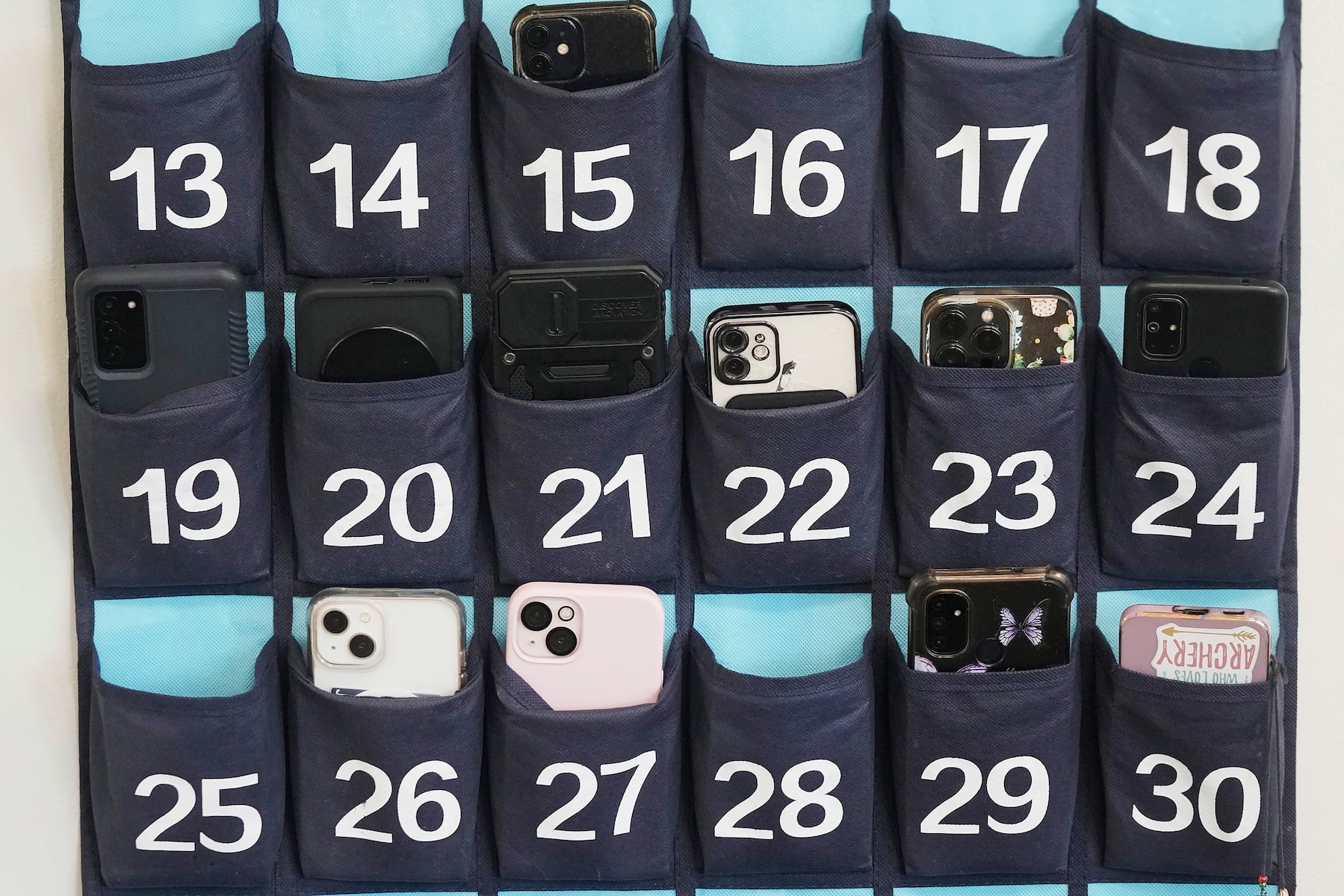
New York City’s smartphone ban in schools has successfully fostered greater student focus and interaction during lunch breaks, but it has also unveiled a significant skill gap: many students struggle to read traditional analog clocks. As of June 2025, New York is one of 21 states, along with Washington D.C., implementing a strict “bell to bell” smartphone ban in educational settings, according to an EdWeek tracker.
Teachers across the city have reported that while the ban has its benefits, it has also highlighted how many students lack the ability to read analog clocks. Tiana Millen, an assistant principal at Cardozo High School in Queens, noted, “That’s a major skill that they’re not used to at all.” Madi Mornhinweg, a high school English teacher in Manhattan, echoed this sentiment, sharing that students frequently ask her for the time. “The constant refrain is ‘Miss, what time is it?’” she said, describing her growing frustration. To address this, she has started prompting students with questions like, “Where’s the big hand and where’s the little hand?”
According to the New York City Department of Education, learning to read clocks is part of the curriculum for first and second graders. Isla Gething, a spokesperson for the department, emphasized the importance of this skill, stating, “At NYCPS, we recognize how essential it is for our students to tell the time on both analog and digital clocks.” She highlighted that young learners are taught terms such as “o’clock,” “half-past,” and “quarter-to” during their early years.
Despite this curriculum, 14-year-old Cheyenne Francis expressed that her peers have largely forgotten how to read analog clocks due to lack of practice. “They just forgot that skill because they never used it, because they always pulled out their phone,” she said. She also pointed out that broken or incorrectly set clocks in school buildings contribute to the issue.
Travis Malekpour, who teaches English and math at Cardozo, described the clock-reading skill as “underutilized.” To keep it relevant, he has incorporated lessons on time management and calendar skills into his algebra classes. This effort aims to reinforce these essential skills in students’ daily lives.
Kris Perry, the executive director of Children and Screens: Institute of Digital Media and Child Development, suggested that the decline in analog clock-reading skills among teens raised in a digital environment is understandable. She questioned whether this shift represents “a cognitive downgrade or just a replacement,” noting that brain scans reveal that engaging with physical books and handwriting typically stimulates more brain activity than reading and typing on screens.
While some educators are concerned about the loss of traditional skills, they acknowledge the benefits of a digital upbringing. Many schools now boast advanced coding and robotics programs, leveraging students’ technological expertise. Mornhinweg recounted a recent incident where her students guided her through new software when she encountered difficulties opening a PDF. “I was freaking out and they were like, ‘Miss, it’s fine, this is what you do.’ I felt really old,” she admitted.
The smartphone ban has ignited a broader conversation about essential life skills in an increasingly digital world. As educators strive to adapt their teaching methods, the challenge remains to balance the advantages of technology with the preservation of foundational skills like reading analog clocks.











Revolutionary Photonic Ski-Jump Could Miniaturize LiDAR Systems

Couples Detox from Plastics in New Netflix Doc: Can It Boost Fertility?

Aventon Launches Affordable Full-Suspension Electric Mountain Bike

Discover Eight Must-Try Restaurants This Spring Season

UC Irvine Team Unveils Innovative Ion Pump for Water Treatment

One-Third of Americans Trim Daily Expenses for Healthcare Needs

Apple Secures First Oscar in Three Years with F1: The Movie

Fourth Graders Celebrate St. Patrick’s Day with Creative Weather Drawings

Kim Kardashian Dazzles at Vanity Fair Oscars Party 2026

Nostradamus’ 2026 Predictions: Star Death and Dark Events Loom

Breakthroughs and Challenges Await Science in 2026

Electric Moto Influencer Surronster Arrested in Tijuana

OpenAI to Implement Age Verification for ChatGPT by December 2025

Discover the Top 10 Calorie Counting Apps of 2025

Bella Hadid Shares Health Update After Treatment for Lyme Disease

Analysts Project Stronger Growth for Apple’s iPhone 17 Lineup

Japanese Study Finds Rose Oil Can Increase Brain Gray Matter

Top 10 Penny Stocks to Watch in 2026 for Strong Returns
-
 Science4 months ago
Nostradamus’ 2026 Predictions: Star Death and Dark Events Loom
-
 Science4 months ago
Breakthroughs and Challenges Await Science in 2026
-
 Technology7 months ago
Electric Moto Influencer Surronster Arrested in Tijuana
-
 Technology4 months ago
OpenAI to Implement Age Verification for ChatGPT by December 2025
-
 Technology9 months ago
Discover the Top 10 Calorie Counting Apps of 2025
-
 Health7 months ago
Bella Hadid Shares Health Update After Treatment for Lyme Disease
-
 Health7 months ago
Analysts Project Stronger Growth for Apple’s iPhone 17 Lineup
-
 Health7 months ago
Japanese Study Finds Rose Oil Can Increase Brain Gray Matter
-
 Technology4 months ago
Top 10 Penny Stocks to Watch in 2026 for Strong Returns
-

 Science6 months ago
Starship V3 Set for 2026 Launch After Successful Final Test of Version 2
-

 Technology1 month ago
Nvidia GTC 2026: Major Announcements Expected for AI and Hardware
-

 Education7 months ago
Harvard Secures Court Victory Over Federal Funding Cuts