
Science
Metal Detectorist Uncovers Rare Viking Age Grave in Norway

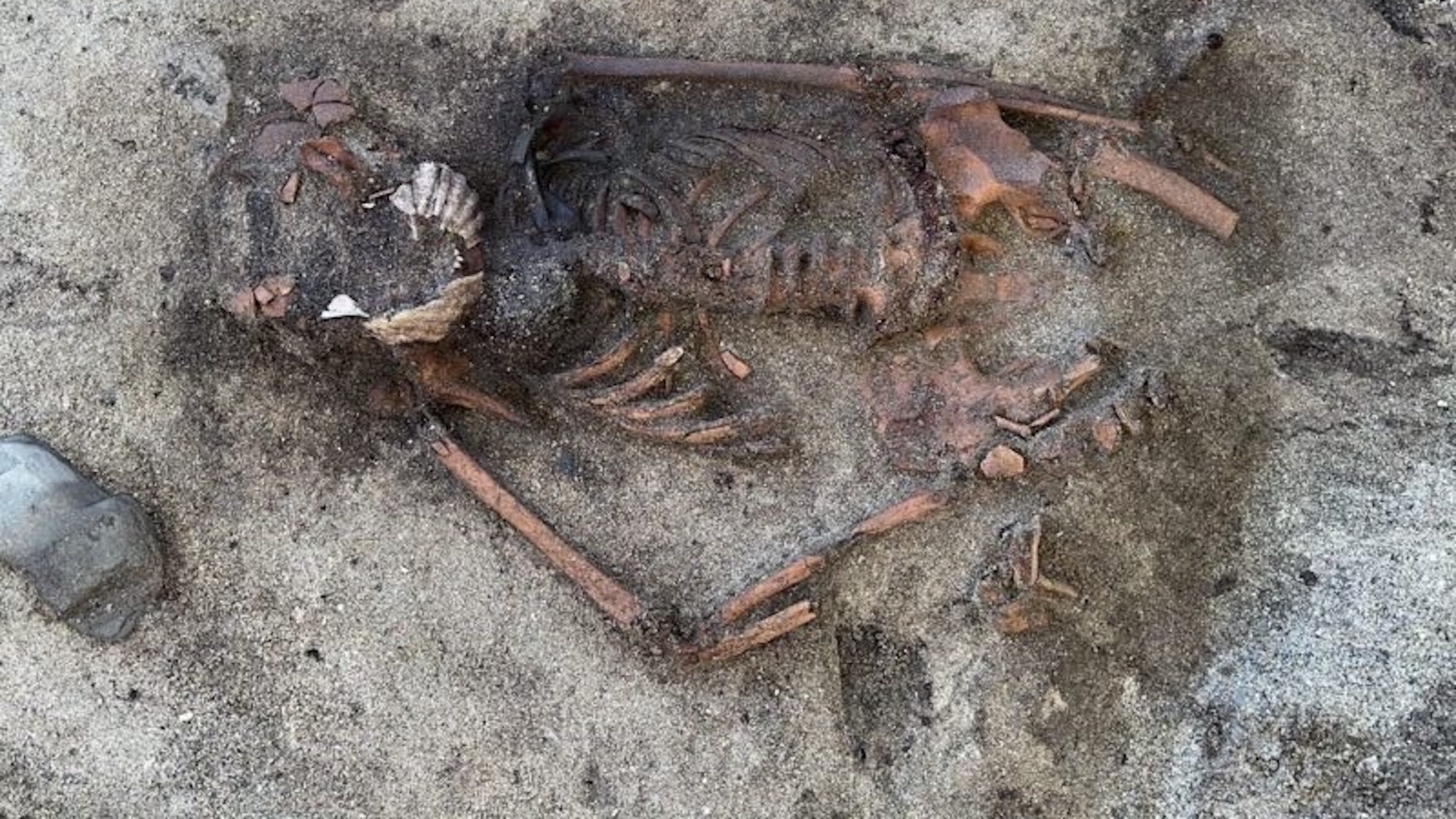
A metal detectorist in Norway has made a remarkable discovery, unearthing a Viking Age grave believed to belong to a woman adorned with costume and jewelry from the 800s. The find occurred in Trøndelag County, prompting archaeologists to excavate the site to further explore its significant historical context.
Roy Søreng was the individual behind this intriguing discovery. Upon finding an oval brooch, he promptly contacted researchers from the Norwegian University of Science and Technology (NTNU). Subsequently, a team led by Raymond Sauvage, head engineer at the NTNU Museum’s Department of Archaeology and Cultural History, began the excavation, working discreetly to protect the site and its archaeological treasures.
Insights into Viking Life
The grave contains the skeletal remains of what is believed to be a woman, who was buried with items indicative of her status. According to Sauvage, the presence of a typical Viking Age costume and jewelry set suggests she was likely a free and possibly married woman, potentially the mistress of a farm. The burial includes two oval brooches, including the one discovered by Søreng, which were used to attach straps of a suspender dress, as well as a ring buckle for closing a petticoat.
One of the most noteworthy aspects of the find is the presence of two scallop shells partially covering the deceased’s mouth. While scallop shells are recognized as a Christian symbol associated with the cult of St. James during the Middle Ages, their occurrence in pre-Christian graves is exceedingly rare. Sauvage remarked, “This is a practice that is not previously known from pre-Christian graves in Norway. We don’t yet know what the symbolism means.”
The excavation also revealed bird bones, likely wing bones, found within the grave. Researchers from Norwegian SciTech News suggest that both the shells and the bird bones may have held symbolic significance for those participating in or observing the burial.
Preserving the Past
The excavation follows another significant find in the same area earlier this year, where a pristine skeleton was documented. According to Hanne Bryn, field supervisor from the Department of Archaeology and Cultural History, the new grave is estimated to be one to three generations younger than the previous discovery. During the initial inspection, Bryn noted the urgency as the site faced potential damage from upcoming ploughing. Fortunately, landowner Arve Innstrand granted permission for the excavation to proceed.
With the excavation complete, the next phase involves a thorough analysis of the skeletal remains. Sauvage indicated that the research team will examine the skeleton for various factors, including body height, gender-defining traits, and potential traces of disease. They will also preserve the discovered artifacts and take samples for dating and DNA analysis. The aim is to learn more about the individual and explore possible familial connections to the previous find in the same location.
The discoveries made by Søreng and the subsequent archaeological efforts not only shed light on Viking life but also contribute to a deeper understanding of the cultural practices of the time. As the analysis unfolds, historians and archaeologists alike anticipate uncovering more about this intriguing period in history.





Researchers Develop Safer Gene Therapy Using Circular DNA

Unlock Today’s NYT Strands Puzzle with Hints and Answers

Mother-Daughter Podcast Tackles Mental Health with Honesty

Medina’s Dashawn Davison Honored as Ohio’s 2025 DSP of the Year

Castle Biosciences vs. Seres Therapeutics: Investment Showdown

Innovative DNA Approach Enhances Safety of Gene Therapy

Big Pharma’s Private Jets Land 127 Times Amid Drug Affordability Crisis

Nonprofit Hires Hackers to Unlock Abandoned Google Nest Devices

Students Showcase Art at Museum Center in Bradley County

Discover the Top 10 Calorie Counting Apps of 2025

OpenAI to Implement Age Verification for ChatGPT by December 2025

Bella Hadid Shares Health Update After Treatment for Lyme Disease

Erin Bates Shares Recovery Update Following Sepsis Complications

Discover How to Reverse Image Search Using ChatGPT Effortlessly

Analysts Project Stronger Growth for Apple’s iPhone 17 Lineup

Electric Moto Influencer Surronster Arrested in Tijuana

Discover 2025’s Top GPUs for Exceptional 4K Gaming Performance

Meta Initiates $60B AI Data Center Expansion, Starting in Ohio
-
 Technology5 months ago
Discover the Top 10 Calorie Counting Apps of 2025
-
 Technology2 weeks ago
OpenAI to Implement Age Verification for ChatGPT by December 2025
-
 Health3 months ago
Bella Hadid Shares Health Update After Treatment for Lyme Disease
-
 Health3 months ago
Erin Bates Shares Recovery Update Following Sepsis Complications
-
 Technology4 months ago
Discover How to Reverse Image Search Using ChatGPT Effortlessly
-
 Health3 months ago
Analysts Project Stronger Growth for Apple’s iPhone 17 Lineup
-
 Technology3 months ago
Electric Moto Influencer Surronster Arrested in Tijuana
-
 Technology1 month ago
Discover 2025’s Top GPUs for Exceptional 4K Gaming Performance
-
 Technology5 months ago
Meta Initiates $60B AI Data Center Expansion, Starting in Ohio
-

 Technology5 months ago
Recovering a Suspended TikTok Account: A Step-by-Step Guide
-

 Health5 months ago
Tested: Rab Firewall Mountain Jacket Survives Harsh Conditions
-

 Lifestyle5 months ago
Belton Family Reunites After Daughter Survives Hill Country Floods