
Science
Yale School of the Environment Celebrates 125 Years of Impact

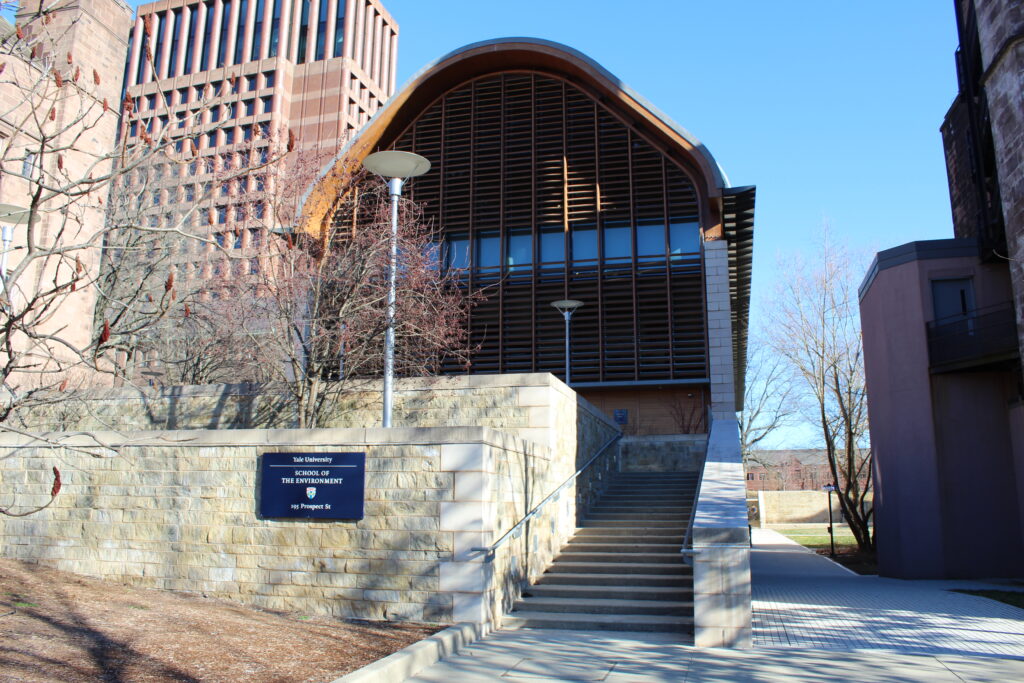
The Yale School of the Environment commemorates a significant milestone this year, marking its 125th anniversary since its founding in 1900. Established initially as the School of Forestry, the institution has evolved into a leading educational hub for environmental studies, training over 5,800 graduates who have gone on to hold influential positions in environmental leadership across 80 countries.
Located in Kroon Hall, a building crafted from sustainably sourced materials, the school embodies a commitment to environmental stewardship. The structure features beams and planks made from Quercus rubra red oaks harvested from the Yale Forests. These elements reflect the connection between education and nature, fostering a new generation dedicated to preserving the environment.
Reflections on Legacy and Future Challenges
According to Indy Burke, Dean of the Yale School of the Environment, the anniversary serves as a source of inspiration and hope for those passionate about environmental issues. In a recent email to the Yale News, she expressed gratitude for the opportunity to reflect on the school’s impact over the years. “YSE alumni hold environmental leadership positions in 80 countries around the world,” Burke noted, highlighting the resilience of the school community and the urgency of future environmental work.
During the reunion weekend from October 24 to 26, 2025, Terry Baker, president of the school’s Alumni Association Board, remarked on the inspiring nature of the events, particularly the celebration of the class of 1975 marking its 50th anniversary. “It was great to see familiar faces and meet new alumni and current students,” Baker stated. The gathering emphasized the shared commitment to a healthier planet and communities.
A Historical Journey Through Education
The origins of the Yale School of the Environment date back to September 29, 1900, when it was reported that the School of Forestry had been established through a generous gift from James Pinchot. His son, Gifford Pinchot, class of 1889, became the school’s first president. Initially, the school operated with only seven students and a two-member faculty, utilizing the residence of Professor O.C. Marsh.
In 1923, the institution moved to Sage Hall, thanks to a significant donation of $300,000 from William H. Sage, class of 1865. During its third decennial reunion in 1930, the school reported a collection of 30,000 forestry-related volumes and management of 1,300 acres of demonstration and research forests, including the Yale-Myers Forest, a gift of 8,000 acres from George H. Myers.
In 1972, the institution rebranded itself as the Yale School of Forestry and Environmental Studies, reflecting a broader curriculum that encompassed various environmental issues. By its centennial celebration in 2000, the school had grown to 270 students, with one-third representing over 20 different countries. Dean James Gustave Speth at the time emphasized the need to address pressing global challenges such as energy, climate change, and biodiversity loss.
Alumni often reflect on the transformative experience they had at Yale. For instance, Bryan Garcia, class of 2000, transitioned to the school after serving in the Peace Corps in Kazakhstan. Now the president and CEO of the Connecticut Green Bank, Garcia credits his time at Yale for shaping his multi-disciplinary approach to environmental challenges. “I entered as an environmental education interested student, and I left as a multi-disciplinary thinker,” he said.
Another alumna, Charissa Leising, class of 2013, arrived at the school as a conservation biologist and later shifted her focus to industrial ecologies. Her career has taken her through various sectors, including electronics recycling at Apple and sustainability initiatives at Albertson’s. “You have some of the most diverse and creative, innovative thinkers at Yale,” she remarked, emphasizing the value of the connections formed during her studies.
Kroon Hall, completed in 2009, exemplifies the school’s commitment to sustainability, utilizing 50 percent less energy than a similarly sized building. As the Yale School of the Environment looks forward, its 125-year legacy serves as a foundation for the ongoing pursuit of environmental stewardship and innovation.



Boys & Girls Club of Lake Tahoe Hosts 4th Holiday Sausage Party

Major Study Reveals Nose Microbiome’s Role in Staph Aureus Risks

Researchers Unveil New Strategy Against Aggressive Blood Cancer

Cyber Monday Discounts Still Available on Top Tech Gadgets

Yale’s Josh Geballe Discusses Innovations in Entrepreneurship

Boys & Girls Club Hosts 4th Annual Holiday Sausage Party

Wedding Gift Miscommunication Strains Friendship Between Families

New Study Offers Key Harm Reduction Tips for First-Time Psychedelic Users

TrumpRx Initiative Aims to Lower Prescription Drug Prices

Discover the Top 10 Calorie Counting Apps of 2025

Bella Hadid Shares Health Update After Treatment for Lyme Disease

Erin Bates Shares Recovery Update Following Sepsis Complications

Discover How to Reverse Image Search Using ChatGPT Effortlessly

Discover 2025’s Top GPUs for Exceptional 4K Gaming Performance

Electric Moto Influencer Surronster Arrested in Tijuana

Meta Initiates $60B AI Data Center Expansion, Starting in Ohio

Recovering a Suspended TikTok Account: A Step-by-Step Guide

Tested: Rab Firewall Mountain Jacket Survives Harsh Conditions
-
 Technology5 months ago
Discover the Top 10 Calorie Counting Apps of 2025
-
 Health2 months ago
Bella Hadid Shares Health Update After Treatment for Lyme Disease
-
 Health3 months ago
Erin Bates Shares Recovery Update Following Sepsis Complications
-
 Technology4 months ago
Discover How to Reverse Image Search Using ChatGPT Effortlessly
-
 Technology1 month ago
Discover 2025’s Top GPUs for Exceptional 4K Gaming Performance
-
 Technology2 months ago
Electric Moto Influencer Surronster Arrested in Tijuana
-
 Technology5 months ago
Meta Initiates $60B AI Data Center Expansion, Starting in Ohio
-
 Technology5 months ago
Recovering a Suspended TikTok Account: A Step-by-Step Guide
-
 Health4 months ago
Tested: Rab Firewall Mountain Jacket Survives Harsh Conditions
-

 Lifestyle5 months ago
Belton Family Reunites After Daughter Survives Hill Country Floods
-

 Technology4 months ago
Harmonic Launches AI Chatbot App to Transform Mathematical Reasoning
-

 Technology3 months ago
Uncovering the Top Five Most Challenging Motorcycles to Ride