
Science
Mars Missions Will Challenge Our Understanding of Time Dilation

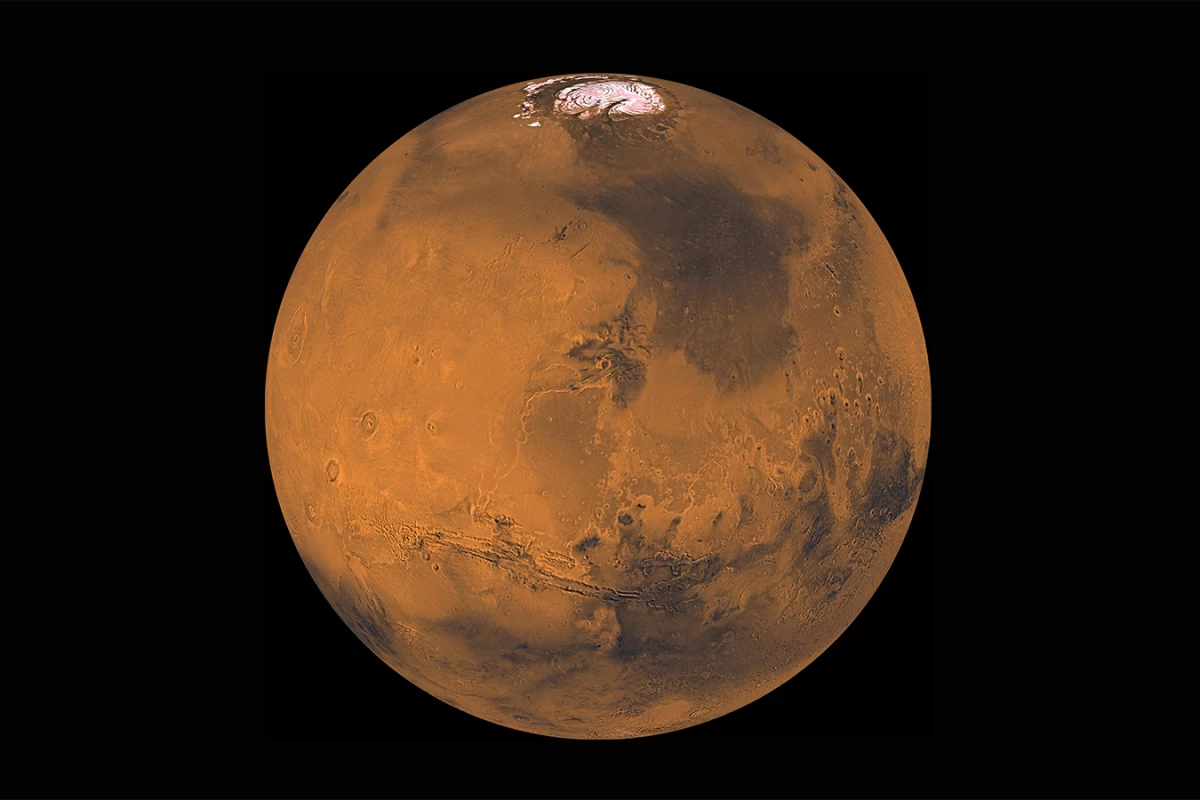
Traveling to Mars may come with an unexpected challenge: astronauts will age faster than they would on Earth. According to research by scientists at the National Institute of Standards and Technology (NIST), the time dilation effect predicted by Albert Einstein‘s Theory of Relativity means that time on Mars runs approximately 477 microseconds faster per day compared to Earth. This discrepancy could have significant implications for future missions and human colonization of the Red Planet.
Understanding time in different gravitational environments can be complex. Einstein’s theory demonstrates that time is not a constant; it varies based on speed and gravitational pull. For example, when Neil Ashby and his colleague Bijunath Patla began investigating the implications of time dilation for Mars, they encountered a challenge that is less straightforward than similar calculations for the Moon.
Time Dilation and Its Implications for Space Travel
When astronauts travel to Mars, they will experience a unique time dynamic due to the planet’s position in the solar system. Unlike the Moon, where calculations can largely depend on the gravitational effects of Earth and the Moon itself, Mars introduces additional complexities. The Martian orbit is not only elliptical but also subject to variations in speed throughout its year, making time calculations significantly more difficult.
The research indicates that, beyond the 477 microseconds per day that astronauts will age faster, there is also a fluctuation of 266 microseconds that must be considered throughout the Martian year. This means that, at different times, the effective time difference could vary, complicating the navigation and communication systems that will be critical for missions.
Future Challenges for Mars Colonization
The implications of these findings extend beyond just the aging process for astronauts. If the effects of time dilation are not accurately accounted for, navigation systems could face serious errors. For instance, without adjustments, GPS satellites on Mars could lead to position calculations that are off by as much as 89 miles (143 km) per day.
Ashby emphasizes the importance of this research, stating, “It’s good to know for the first time what is happening on Mars timewise. Nobody knew that before.” The details of time calculation are fundamental to both the theory of relativity and the functioning of devices like GPS. As humanity aims for more ambitious missions to Mars, understanding how time behaves there will be essential.
The research findings were published in The Astronomical Journal, marking a significant step in our understanding of time in different planetary environments. As plans for human missions to Mars accelerate, these insights will be crucial for ensuring safe and effective exploration of the Red Planet.
As we prepare for a future where humans may live and work on Mars, the challenges of time will require innovative solutions and adjustments to our technologies. The exploration of time dilation is not just a theoretical exercise; it is a pressing issue that could shape the success of interplanetary travel.







Transforming Threat Intelligence: Insights from Simbian’s CTO

Tangipahoa Schools Enhance Security Measures for Student Safety

Paul Rose Reflects on 16 Years of Service to Medina Council

Mars Missions Will Challenge Our Understanding of Time Dilation

Substance Use Disorder Costs US Economy Nearly $93 Billion in 2023

Transforming Threat Intelligence: Insights from Simbian’s CTO

Test Your Literary Knowledge with This Engaging Quiz

Tyla Styles Airport Look with Iconic Louis Vuitton Collaboration

Innovative Composite Material Boosts Lithium-Sulfur Battery Performance

Discover the Top 10 Calorie Counting Apps of 2025

Bella Hadid Shares Health Update After Treatment for Lyme Disease

OpenAI to Implement Age Verification for ChatGPT by December 2025

Erin Bates Shares Recovery Update Following Sepsis Complications

Discover How to Reverse Image Search Using ChatGPT Effortlessly

Electric Moto Influencer Surronster Arrested in Tijuana

Discover 2025’s Top GPUs for Exceptional 4K Gaming Performance

Meta Initiates $60B AI Data Center Expansion, Starting in Ohio

Analysts Project Stronger Growth for Apple’s iPhone 17 Lineup
-
 Technology5 months ago
Discover the Top 10 Calorie Counting Apps of 2025
-
 Health3 months ago
Bella Hadid Shares Health Update After Treatment for Lyme Disease
-
 Technology1 week ago
OpenAI to Implement Age Verification for ChatGPT by December 2025
-
 Health3 months ago
Erin Bates Shares Recovery Update Following Sepsis Complications
-
 Technology4 months ago
Discover How to Reverse Image Search Using ChatGPT Effortlessly
-
 Technology3 months ago
Electric Moto Influencer Surronster Arrested in Tijuana
-
 Technology1 month ago
Discover 2025’s Top GPUs for Exceptional 4K Gaming Performance
-
 Technology5 months ago
Meta Initiates $60B AI Data Center Expansion, Starting in Ohio
-
 Health3 months ago
Analysts Project Stronger Growth for Apple’s iPhone 17 Lineup
-

 Technology5 months ago
Recovering a Suspended TikTok Account: A Step-by-Step Guide
-

 Health5 months ago
Tested: Rab Firewall Mountain Jacket Survives Harsh Conditions
-

 Lifestyle5 months ago
Belton Family Reunites After Daughter Survives Hill Country Floods