
Science
Former Neuralink President Launches Organ Preservation Initiative

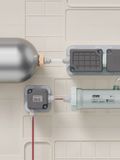
Max Hodak, the former president of Neuralink, has unveiled an ambitious initiative aimed at extending the viability of human organs. His startup, Science Corporation, based in Alameda, California, is launching a new division focused on developing advanced organ perfusion technologies. These systems are designed to enhance the preservation of organs for transplantation and provide long-term life support for patients whose vital organs have ceased functioning.
The current perfusion systems utilized in medical settings, which circulate blood through organs that can no longer sustain themselves, are often cumbersome and expensive. Hodak’s team aims to create a more compact and portable solution that could significantly improve organ preservation methods. Until now, Science has concentrated primarily on neural interfaces, including a breakthrough “biohybrid” interface that utilizes living neurons for brain connectivity, as well as a retinal implant capable of restoring vision for patients with advanced macular degeneration.
Acquired in 2024 from the struggling French startup Pixium Vision, the retinal implant is an example of Science’s innovative approach, having already shown success in patients. Hodak has likened both the organ preservation efforts and neural interfaces to longevity technologies, underscoring a shared goal of extending human life.
The inspiration behind the organ preservation project stemmed from a heartbreaking case in Boston. A 17-year-old boy with cystic fibrosis faced a dire situation when his lungs failed, requiring extracorporeal membrane oxygenation (ECMO) to survive while waiting for a transplant. After two months on the waitlist, complications arose, leading to a tragic outcome. This case highlighted the ethical dilemmas and limitations of existing life-support systems, which are costly and resource-intensive.
Currently, ECMO machines cost thousands of dollars daily to operate and require constant monitoring due to their complex setups. In contrast, Science’s new technology aims to simplify organ preservation. Hodak posed a thought-provoking question: “Could you get to the point where you could check a kidney as luggage on a United flight to the East Coast?”
Beyond ECMO, existing perfusion systems used for organ transport are also financially burdensome. For instance, TransMedics produces a system that costs around $250,000, with each use ranging from $40,000 to $80,000. These systems often necessitate specialized training for personnel, limiting their accessibility in hospitals.
Science has already made significant strides, successfully developing a perfusion system capable of sustaining rabbit kidneys outside the body for up to 48 hours. Hodak anticipates extending this viability to a month by March 2024. In comparison, human kidneys can remain viable for 24 to 36 hours when stored on ice, while current perfusion machines can extend this timeframe to four days or more.
The decision to branch into organ perfusion was always part of Hodak’s vision for Science, which has grown to approximately 170 employees. He emphasized the importance of preliminary work to gain confidence for this larger commitment. The prototype developed by Science integrates real-time monitoring sensors for vital parameters, ensuring automatic adjustments, which contrasts with current ECMO machines that require manual operation.
As Science enters a competitive landscape filled with other companies working on automated perfusion systems, the focus will be on making this technology more accessible. Hodak aims for a price point that allows broader utilization, stating, “There’s this big gap between what this technology is fundamentally capable of and how it is being deployed and used in daily practice.”
If Science successfully bridges this gap, it could transform the landscape of organ preservation, moving from complex medical procedures to potentially swappable organ systems, thereby revolutionizing the way healthcare addresses organ failure and transplantation.









Revolutionary Photonic Ski-Jump Could Miniaturize LiDAR Systems

Couples Detox from Plastics in New Netflix Doc: Can It Boost Fertility?

Aventon Launches Affordable Full-Suspension Electric Mountain Bike

Discover Eight Must-Try Restaurants This Spring Season

UC Irvine Team Unveils Innovative Ion Pump for Water Treatment

One-Third of Americans Trim Daily Expenses for Healthcare Needs

Apple Secures First Oscar in Three Years with F1: The Movie

Fourth Graders Celebrate St. Patrick’s Day with Creative Weather Drawings

Kim Kardashian Dazzles at Vanity Fair Oscars Party 2026

Nostradamus’ 2026 Predictions: Star Death and Dark Events Loom

Breakthroughs and Challenges Await Science in 2026

Electric Moto Influencer Surronster Arrested in Tijuana

OpenAI to Implement Age Verification for ChatGPT by December 2025

Discover the Top 10 Calorie Counting Apps of 2025

Bella Hadid Shares Health Update After Treatment for Lyme Disease

Analysts Project Stronger Growth for Apple’s iPhone 17 Lineup

Japanese Study Finds Rose Oil Can Increase Brain Gray Matter

Top 10 Penny Stocks to Watch in 2026 for Strong Returns
-
 Science3 months ago
Nostradamus’ 2026 Predictions: Star Death and Dark Events Loom
-
 Science4 months ago
Breakthroughs and Challenges Await Science in 2026
-
 Technology7 months ago
Electric Moto Influencer Surronster Arrested in Tijuana
-
 Technology4 months ago
OpenAI to Implement Age Verification for ChatGPT by December 2025
-
 Technology9 months ago
Discover the Top 10 Calorie Counting Apps of 2025
-
 Health7 months ago
Bella Hadid Shares Health Update After Treatment for Lyme Disease
-
 Health7 months ago
Analysts Project Stronger Growth for Apple’s iPhone 17 Lineup
-
 Health7 months ago
Japanese Study Finds Rose Oil Can Increase Brain Gray Matter
-
 Technology4 months ago
Top 10 Penny Stocks to Watch in 2026 for Strong Returns
-

 Science6 months ago
Starship V3 Set for 2026 Launch After Successful Final Test of Version 2
-

 Technology1 month ago
Nvidia GTC 2026: Major Announcements Expected for AI and Hardware
-

 Education7 months ago
Harvard Secures Court Victory Over Federal Funding Cuts