
Science
Earth’s Magnetic Field: Movement and Potential Reversal Unveiled

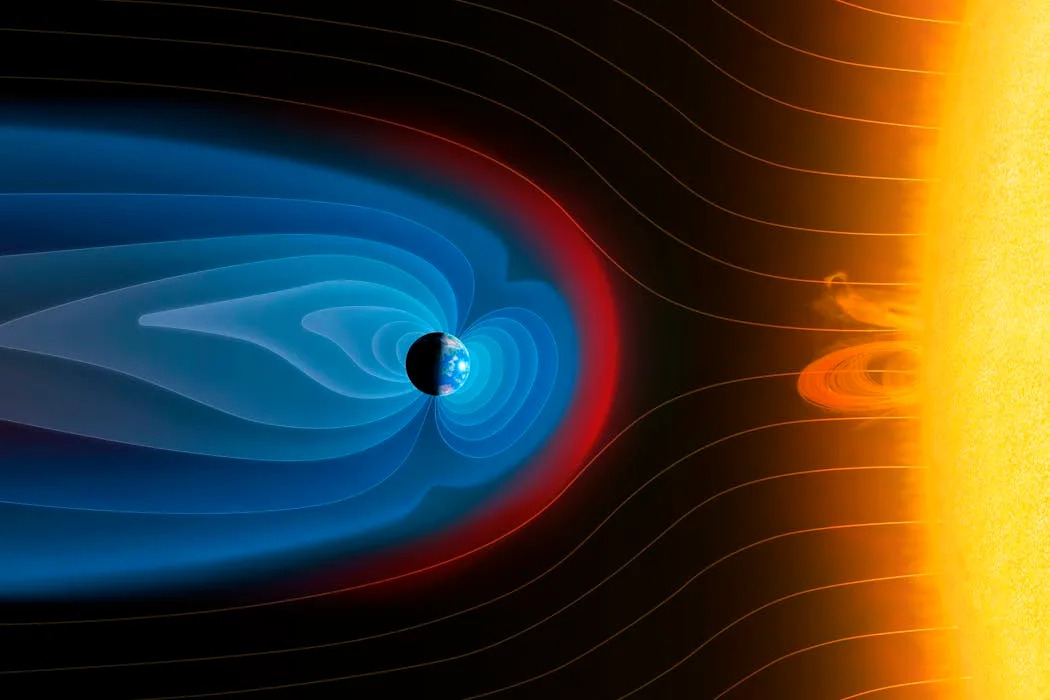
The Earth’s magnetic field, crucial for protecting life on the planet, is undergoing significant changes. Over the past two centuries, the north magnetic pole has shifted approximately 600 miles (965 kilometers), with its migration speed increasing from 10 miles per year to 34 miles per year. This acceleration may signal the onset of a magnetic field reversal, where the north and south magnetic poles switch places, a phenomenon that occurs over thousands of years.
Understanding the mechanics of the Earth’s magnetic field is essential. It is generated by moving electric charges within the planet’s liquid iron core. These movements create a protective magnetic bubble known as the magnetosphere, which shields the Earth from harmful cosmic radiation and solar wind. The interaction between the magnetosphere and solar phenomena, such as coronal mass ejections, can lead to geomagnetic storms that disrupt satellite communications and power grids.
Tracking the Magnetic Pole Movement
Scientists have meticulously tracked the movements of the magnetic poles for centuries, utilizing local measurements and advanced modeling techniques. The north magnetic pole’s shift, first recorded in 1831, has prompted questions about the stability of the Earth’s magnetic field. While minor shifts are not alarming, the potential for a complete reversal poses risks to modern technology and the climate.
Historically, the Earth’s magnetic field reverses every 100,000 to 1,000,000 years. The evidence for these reversals comes from volcanic rocks formed at the ocean floor, which capture the magnetic field’s orientation at the time of their creation. By dating these rocks, scientists can reconstruct the field’s historical behavior.
The current pace of the magnetic pole’s movement raises concerns. With the north pole moving faster than ever, scientists are investigating whether this trend marks the beginning of a field reversal. Although reliable predictions are challenging due to limited data, ongoing research aims to enhance understanding of these phenomena.
Implications of a Magnetic Reversal
A magnetic field reversal does not happen overnight. It typically unfolds over several thousand years, during which the Earth’s magnetosphere may weaken, exposing the surface to increased cosmic radiation. Such exposure could alter atmospheric ozone levels, impacting climate and ecological systems.
Additionally, heightened cosmic radiation poses risks to satellite operations and astronauts. Geomagnetic storms, triggered by solar activity, can overload power grids and disrupt essential communication systems. As society becomes more reliant on technology, understanding the dynamics of the magnetic field is paramount.
Despite uncertainties, scientists continue to monitor the magnetic field’s behavior. The ongoing study of its movement and potential reversals is critical for predicting future impacts on life on Earth. According to Ofer Cohen, a physicist at the University of Massachusetts Lowell, the current changes in the magnetic field highlight the intricate relationship between planetary dynamics and the environment.
As research progresses, awareness about the Earth’s magnetic field and its implications will be vital for mitigating risks associated with its fluctuations. Understanding this natural phenomenon offers insights into both the past and future of our planet’s climate and technology.





Driver Arrested for DUI After Crashing into Home in Yakima

Jacksonville HealthLink Program Faces Scrutiny Amid Resident Support

Rethinking A/B Testing: Speed Up Decisions to Boost Growth

Runner Rescued After Cardiac Arrest at California Marathon

Palmer Luckey Advocates for AI in Military Decision-Making

Driver Arrested After Crashing Into Family Home in Yakima

WJXT Celebrates Success with Four Suncoast Emmy Awards

Researchers Secure $1.25M Grant for Hawaiʻi Hazard Monitoring Sensors

Study Reveals Potential for Expanded Donor Pool in Stem Cell Transplants

Discover the Top 10 Calorie Counting Apps of 2025

Bella Hadid Shares Health Update After Treatment for Lyme Disease

OpenAI to Implement Age Verification for ChatGPT by December 2025

Erin Bates Shares Recovery Update Following Sepsis Complications

Discover How to Reverse Image Search Using ChatGPT Effortlessly

Electric Moto Influencer Surronster Arrested in Tijuana

Discover 2025’s Top GPUs for Exceptional 4K Gaming Performance

Meta Initiates $60B AI Data Center Expansion, Starting in Ohio

Recovering a Suspended TikTok Account: A Step-by-Step Guide
-
 Technology5 months ago
Discover the Top 10 Calorie Counting Apps of 2025
-
 Health3 months ago
Bella Hadid Shares Health Update After Treatment for Lyme Disease
-
 Technology6 days ago
OpenAI to Implement Age Verification for ChatGPT by December 2025
-
 Health3 months ago
Erin Bates Shares Recovery Update Following Sepsis Complications
-
 Technology4 months ago
Discover How to Reverse Image Search Using ChatGPT Effortlessly
-
 Technology3 months ago
Electric Moto Influencer Surronster Arrested in Tijuana
-
 Technology1 month ago
Discover 2025’s Top GPUs for Exceptional 4K Gaming Performance
-
 Technology5 months ago
Meta Initiates $60B AI Data Center Expansion, Starting in Ohio
-
 Technology5 months ago
Recovering a Suspended TikTok Account: A Step-by-Step Guide
-

 Health5 months ago
Tested: Rab Firewall Mountain Jacket Survives Harsh Conditions
-

 Health3 months ago
Analysts Project Stronger Growth for Apple’s iPhone 17 Lineup
-

 Lifestyle5 months ago
Belton Family Reunites After Daughter Survives Hill Country Floods