
Science
Drones and Countermeasures: New Weapons Transform Warfare Dynamics

The ongoing Russo-Ukraine war has catalyzed significant innovations in military technology, particularly the use of drones. These unmanned aerial vehicles (UAVs) have become pivotal to both Ukrainian and Russian strategies, accounting for approximately 60% to 70% of all casualties sustained in the conflict. As traditional air assets like fighter jets become less viable due to their high manufacturing costs and operational risks, drones are reshaping the landscape of modern warfare.
Drones have extended the range in which ground forces are vulnerable, with lethal attacks now possible from distances of six to nine miles behind front lines. This shift has rendered conventional defenses, such as trenches and armored vehicles, considerably less effective. Beyond their offensive capabilities, drones also excel in intelligence, surveillance, and reconnaissance, providing real-time battlefield data that enhances operational planning and communication.
As history suggests, the introduction of new military technologies often prompts the development of countermeasures. For instance, during World War I, the initial success of tanks was quickly mitigated by the introduction of anti-tank guns. Similarly, in Ukraine, simple protective measures like netting have been employed to counter drone threats, albeit with limited success.
Emergence of Advanced Countermeasures
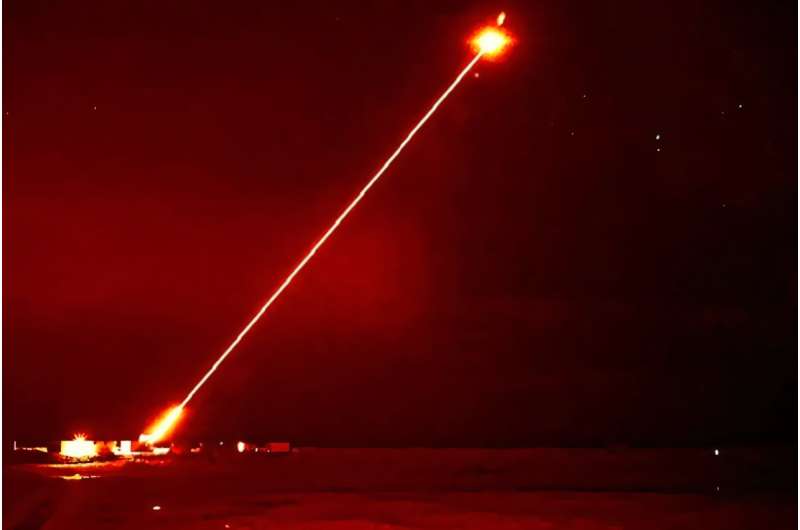
The United Kingdom is at the forefront of these counter-innovations with its planned deployment of DragonFire, a laser-based weapon designed to neutralize drones and other small aerial threats. Set to be operational by 2027, DragonFire boasts a cost-effectiveness of just £10 per shot and can accurately engage targets the size of a one-pound coin from distances up to one kilometer. While DragonFire requires a direct line of sight to operate, it represents a significant leap in defensive technology against drones.
In addition to DragonFire, the UK is testing another direct-energy weapon that utilizes radio-frequency systems. This system offers advantages over traditional laser weapons, including the ability to function in adverse weather conditions and the capability to target multiple drones simultaneously. However, it comes with a significant drawback: it cannot differentiate between friendly and enemy aircraft, raising operational safety concerns.
The rapid evolution of military technology and countermeasures reflects a persistent cycle in warfare. As drones become more integral to combat strategies, their effectiveness will inevitably be challenged by new defensive technologies. While UAVs are likely to remain essential components of modern military arsenals, the notion that they will entirely replace crewed aircraft remains uncertain.
The developments in Ukraine and the UK’s ongoing advancements highlight a crucial aspect of contemporary warfare: the balance between offensive capabilities and defensive responses continues to evolve. As both sides adapt to the changing landscape, the future of aerial warfare will depend on the interplay between these emerging technologies.





Saintly City Snow Angels Seek Volunteers for Sidewalk Shoveling

Researchers Turn Seashells into Low-Carbon Concrete Solution

San Francisco Files Lawsuit Against Major Ultra-Processed Food Makers

Drivers Warn of Dangers Behind the Wheel of Porsche Carrera GT

Melville Library Honors Student Artist with Commemorative Plaque

Bay High School Celebrates 98 New Inductees into National Honor Society

Boys & Girls Club of Lake Tahoe Hosts 4th Holiday Sausage Party

Major Study Reveals Nose Microbiome’s Role in Staph Aureus Risks

Researchers Unveil New Strategy Against Aggressive Blood Cancer

Discover the Top 10 Calorie Counting Apps of 2025

Bella Hadid Shares Health Update After Treatment for Lyme Disease

Erin Bates Shares Recovery Update Following Sepsis Complications

Discover How to Reverse Image Search Using ChatGPT Effortlessly

Discover 2025’s Top GPUs for Exceptional 4K Gaming Performance

Electric Moto Influencer Surronster Arrested in Tijuana

Meta Initiates $60B AI Data Center Expansion, Starting in Ohio

Recovering a Suspended TikTok Account: A Step-by-Step Guide

Tested: Rab Firewall Mountain Jacket Survives Harsh Conditions
-
 Technology5 months ago
Discover the Top 10 Calorie Counting Apps of 2025
-
 Health2 months ago
Bella Hadid Shares Health Update After Treatment for Lyme Disease
-
 Health3 months ago
Erin Bates Shares Recovery Update Following Sepsis Complications
-
 Technology4 months ago
Discover How to Reverse Image Search Using ChatGPT Effortlessly
-
 Technology1 month ago
Discover 2025’s Top GPUs for Exceptional 4K Gaming Performance
-
 Technology2 months ago
Electric Moto Influencer Surronster Arrested in Tijuana
-
 Technology5 months ago
Meta Initiates $60B AI Data Center Expansion, Starting in Ohio
-
 Technology5 months ago
Recovering a Suspended TikTok Account: A Step-by-Step Guide
-
 Health4 months ago
Tested: Rab Firewall Mountain Jacket Survives Harsh Conditions
-

 Lifestyle5 months ago
Belton Family Reunites After Daughter Survives Hill Country Floods
-

 Technology4 months ago
Harmonic Launches AI Chatbot App to Transform Mathematical Reasoning
-

 Technology3 months ago
Uncovering the Top Five Most Challenging Motorcycles to Ride