
Science
AI Revolutionizes Warehousing: 60% of Facilities Now Automated

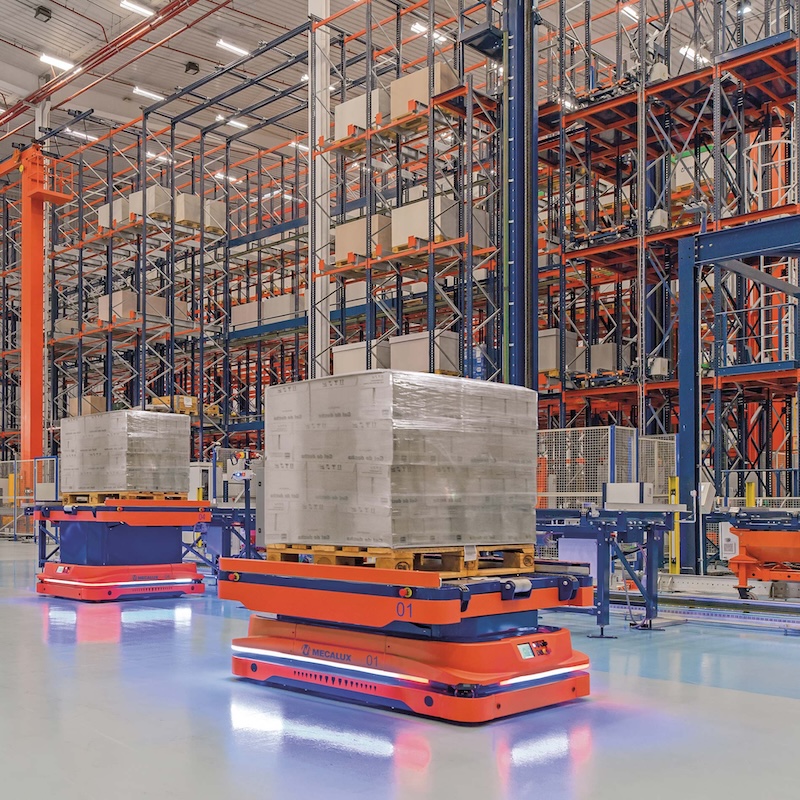
A recent study conducted by Mecalux and the MIT Intelligent Logistics Systems Lab reveals that artificial intelligence (AI) is now embedded in over 60 percent of warehouses globally. This significant finding underscores the rapid adoption of automation technologies within the logistics sector, as businesses prepare for the upcoming surge in demand typically associated with events like Black Friday.
The research, which surveyed more than 2,000 logistics leaders across 21 countries, indicates that AI and machine learning are no longer merely experimental tools. Instead, they have become integral to enhancing productivity, accuracy, and workforce dynamics in modern warehousing. According to the findings, more than 90 percent of warehouses currently employ some form of AI or advanced automation, marking a substantial evolution in operational capabilities.
AI Enhances Warehouse Efficiency and Resilience
The study highlights that over half of the organizations surveyed operate at advanced or fully automated maturity levels, particularly among larger businesses with complex logistics networks. AI is now a critical component of daily workflows, bolstering processes such as order picking, inventory optimization, equipment maintenance, labor planning, and safety monitoring.
“The data show that intelligent warehouses outperform not only in volume and accuracy but in adaptability,” stated Javier Carrillo, CEO of Mecalux. With the peak season approaching, he noted that companies investing in AI are not only achieving faster operations but are also becoming more resilient and better equipped to handle market volatility.
The findings also reveal that investments in AI are yielding quicker returns than anticipated. Organizations now allocate between 11 percent and 30 percent of their technology budgets to AI and machine learning initiatives, with average payback periods ranging from two to three years. These investments are linked to measurable improvements in inventory accuracy, throughput, labor efficiency, and reduced errors.
Addressing Challenges and Expanding Workforce Opportunities
Despite the progress, companies face challenges in scaling AI. “The hard part now is the last mile: integrating people, data, and analytics seamlessly into existing systems,” explained Dr. Matthias Winkenbach, Director of the MIT ILS Lab. Key barriers include the need for technical expertise, system integration complexities, data quality issues, and high implementation costs.
Nonetheless, businesses report robust foundations in data and project management, identifying improved tools, clearer roadmaps, increased budgets, and enhanced internal expertise as crucial factors for further adoption. The report also addresses concerns regarding automation and job displacement. Rather than replacing human workers, AI is fostering higher productivity and job satisfaction. More than 75 percent of organizations noted improvements in employee productivity and satisfaction after implementing AI tools, and over half reported an increase in workforce size.
Emerging roles in this evolving landscape include AI and machine learning engineers, automation specialists, process-improvement experts, and data scientists, indicating that intelligent automation is expanding the human role rather than diminishing it.
Looking forward, nearly every company surveyed plans to expand its use of AI within the next two to three years. A remarkable 87 percent expect to increase their AI budgets, while 92 percent are currently implementing or planning new AI initiatives. The focus will shift towards decision-making technologies, particularly generative AI, which businesses identify as the most valuable tool in today’s logistics environments.
“Traditional machine learning is great at predicting problems, but generative AI actually helps you engineer the solution,” Dr. Winkenbach added. This transition towards more sophisticated capabilities promises to facilitate the movement from predictive insights to automated actions, ultimately enhancing productivity and operational efficiency in warehouses.
As the logistics sector gears up for its busiest season, the study emphasizes that warehouses are not only becoming more automated but are also evolving into intelligent systems. With AI driving performance and supporting workforce capabilities, the future of warehousing appears poised for deeper integration of data and decision-making processes.










Saintly City Snow Angels Seek Volunteers for Sidewalk Shoveling

Researchers Turn Seashells into Low-Carbon Concrete Solution

San Francisco Files Lawsuit Against Major Ultra-Processed Food Makers

Drivers Warn of Dangers Behind the Wheel of Porsche Carrera GT

Melville Library Honors Student Artist with Commemorative Plaque

Bay High School Celebrates 98 New Inductees into National Honor Society

Boys & Girls Club of Lake Tahoe Hosts 4th Holiday Sausage Party

Major Study Reveals Nose Microbiome’s Role in Staph Aureus Risks

Researchers Unveil New Strategy Against Aggressive Blood Cancer

Discover the Top 10 Calorie Counting Apps of 2025

Bella Hadid Shares Health Update After Treatment for Lyme Disease

Erin Bates Shares Recovery Update Following Sepsis Complications

Discover How to Reverse Image Search Using ChatGPT Effortlessly

Discover 2025’s Top GPUs for Exceptional 4K Gaming Performance

Electric Moto Influencer Surronster Arrested in Tijuana

Meta Initiates $60B AI Data Center Expansion, Starting in Ohio

Recovering a Suspended TikTok Account: A Step-by-Step Guide

Tested: Rab Firewall Mountain Jacket Survives Harsh Conditions
-
 Technology5 months ago
Discover the Top 10 Calorie Counting Apps of 2025
-
 Health2 months ago
Bella Hadid Shares Health Update After Treatment for Lyme Disease
-
 Health3 months ago
Erin Bates Shares Recovery Update Following Sepsis Complications
-
 Technology4 months ago
Discover How to Reverse Image Search Using ChatGPT Effortlessly
-
 Technology1 month ago
Discover 2025’s Top GPUs for Exceptional 4K Gaming Performance
-
 Technology2 months ago
Electric Moto Influencer Surronster Arrested in Tijuana
-
 Technology5 months ago
Meta Initiates $60B AI Data Center Expansion, Starting in Ohio
-
 Technology5 months ago
Recovering a Suspended TikTok Account: A Step-by-Step Guide
-
 Health4 months ago
Tested: Rab Firewall Mountain Jacket Survives Harsh Conditions
-

 Lifestyle5 months ago
Belton Family Reunites After Daughter Survives Hill Country Floods
-

 Technology4 months ago
Harmonic Launches AI Chatbot App to Transform Mathematical Reasoning
-

 Technology3 months ago
Uncovering the Top Five Most Challenging Motorcycles to Ride